
December 18, 2024

Learn
About the Trust
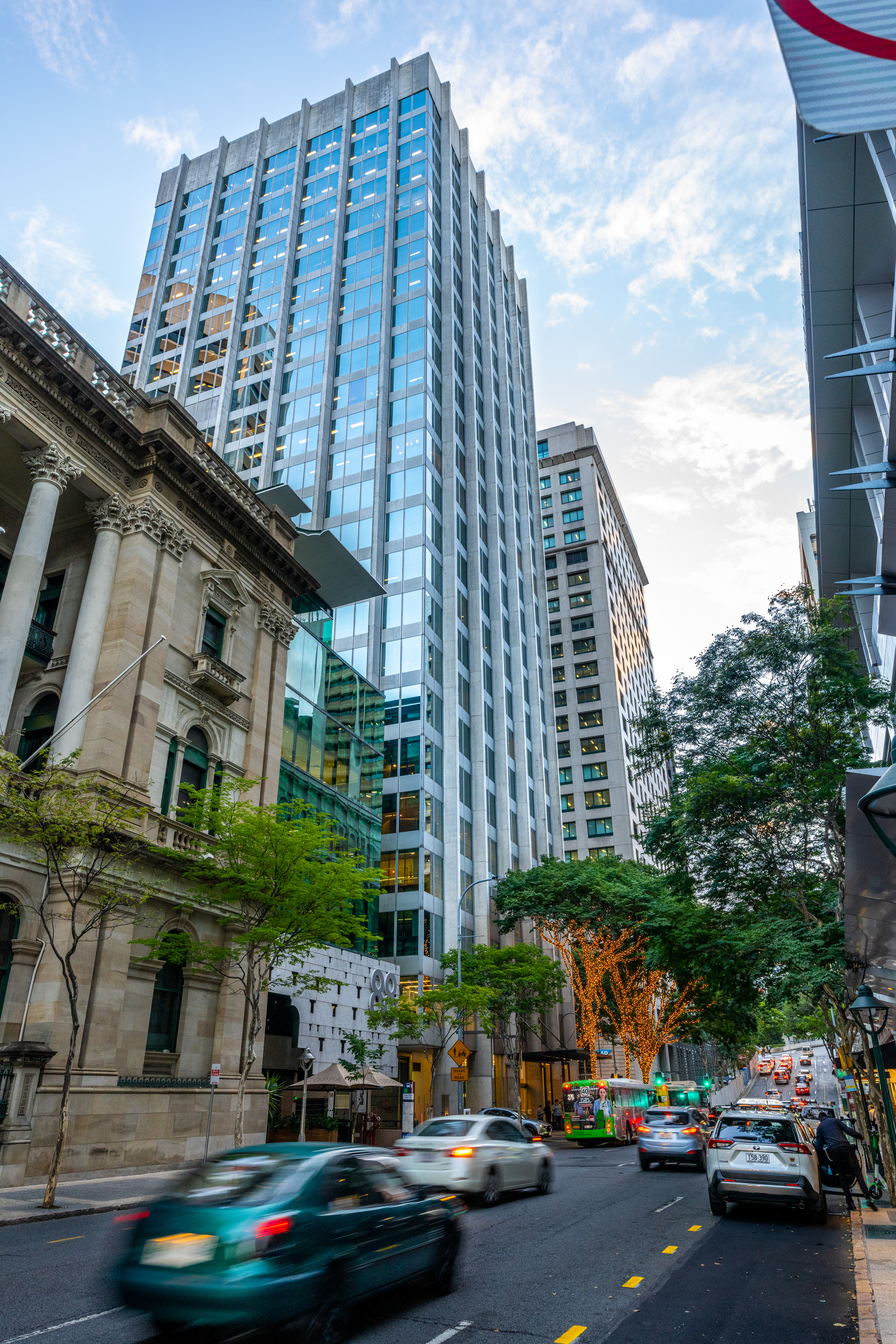
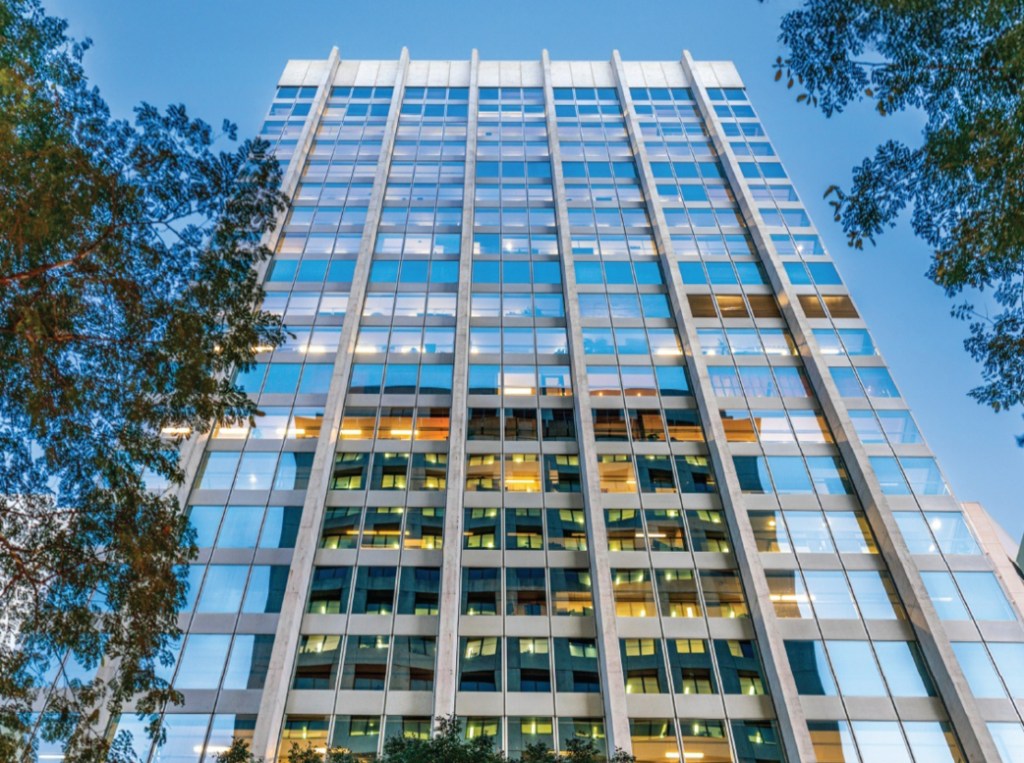
The Cromwell Riverpark Trust (the Trust) was the first of Cromwell’s ‘back to basics’ single property trusts, launched in February 2009 to fund the acquisition and construction of Energex House. The anchor tenant, Energy Queensland Limited, is one of Australia’s largest and fastest growing energy suppliers and occupies 94% of the 30,601 sqm of net lettable area of the building on a long lease.
As one of Queensland’s most energy efficient commercial buildings, Energex House has earned a Six Star Green Star rating and a 5.5 Star NABERS rating.

Market challenges at the end of the second Investment Term
Following the end of the second investment term of the Trust in 2021, efforts to sell Energex House did not yield offers deemed to be in the best interests of Unitholders. A preferred bidder entered due diligence in March 2022 however, during this period, market conditions changed dramatically.
The RBA’s increase of the cash rate on 3 May 2022, along with subsequent movements in debt markets, resulted in the preferred buyer ultimately withdrawing in late May 2022. This was followed by nine consecutive cash rate target increases, totalling 13 by November 2023, marking the sharpest and second-longest hiking cycle in the history of the Australian cash rate. In such an environment, long-term real estate investors often withdraw from the market due to increased volatility and uncertainty, particularly for larger assets.
Consequently, transactional activity within the office market fell dramatically to its lowest levels in over 10 years, both in terms of dollar value and the number of deals. Asset sales that have occurred over 2024 have continued to show significant discounts to book values.
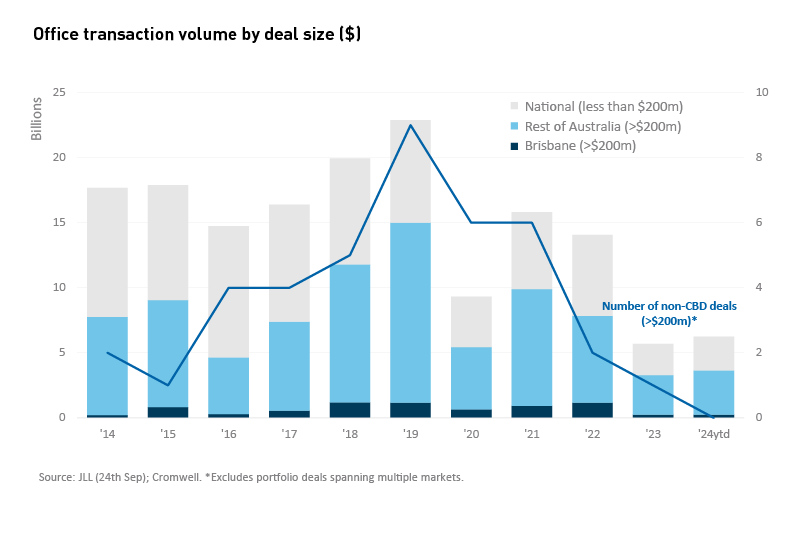
Currently, buyers are typically pricing opportunistically, which is not conducive to achieving a favourable sale price for the property. Given these conditions, extending the investment term of the Trust was recommended as the best course of action.
Unitholders vote on Term Extension
In late October 2024, Cromwell Riverpark Trust Unitholders were invited to vote on a Term Extension Proposal for the Trust. Of the 69.69% of unitholders who voted, 88.01% were in favour of extending the investment term until 31 December 2026. This extension aims to allow Energex House to be sold in a more orderly market when long-term buyers become more active and create a more competitive environment.
Why wait?
Early signs of price stabilisation in the office market have emerged, with the rate of yield expansion beginning to slow. Increased stability in pricing may attract a larger pool of market participants and hence contribute to greater transaction volume. Combined with the potential for future decreases in interest rates, this should help in creating more confidence with potential purchasers.
With limited new supply completed over the quarter and the demand side of the equation proving solid, the national CBD vacancy rate improved from 15.4% to 15.1%. Every market except Melbourne CBD and Brisbane CBD saw vacancy decline, with Sydney CBD (-0.9%) the standout due to its strong quarter of demand. Canberra and Brisbane CBD remained the tightest markets – their vacancy rates are in line with or tighter than the long-term average.
Strong fundamentals for Brisbane Fringe
Office space market fundamentals for the Brisbane fringe market have been improving and show good performance relative to other markets. Recent tenant demand for prime Brisbane fringe office space has been strong, with the Fortitude Valley precinct leading the Brisbane fringe sub-market in total occupied space growth since the onset of COVID-19.
This strong demand has contributed to a fall in the vacancy rate. A constrained supply pipeline is expected to keep the vacancy rate low, fostering conditions for rental growth. The Brisbane fringe has recorded the second-strongest rental growth nationally since December 2019, second only to the Brisbane CBD.
The decision by Cromwell Riverpark Trust Unitholders to extend the investment term until 31 December 2026 reflects a strategic approach to navigating current market challenges. By allowing more time for market conditions to stabilise and improve, the Trust aims to achieve a more favourable sale price for Energex House. The strong fundamentals of the Brisbane office market, combined with early signs of price stabilisation and potential future decreases in interest rates, support this decision to wait, rather than sell in a depressed market.
Cromwell Funds Management remains committed to monitoring the market and will initiate a formal sale campaign when conditions are deemed favourable, aiming to ensure the best possible outcome for unitholders.

Learn
November 12, 2024
Tenants praise Cromwell’s approach as FY24 ESG results released
Cromwell’s latest ESG report was released in late October – the document outlines the significant progress the business has made towards our long-term ESG targets in FY24, including sizeable reductions in Australian scope 1, 2, and 3 emissions. Encouragingly, the results have been praised by tenants throughout our Australian office and fund portfolios.
Cromwell Head of Property Operations, Tessa Morrison, said ongoing delivery of ESG initiatives was consistently being undertaken in close partnership with building users to deliver tangible positive impacts.
“We’ve seen a massive shift towards an ESG focus by tenants in the past 18 months – it’s always been strategically important to us as a business, but it is increasingly becoming a key consideration for occupiers in their decision making as well,” said Ms. Morrison.
“A large part of Cromwell’s ESG approach is centred on ‘future proofing’ our assets – making sure we can meet the current and future needs of occupiers. By installing solar energy infrastructure and making the shift to GreenPower in our buildings, for instance, we’re taking steps to secure the long-term future of our assets and simultaneously aligning our approach with our occupiers’ ESG needs.
“Larger tenants, in particular, are telling us that they need to have their net zero strategy in place; they’ve got their own targets and, because of their footprint, they need to carefully consider the office space they occupy.
“This means that if we can’t support tenants’ needs, they can’t meet their ESG objectives, but by meeting tenant ESG demands – through the implementation of environmental, social, and governance policies to produce tangible results – we’re working to maximise rental yield, reduce waste, and retain tenants at the same time.”
Through the implementation of environmental, social, and governance policies to produce tangible results – we’re working to maximise rental yield, reduce waste, and retain tenants at the same time. Tessa Morrison – Head of Property Operations, Cromwell Property Group
Global software corporation occupies a full floor at Cromwell Direct Property Fund’s 100 Creek Street building in Brisbane’s CBD. Gustavo Pilger, 3DS’s R&D Strategy & Management Director, said, “ESG, and sustainability in general, is at the core of our purpose and ambition as a company. It remains critical that we do business with organisations that place importance on ESG also, so to see Cromwell make strides towards their own ESG ambitions has been hugely encouraging.”
Similarly, business advisory firm ImpactInstitute, which occupies space in Tower 1 of Cromwell’s 475 Victoria Avenue complex in Chatswood, has also expressed admiration for Cromwell’s ESG development.
Company CEO [name] said, “as an organisation dedicated to implementing actionable strategies that help positively shape the future of Australia – and the world – we’ve felt that Cromwell’s ESG strategy really aligns with our own values.”
“It’s refreshing to be headquartered in a building where the owner has made tangible changes to better the community in which we work and live – and has committed to doing so going forward.”
Earlier in 2024, global infrastructure consulting firm AECOM signed a seven-year lease extension – for 6,622 sqm of floorspace over two-and-a half levels – at the HQ North building in Fortitude Valley, citing Cromwell’s ESG sustainable upgrades and excellent facilities at the building as a determining factor in remaining at the location.
ESG Report
Cromwell’s FY24 ESG Report highlights the business’s ESG progress made during FY24. This includes:
- Scope 1 emissions in Australia decreased by 24%, primarily due to electrification projects and continual improvement of building management practices.
- Scope 2 emissions decreased by 58% through the purchase of GreenPower, a government-accredited renewable energy product, along with energy efficiency measures and the installation of additional on-site solar panels.
- Scope 3 emissions in the Australian value chain decreased by 14% which represents all upstream and downstream activities. A portion of this decrease is linked to downstream leased assets as tenants benefitted from the shift to GreenPower.
Cromwell has also highlighted a focus on efficient resource utilisation and exploring opportunities in the transition to a low-carbon economy going forward. This approach aims to drive sustainable value creation and build resilience against climate risks for the business.
View the ESG Report
The full report can be found at www.cromwellpropertygroup.com/esg.

Learn
November 11, 2024
In conversation with… Michelle Dance
Chief Financial Officer, Cromwell Property Group
Cromwell Chief Financial Officer Michelle Dance began her professional career during the catastrophic worldwide stock market crash of 1987. This remarkable experience steeled her for the next 36 years, which she has spent working in finance and real estate markets across the world.
Skilled in navigating capital markets, portfolio and funds management, as well as debt origination and arrangement, Michelle has been with Cromwell for more than two-and-a-half years – recently stepping into the CFO role.
Michelle holds a Bachelor of Economics from the University of Queensland, as well as a Master of Commerce, Economics, and Finance from the University of New South Wales.


1. Michelle, you have an impressive, decades long career in finance and property – and have worked with some large organisations – what initially appealed to you about this line of work?
My favourite subjects at school were economics and English – I had the same teacher for both, who was quite an inspirational woman. As I was finishing high school, I decided that I didn’t want to be a teacher, which seemed to be the only clear career path for someone who was considering studying English literature at university. And so, economics became the most logical path for me to take, given my love for the subject – and it’s a love that’s still there today.
As I was studying economics at university, I got it into my head that I wanted to be a dealer, working in dealing rooms. I don’t even think that, at the time, I had a clear idea of what that meant – but it sounded like a lot of fun.
When I finished university, a recruiter friend set up a series of job interviews at various brokerage houses and dealing rooms around Sydney. The day that I flew into Sydney from Brisbane for my interviews was 19 October 1987 – Black Monday.
I remember walking into dealing rooms for job interviews that day, and the interviewers being close tears; people shouting and screaming around the offices; people running out of my interviews to scream at other people and then coming back in to continue our conversation. It was quite dramatic!
It was only really the next morning when I opened the newspaper that I realised exactly what I’d been witnessing. Regardless, I was offered a job as a trainee dealer at CSR and I moved to Sydney the day after my 20th birthday.
I spent the first decade of my career working in dealing rooms in corporate group treasury roles. It was exciting – it was all the things that I’d learned about in economics at school and university playing out in in real life, in real-time.
Here I was, a very young kid from the suburbs in Brisbane, suddenly dealing with vast, vast quantities of money. And it was kind of intoxicating – I just loved it.
Sign up to Insight Magazine
Stay informed about investing strategies, finance news, property market updates, and more by signing up for Insight. Build a solid foundation of investment knowledge to help you make the right investment decisions and guide you in planning your investment journey.

 2. What appealed to you about joining Cromwell Property Group?
One of the key things that I’ve learned is that your level of happiness in an organisation is very much dependent on the work that you’re doing – but it’s equally impacted by the culture of the organisation. You can be doing exciting work, but, if the culture that doesn’t work for you, it can be a pretty unhappy experience.
So, all the questions I asked of Cromwell and the leadership team during the interview process were about the culture that they wanted to build and, very quickly, that line of questioning became, “what is the culture that we’re going to create together?”
And so, I made the decision to join an organisation where I could see such enormous potential – if we could reset the culture and really embrace what Cromwell had been in the past – a really nimble, exciting property manager – then we had the ability to reestablish something that was pretty exciting.
In the years since, we’ve been fortunate to foster the kind of culture that we want to work in, and the kind of business that we would have been really excited about joining when we were starting our careers.
3. What does your role as Cromwell’s Chief Financial Officer involve?
What are some of the key responsibilities that you take on daily?
I love the CFO role – I’m really, really enjoying it.
Over the past year, we’ve made incredible inroads into getting the balance sheet into the position you’d want it in at this point of the real estate cycle. We’ve had far too much capital invested in Europe, and our gearing was way higher than we wanted it to be. We’ve exited non-core investments in Australia, but the exit from Europe is the real game changer.
The interest rate environment has been as challenging as the property market; and working with the team to refine how we manage our interest rate risk has been important too.
Obviously, having less debt in the first place makes us less sensitive to movements in interest rates, which is a good start.
While the improvement to the balance sheet is incredibly rewarding – and critical to being able to grow returns for our investors – where I get a real buzz is from the people I get to work with, the role is about people more than anything else. You can’t achieve superior financial performance without great people and a positive culture.
Cromwell has a large and very diverse finance team, and I’m responsible for supporting these incredible people to be themselves; to give them the space to grow and do more of what they do well.
The CFO role is really about strategy and people and relationships – I feel incredibly lucky to lead such an incredible group of finance professionals.
 4. The last few years have been challenging for markets across the world – how does the current environment compare to previous market downturns that you’ve helped guide organisations through?
There’s a principle derived from a quote in Leo Tolstoy’s Anna Karenina, which essentially says that all families are functional and happy in the same way, but they’re dysfunctional and unhappy in their own individual ways.
Markets cycles are a little bit the same – when markets are trending in a bullish direction, cap rates are compressed; interest rates are low; money is easy; life is easy.
It’s when markets turn that you really learn a lot about the environment you’re working in – you get to find out who’s really good at what they do, and you learn a lot more about the character of the people that you work with.
I’ve been through several market cycles – I started working the aftermath of the stock market collapse of 1987; through the challenges of the real estate market in the early 90s; and I worked through the Global Financial Crisis.
The cycle we’re going through at the moment is similar to other previous real estate cycles that I’ve experienced.
Traditionally in downcycles, the risk premium that gets eroded when everyone’s buying reappears. And it’s normal that you should have a risk premium – you should have a higher return from a riskier investment than a safer investment. People forget that when you’re in a very bullish market – I think we’re seeing that at the moment.
Having said that, there are two key differences in the current market when compared to the Global Financial Crisis, for instance.
One is that the market is still very liquid – the banks are very healthy, you can get money. At the moment, the debt markets are functioning perfectly well.
By contrast, the GFC was very much about the banks having no liquidity. You had strongly performing assets, but you had very distressed owners because they couldn’t get access to capital.
Secondly, for those of us who primarily own office buildings – we’re experiencing what retail experienced when people figured out that they could shop on their mobile phones.
It didn’t mean that all shops ceased to exist, it meant that bad shops ceased to have a reason to exist.
Office space is currently going through the same thing.
For many years, we’ve been working towards a more flexible working environment – I think that’s really important for employees, and I think it’s really important for employers, too.
Because of the aging population, anything that can be done to grow the pool of available labour – like offering hybrid working – is good for employers.
What hybrid working means for providers of office space is that we’re no longer just competing with other providers – we’re also competing with people’s lounge rooms. So, there’s a structural element to what’s happening in the property market currently, compared to previous cycles.
As a business, Cromwell is always working to make sure that we meet the specific needs of our tenants. We’re continuing to be adaptable and cater for tenants with changing needs, and we’re also making sure that we spend our money wisely on attractive places for people to come and enjoy.
5. Why was the sale of Cromwell’s European portfolio so important, and how does the sale position our business going forward?
The sale of the European platform is extremely significant for the future of our business. It was important for us to realise that operating in Europe wasn’t benefitting the business or our investors to our expected standard, and that it was instead prudent to focus on the things that we’re good at, in the markets that we know.
Since we ventured into Europe, it had become very difficult for the market to understand who we were and how our business worked. We were a Brisbane-based asset and fund manager that was buying assets across Europe; investing in a vehicle in Singapore; and investing in shopping centres in Poland. This made it hard for us to engage with equity markets.
So, getting out of Europe achieves a few things – one it completes our simplification strategy which was executed to bring us back to our core sectors and markets, and make Cromwell attractive to investors once again.
Secondly, it brings back a huge amount of capital that we can reinvest in growing our Australian business.
A lot of our peers are still going through the de-gearing process; they’re still going through the process of selling assets, and they’re selling assets at the bottom of the cycle. Whereas the Australian assets that we sold were largely sold at the beginning of the cap rate expansion cycle.
So, we’re fairly uniquely positioned to grow our business. I find that incredibly exciting – and the culture that we’ve in place got should enable us to do that.
6. What market/economic indicators are cause for optimism, looking forward? And where do you see opportunity for Cromwell over the next 12-18 months?
I see that we’re currently bouncing around the bottom of the real estate valuation cycle – but buildings that are well-located, and that have good amenity, are very well let.
Most of the vacancies in Australia are contained to a very small number of assets. If you look at Melbourne, for example – September 2024 research from JLL finds that just over 60% of vacancy in Melbourne was across 38 buildings. So, it’s very concentrated.
Importantly, we know the sorts of things that are attractive to retaining tenants – our leasing team and asset management team are amazing. You just have to look at the incredible third spaces we’ve created, like at our 400 George Street asset; the end-of-trip facilities in buildings across our portfolio; or the ESG upgrades that we’ve completed in the past 12 months and you get a sense of what we can accomplish.
We’ve also identified a number of key areas of investment going forward. In particular, we see really good opportunity in non-discretionary retail – there’s really good opportunity to generate really good returns in that space, as well as in the small lot industrial space.
It’s not our aim to establish billion-dollar funds to compete with the likes of Dexus and Mirvac – our intention is very much to focus on the things that we’ve always been good at: repositioning of assets, finding stuff that other people don’t know what to do with, and then just managing it really well. We’re good at that!
7. What do you enjoy most about your role at Cromwell?
The people! The people are awesome.
I’ve been reflecting on this recently – there are very few moments in my career – very few organisations I’ve worked for – where the executive team all like each other. It is shocking how rare that is.
In other organisations, that factionalism in executive committees filters down and just infects the culture with this really quite toxic feeling. And Cromwell just doesn’t have that.
I love working with everyone at Cromwell – it’s an awesome place.
Want to learn more about investing in property?
Information on commercial property investing, plus the latest industry research and insights, are available on our learn page to help you start planning your investment journey.
Learn
August 1, 2024
Actively managing our assets: 545 Queen Street, Brisbane
As part of Cromwell’s approach to actively managing assets, the performance of each property is continually appraised – relative to market demand; possible future uses; socio-demographic profiles; and growth corridors. Understanding the property cycle, future capital works, and the demand for continuing occupation underpins every asset management and refurbishment strategy across our business. In this edition we profile Cromwell’s activity at 545 Queen Street in Brisbane.
545 Queen Street was acquired by Cromwell Funds Management in May 2021 for $117.5 million, on behalf of Cromwell Direct Property Fund (DPF) unitholders. Occupying its own block, the property is prominently located at the northern entrance to Brisbane’s sought-after ‘Golden Triangle’ financial district.
Creating sustainable spaces in line with tenant demand
In April 2024, 545 Queen Street was awarded a 6.0-star NABERS Energy rating for the first time ever, up from 5.5 stars in the previous period. NABERS (National Australian Built Environment Rating System) provides simple, reliable, and comparable sustainability measurement across building sectors, such as hotels, shopping centres, apartments, offices, data centres, and more.
A NABERS Energy rating is compulsory whenever an office building larger than 1,000 square metres is being sold or leased in Australia – a 6.0-star rating is the highest that can currently be achieved.
Top-rated NABERS buildings are highly sought after by blue-chip and government tenants. Indeed, from 1 July 2025, Australian Government specifications dictate that, where a government tenant leases an office space of 1,000 square metres, or above, for four or more years, the office space and the building in which it is located must have and maintain a 5.5 star or higher base building and tenancy NABERS Energy ratings.
Given the prevalence of government tenants in a number of Cromwell buildings, we are taking steps to increase our NABERS ratings across all assets, where possible.
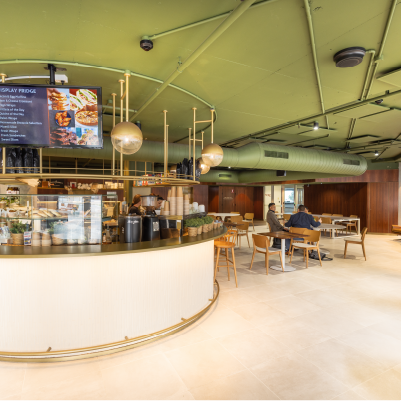
545 Queen Street’s impressive 6.0-star rating in April was the culmination years of sustainability planning and energy saving initiatives, in addition to ongoing consultation with Australian energy solutions provider, Conservia.
Conservia was engaged to help save energy through the modification of the building’s existing heating, ventilation, and air conditioning (HVAC) system. Energy control strategies implemented at 545 Queen Street have included:
- Carefully monitoring individual office conditions and modifying the building’s HVAC operating system to only supply cooling/heating to required levels, instead of unnecessary high/low temperatures. This approach has allowed Cromwell to reduce the HVAC system’s chiller operation time – as well as machinery pump and fan speeds – which, in turn, has saved energy.
- Undertaking calculations regarding the ‘optimum start time’ of the HVAC system – this means tenants are greeted with the desired temperature in their office space when they first walk in the door each day, but the cooling/heating system is not turned on too early in the morning, thus reducing energy consumption.
- Similarly, calculating the ‘optimum stop’ process, so that the HVAC equipment can be powered down over time toward the end of the day, while still meeting tenants’ comfort conditions.
- Turning off the HVAC system when it is not required to be running.
- Monitoring indoor environmental quality markers in the office spaces, such as carbon dioxide levels. By better understanding these markers, the HVAC system can be programmed to pump in fresh air from outside, which naturally cools the building without the need for other elements in the cooling system to be turned on.
- Installing smart alarms that alert building users to excess energy and water usage.
Pinpointing areas of electrical overuse through automated monitoring systems, reducing the need for manual checks. - Assisting NABERS assessors to ensure all tenant exclusions are being counted.
Continuous refining of HVAC control systems through the year; ensuring no out-of-sync sensors start or stop the system unnecessarily. - Regular monthly reporting on the system’s efficiencies and NABERS estimates through the year.
This approach saved almost 80,000 kilowatt hours (kWh) in 2023, compared to the previous year, meaning greater system efficiencies, thousands of dollars saved, and less impact on the environment.
545 Queen Street tenants awarded Cromwell an overall satisfaction level an impressive 11% higher than the Tenant Survey Index.
Learn more about other properties from the Fund.



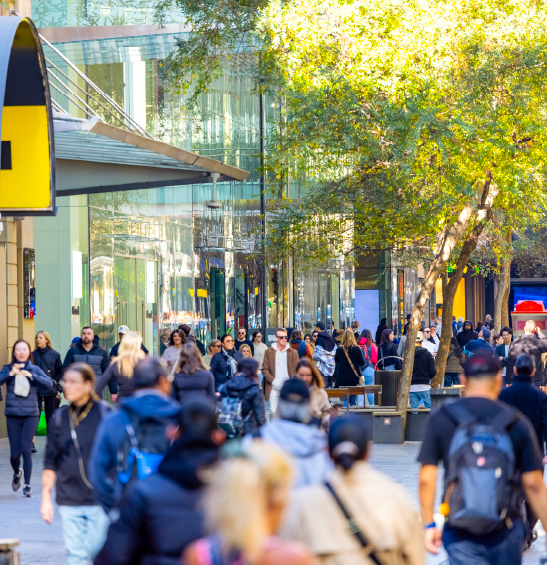





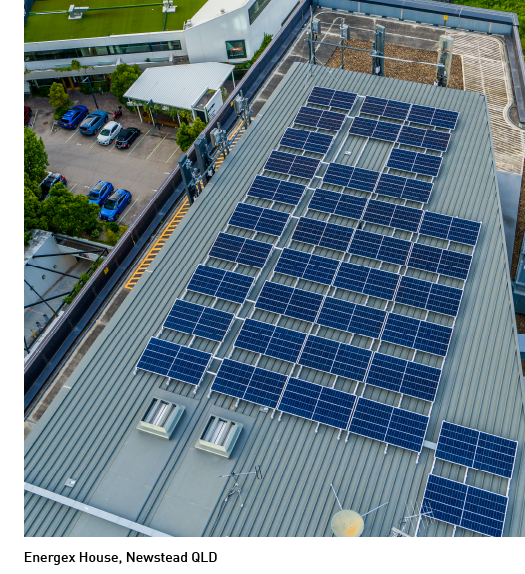 Cromwell has completed Stage 2 of our programme of works to install solar panels on buildings at locations across the country, as part of the business’s commitment to meet our long-term ESG targets.