

5846
Person typing on a laptop

Learn

December 6, 2022

Managing and mitigating risks with Cath Parker

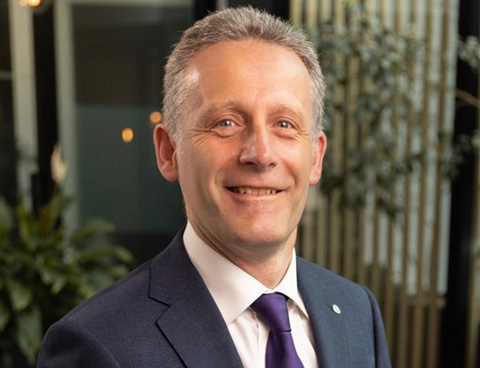
Following a successful legal career, Cath Parker developed a passion for managing and mitigating risk on an organisational scale.

Cath joined Cromwell as our Head of Risk and Compliance in 2021, and she has overseen some rapid advancements at the Group in that time – particularly in the ESG space, where she has a real desire to make a difference. Cath loves a glass of bubbly, and her two dachshunds, and finds time to give back to the community in her spare time.

Cromwell Cath Parker Head of Risk and Compliance


1. Tell us about your role. What are some of the key responsibilities you take on daily?

I’ve been with Cromwell for 18 months – and stepped into a newly created role as Cromwell’s first Australian designated head of risk. I’m responsible for our enterprise-wide risk management and compliance functions, especially relating to our AFSL obligations. Essentially, this links to ensuring our investors have the right level of protection; ensuring that all our regulatory risks are managed; and that we’re compliant where we need to be.

It’s a broad remit – because risk is present in everything that a company or individual does. You can’t silo off risk to one side because, at the end of the day, we all manage risk – from choosing to cross a road; or whether we holiday overseas; or whether we choose to invest in certain products or with certain companies. When you strip it all down, managing risk is about making good decisions, and part of my role is to assist people to do that. Our frameworks and policies are designed to support informed decisions, so that the right information is included; the right people are part of the process; and that we do things in a timely way. Similarly, being able to see the impact of that decision is important, as is being able to quickly change tact, if needed.

I really enjoy my role, because it draws together a number of functional threads. This allows us to think about risk and compliance as more than just a ‘tick a box’ exercise. Embodying good risk management leads to better decision making; it includes always being ethical and focused on the right considerations, including ESG and risk factors in our actions. Above all, we want to make sure that our investors’ interests are protected – and that our products and services reflect that priority.


2. How do you make sure that risk management at Cromwell is a day-to-day process?

It’s a mix of a ‘top-down’ and ‘bottom-up’ approaches. It starts with our Boards thinking deeply and often about the key risks that lead us to unexpected outcomes, and how much and what type of risk they decide we should take, in executing the business strategy. On the other side, we also engage with our people and include a bottom-up aspect. Everyone in the business manages risk in their individual roles, so it’s important that we consider risks at every level.

Ultimately, making risk management come alive day-to-day requires exploring the psychology of risk – it’s a fascinating topic. Managing risk largely involves humans, who all think, behave, and react differently. Trying to understand the risks that you may not see, because you have a particular bias or different set of experiences, very much requires a psychological approach.
We invest in property – bricks and mortar – but it’s ultimately our people that make us strong, and it’s up to us to make sure they are supported in doing their best work because we all want great outcomes for our investors.

Managing risk is about making good decisions, and part of my role is to assist people to do that.
Cath Parker – Head of Risk and Compliance, Risk and Compliance

3. Looking back, how did your career in risk and compliance begin?

I took a job as the first in-house lawyer with a small financial institution in Brisbane many years ago.

I’m fortunate that my role there expanded rapidly. In addition to the legal and regulatory function, I was managing multi-disciplinary teams, including securities and mortgage production; adding company secretarial and governance functions; and our financial planning business was restructured and expanded, requiring a wider remit. At the time, the regulator, APRA, was implementing changes to ensure financial institutions prioritised risk management and required licensees to have a dedicated risk management function with direct reporting lines to boards.

Before that, I was an ‘escapee’ from about 15 years of private law practice. For me, it was often frustrating to provide legal advice in a private firm environment – as it can be difficult to get under the hood of a business; you may not understand why decisions are being made. Sometimes it feels like you’re looking in through the window, rather than being in the action. I’m an extrovert, so I enjoy engaging with people and I was always drawn as a lawyer to explore the context and inner workings of clients’ businesses to make sure any advice is practical well as being legally correct.

I enjoy being part of a business; being not only an advisor but also understanding and creating strategy and implementing it. Of course, being a lawyer, regulatory stuff is interesting for me, so that’s set me up well for my current role. I do genuinely love the work that I do.


4. There have been some very public privacy/data breaches in some very large organisations recently, how does Cromwell manage risk and protect our investors? How do we minimise the chance of these kinds of hacks happening to us?

It’s about making sure that we have the fundamentals right first, which includes having strong processes and mechanisms to make our systems sound. At Cromwell, we have a three ‘lines of accountability’ approach to ensure that everyone in the business manages risk, knows their role, and that there is checking and testing to give assurance, as well as to help us continually improve.

The first line of accountability are our teams performing their roles – from creating products and providing services, dealing with investors, managing IT or accounting functions – and managing the risks relating to their role. As a risk and compliance team, or in ‘line 2’ we provide expertise, support and consider how our people can have the right boundaries and steps in place to comply with laws and manage risks.

We also make sure the right framework is in place to enable the Board and management to oversee performance and know when there are concerns. To help us monitor risk levels, our team also performs independent tests and investigations and assist managing issues.

An extra layer is the third line. This involves Cromwell obtaining independent and objective assurance, mainly via external professionals such as auditors, consultants, or certifiers. As well as meeting regulatory audit requirements, we consider particular areas of risk – cybersecurity is a good example – that are so important that we obtain extra assurance from experts to do a review or deep dive to identify if and where we should make changes; to benchmark ourselves and continually improve. So, our three lines approach defines accountability and includes focus on aspiring to always enhance our business.


5. What are some changes or shifting attitudes/trends that you currently see playing out in the governance, risk, and compliance sector?

Change, and the speed at which it occurs are the standout factors.

We know that change is constant – there will be property cycles, interest rate rises, pandemics and other headwinds – but being able to trust in your people; give them the tools to perform their roles well; and have the right framework in place to navigate unpredictability all helps in responding confidently. By definition, managing risk is responding well to impacts – both positive and negative – on the achievement of goals, so uncertainty is inherent in that. You must be comfortable with navigating uncertainty, which can be difficult, and be prepared to adapt to suit.


6. How is Cromwell responding to the growing importance of ESG for both investors and tenants? Is it a case that ESG is now as important as all other business considerations, do you think – and how do you see businesses adapting to this changing stakeholder sentiment?

Cromwell has always prioritised ESG factors as part of its business and Cromwell’s previous work in sustainability was one of the reasons I was attracted to this role.

Including ESG factors in decision-making and business processes is part of managing risk well. It’s not really that ESG of itself is as important as all other business considerations, because ESG issues, being so wide and varied, are part of all of our decisions and activities.

It’s been exciting to be closely involved in reviewing Cromwell’s forward ESG pathway including refreshing our ESG Strategy. I’ve been so impressed that everyone at Cromwell – from the Board to our people – are actively engaged, enthusiastic, and committed to playing our part in responding to critical issues, including climate change and decarbonisation. I am proud that this enthusiasm has been matched with authenticity, so that a thoughtful and pragmatic approach is taken when setting our goals. We’re about to release our ESG Strategy shortly.

While there’s a growing importance placed on ESG by investors, it’s also important for our people, just as it is important for our communities and society generally. Our response to the growing awareness of environmentally conscious investors must focus not only on reducing harm but equally, on contributing positively to the broader societal response to these urgent issues.

We’re about to release our ESG strategy shortly.
Cath Parker – Head of Risk and Compliance, Risk and Compliance

7. Where would you like to see Cromwell’s ESG strategy in five years’ time?

I’d like to see that we don’t talk about ‘ESG strategy’ at all, we just talk about strategy – because it’s integrated in every part of the business, and the outcomes we seek financially, from risk management and from environmental, social and governance related goals become more ambitious over time, are consistently achieved.


8. What’s the benefit of taking an ESG-centred approach to our investors?

The community, and the world more broadly, expects more to be done in the ESG space – so, we must constantly strive to do good and be better. From an investor perspective, financial returns are of course an imperative. Ensuring that our investment approach includes ESG issues is also part of managing physical risks to assets, such as potential climate and weather impacts. The steps we take to future-proof our buildings may also result in reduced operational costs from infrastructure that is aligned positively with environmentally positive initiatives, e.g., using solar power and implementing energy efficiency upgrades. Because ESG factors will also shape and influence the value of real estate in the future, considering ESG may become increasingly important as a potential value driver in future investment decisions and impact return outcomes.


9. What do you enjoy most about your role?

The variety of work resulting from my role is hugely stimulating but most importantly, being able to link together various issues and make them simpler and more understandable is rewarding. Undoubtedly though, it’s the people at Cromwell that make my role enjoyable. The talent and experience within the Cromwell team is incredible, but it’s a bonus that they are genuinely great humans and colleagues as well.


10. What do you do to relax? / How do you spend your time outside work?

Home’s really important to me and, like many people, COVID-19 reminded me of the importance of family and trying to get the balance between work and play right. My husband and I enjoy escaping to our pad at Kings Beach when we can, with our daughter and dachshunds, Frank and Connie, in tow. We’re also currently making up for lost overseas travel time, with a couple of quick trips this year. I’m addicted to true crime podcasts, good books and, so far, I’m yet to meet a champagne I don’t like.

Between all of that, I do try to contribute to the greater good. I’m a director on several not-for-profit boards, including YMCA Brisbane. I am also on the board of Mercy Partners, who is the overall governance body for some hospitals, schools, and community service businesses. The work that these incredible companies do is something I’m very proud to play a small part in. Importantly, these opportunities give me opportunity to continue to learn and expand my own skills which, hopefully, makes me a better Cromwell team member.

Person typing on a laptop

Learn

November 16, 2022

Arbitrage opportunities in commercial property

Stuart Cartledge


Arbitrage-Opportunities-Gerald-1-1

Meet Gerald.

Gerald doesn’t sleep well because he’s always alert to market opportunities. He’s willing to transact in the middle of the night, seeking out small gains, sometimes with little risk. While he doesn’t sleep well, he sure has the money to eat well.

Arbitrage-Opportunities-Gerald-2-1.png

We didn’t catch this guy’s name.

He appears to be less flexible and prefers to follow a ‘steady-as-she-goes’ approach to investing. He sleeps really well, but because he doesn’t benefit from some of the opportunities that Gerald identifies, he has less money and doesn’t eat as well.


Which type of investor are you?

Investing in commercial property or infrastructure assets is a long-term game, and there’s no single strategy that always wins. However, at times, market distortions create opportunities for those with a little flexibility in their investing tool kit.

Following the sell-off in listed property securities since the beginning of 2022 (largely in response to rising interest rates), listed property provides investors with an exposure to commercial property at a substantial discount to very similar exposures in less liquid alternatives.

As Gerald identified, if you’re allocating capital to property, this current opportunity must surely be worth considering.

Like most market dislocations, these opportunities arise because different investors are driving different markets, and it takes time for arbitrages to close.

The following are some examples of investments that the Cromwell Phoenix Property Securities Fund has benefitted from in the past and some lessons to learn.

Sydney Airport – lower risk as an unlisted asset?


We recently wrote about the long journey that Phoenix’s clients enjoyed as shareholders of listed infrastructure stock, Sydney Airport, which delivered an annualised return from IPO to takeover of approximately 18% p.a.


This outcome was of course enhanced by a ‘take private’ transaction that sees the asset now held by a consortium of investors including some of the biggest industry funds. So how can unlisted investors pay more for an asset that has been listed for 20 years and had its value compound so strongly for so long?

One of the key attributes that Sydney Airport now possesses that it didn’t before, is that it’s no longer a volatile asset.

Incredible, isn’t it?!


The return profile, generated from aeronautical activities, retail and car parking will be the same. The entity will be subject to the same capital market conditions, particularly rising interest costs as its debt matures, and the impact of exogenous shocks such as pandemics and wars. However, instead of being revalued daily by global markets, the value of the entity will now be assessed by a team of ‘experts’, on a far less frequent basis, most likely quarterly. Thankfully, these experts don’t have to invest their own money at their own valuations.


An asset that is only revalued occasionally looks like its risk, or volatility, is low when compared to exactly the same asset that’s being valued daily by the share market. As a result of ‘apparent’ low risk, unlisted funds can (perhaps legitimately) pay more for these assets.


GPT Group – similar assets, different pricing

The same holds in listed property securities. While we’re happy to acknowledge listed markets are sometimes just volatile for the sake of being volatile (and that does keep some of us awake at night) they must also be respected for attempting to factor in new information as efficiently as possible.

In August 2021, Australian 10-year Government Bonds were trading on a yield to maturity of around 1%. Today, they are well over 3%. The value of almost any asset is impacted by this.

The listed property market has reacted, and investors can now buy a stock, such as GPT Group (ASX:GPT), for a material discount to its underlying asset backing. At the same time, GPT manages two unlisted wholesale funds, which in some cases hold assets in common with GPT’s own balance sheet. These wholesale unlisted funds are valued at book. They too have an apparent risk that is lower than GPT, but do they really?


Redcape Hotel Group – beer does help you sleep

Redcape Hotel Group was a listed owner and operator of pubs in NSW and QLD. However, after less than two years as a listed entity, the responsible entity determined that the listed market wasn’t properly valuing the stock, so a complicated proposal to delist was announced.

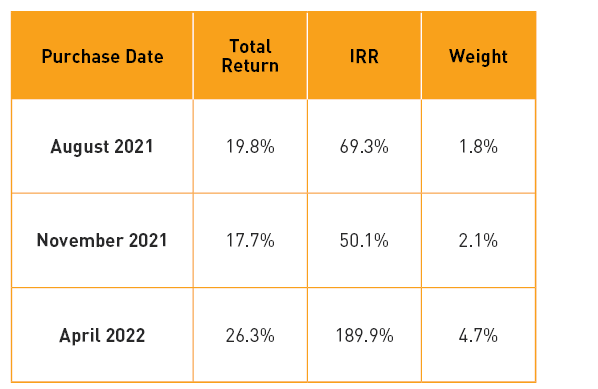
Phoenix took advantage of the transaction, to buy into the listed stock, and to ultimately sell the unlisted stock, locking in a listed versus unlisted arbitrage along the way. Our Redcape position rallied almost 40% in the first six months of 2022. Over the same period, the listed property sector fell by 23%.

We fully accept that markets, stocks and portfolio construction are complex matters. However, at times, there are low risk opportunities to take advantage of market dislocations. Listed volatility might keep us awake at night, but those investors who don’t bury their head in the sand and make decisions based on a clear understanding of exactly what they’re investing in, are likely to prosper.

Achieve long-term benchmark outperformance
Person typing on a laptop

Learn

May 26, 2022

Stock in focus: Sydney Airport

Stuart Cartledge


The successful completion of the takeover of Sydney Airport in March 2022 marks the conclusion of 20 years as a listed entity. Since the inception of the Cromwell Phoenix Property Securities Fund (the Fund) in April 2008, Sydney Airport (ASX:SYD) has been a core holding and a big positive contributor to the Fund’s returns.

From the early days, the potential upside of airports made for a compelling investment case for the Cromwell Phoenix Property Securities Fund. Airport ownership provides a myriad of opportunities to invest in commercial activities, particularly via the unregulated retail, car parking and property opportunities, which combined can often represent a greater proportion of airport revenues than aeronautical activities.

With respect to aeronautical activities, the privatisation of Sydney Airport was accompanied by the removal of price controls on aeronautical charges, enabling more flexible arrangements between airlines and the airport allowing for the provision of services to meet the demands of airlines.

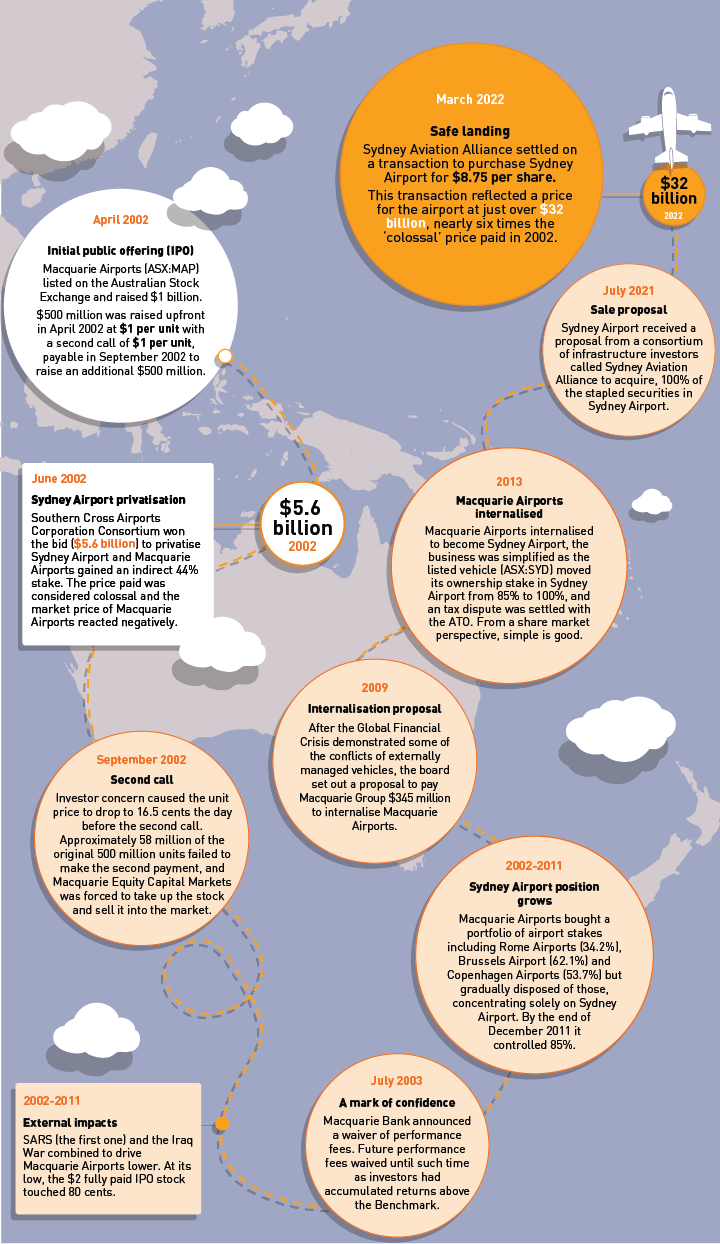
The infographic below provides a timeline of Sydney Airport’s ascent, turbulence and smooth landing.

Stock-in-focus-Sydney-airport-infographic

For an in-depth analysis of the 20-year journey and why Phoenix held a stake can be read here.