January 9, 2024
Build to Rent – an emerging asset class in Australia
Stuart Cartledge, Managing Director, Phoenix Portfolios



Stuart Cartledge, Managing Director, Phoenix Portfolios
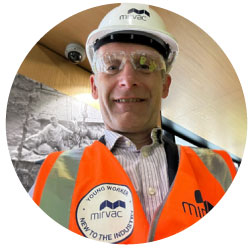
In October 2023, Phoenix participated in an Investor Day, hosted by listed REIT, Mirvac Group, that focussed on “Living Sectors”. Aside from the joy of wearing a high-vis jacket, those with an eye for detail will notice the badge, clearly indicating that the occupant of the jacket is a “Young Worker”.
In this article we share with you some of the lessons learned by that young worker from the day.
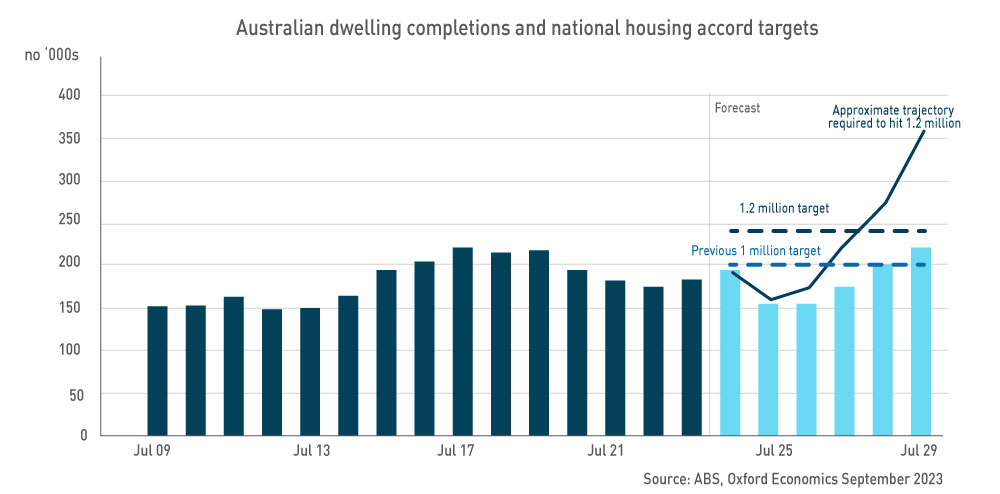
Australia has a housing crisis. We may have had an inkling of this one before the tour, but with an estimated 1,000,000 new immigrants expected to arrive in Australia over the next 3 years, requiring approximately 400,000 dwellings, we’re going to have to get cracking with the government’s new housing targets.
The chart below puts these figures into the context of what has been delivered in the past. The key takeaway for us, is that the Australian Government may well be having another Utopia moment.
With demand likely to remain robust, and rental markets as tight as a drum, the opportunity for an entity such as Mirvac Group to deliver product into this environment is compelling.
Build to Rent (BTR) is the creation of residential dwellings, typically apartments, which instead of being strata titled and sold to individuals, remain institutionally owned, professionally managed, and represent high quality rental accommodation, often including a higher level of amenity than competing product. Furthermore, a resident has security of tenure, not just through a lease, but because the entire building forms part of a long-term residential community.
An investor in BTR benefits from typically high occupancy rates, with multiple tenants delivering low volatility of income and stable valuations. Well-designed buildings should certainly benefit from relatively low maintenance capital requirements, at least initially, and certainly do not suffer from the requirement to incentivise tenants with expensive fit outs that plague the office leasing market.
While BTR may be a relatively new concept in Australia, it is a mature property sub-sector in offshore markets, particularly in the US, where it is referred to as “multi-family”.
The BTR sector is embryonic in Australia, representing less than 0.5% of housing stock across the country. This compares with a ~12% penetration in the US and around 5.4% in the UK. The opportunity set is therefore large.
For MGR, the BTR sector capitalises on the company’s 50-year residential track record of asset design and creation and has facilitated MGR to pioneer the sector in Australia. MGR has branded its BTR product with the “LIV” name, and delivered LIV Indigo, its first project in Sydney Olympic Park back in September 2020. That project is now 94% occupied. LIV Munro, opposite Queen Victoria Market in Melbourne’s CBD is the second completed project which opened at the end of last calendar year and is now 70% occupied. LIV Munro is pictured below.

The tour showed investors around LIV Munro enabling us to get a feel for the amenity, including pool, gym, dining areas, podcasting rooms and rooftop BBQ and relaxation facilities and to meet the on-site staff responsible for the community experience. We were impressed.
We also visited LIV Aston, a project under construction on the corner of Spencer Street and Flinders Street West, also in Melbourne’s CBD. Hard hat required! With a total of 474 apartments, the construction project was on time and budget and is expected to compete before the end of the current financial year. This project is almost adjacent to another, yet to be competed, BTR project currently being developed by Lendlease. It will be interesting to see these projects go head-to-head when they are both operational.
Alongside the three projects referred to above, MGR has another 2 projects under construction, one in Melbourne and the other in Brisbane, which will bring their collective exposure to BTR to approximately 2,200 apartments across 5 projects.
Financial modelling for BTR is made a little tricky by some big movements in construction costs over the last few years, which ordinarily would lower returns, combined with some offsetting and also significant market rental increases in the residential sector. For MGR, the end result is a stabilised yield on cost of 4.5% – 5.0%. Along with rental growth, maintenance costs and ancillary income, the investment return (Internal Rate of Return) is estimated to be around 7% – 7.5%.
MGR’s investment in the sector is structured in a joint venture as shown in the diagram below.
External investors sit alongside MGR, and enjoy investment returns that benefit from MGR’s active management and can take comfort that MGR’s interests are very much aligned with theirs.
In addition to the returns on capital invested in the joint venture, MGR also earns funds management, development management and asset management fees across the platform. This fee stream is more volatile but adds to the returns that MGR shareholders enjoy.

Phoenix assumes that MGR is able to build out its current pipeline of BTR opportunities and will be able to identify future projects to reach its medium term target of 5,000 apartments on the platform. Importantly, we also assume that the company will be able to continue to partner with external investors to deliver a solid outcome for all stakeholders.
We expect the BTR market to get more competitive, but with penetration rates so low and the demand for housing so high, we forecast a solid runway for the foreseeable future. The only sad thing about the day, was the discovery that BTR is typically targeting the affluent renters, aged between 25 and 39. The “young worker” on this tour is more likely a target for the over 55 land lease portfolio, which we will write about in subsequent articles.
 About Stuart Cartledge
Stuart is the Managing Director of Phoenix Portfolios and the portfolio manager for each of the company’s property portfolios. Prior to establishing the business in 2006, Stuart built a strong track record in the listed property security asset class and has been actively managing securities portfolios since 1993. Stuart holds a master’s degree in engineering and management from the University of Birmingham and is a Chartered Financial Analyst.
The content above is taken from the Cromwell Phoenix Property Securities Fund quarterly report. Sign up here to be the first to access the latest report and to gain a deeper insight into the Fund’s performance.
Fill out the form below to view the full commentary.
Head of Corporate Operations, Cromwell Property Group
As one of the senior leaders within Cromwell, Roxanne has spent years helping guide the direction of the business – including fostering an environment where staff can thrive. As workplaces continue to evolve, Roxanne continues to explore how Cromwell can be a positive work environment.

I do have a broad role here – and that means every day is different, which I love.
I am accountable for the People and Culture, Marketing, and Operations teams at Cromwell – so, in a nutshell, I’m responsible for ensuring that Cromwell has the right talent to execute on its strategy and deliver for our investors; execute on marketing strategies that attract and retain investors; and support the operations of the business from an office and administrative perspective.
Everyone has heard the old “culture eats strategy for breakfast” adage but, for me, culture eats everything; culture is everything. Without the right culture, an organisation cannot succeed – and values are at the core of that. Values are the handful of words that attempt to sum up the enormity of an organisation’s culture and vision.
It’s no secret that Cromwell has undergone a significant amount of evolution of the past few years, as all organisations do. Like any organisation, we’re not stagnant – and we had shifted significantly enough to justify redefining the terms that captured both who we were, and who we wanted to be.
And we could only achieve that by engaging everyone in the conversation. Over a three-month period, we engaged with our entire business – we asked people what our vision meant to them, who they felt we needed to be in order to achieve their best, as well as what our current strengths were that we could leverage. We also had transparent discussion about what activities we needed to stop doing.
It was a surprisingly simple process. There was general consensus about our strengths – we’re respectful, we care, we’re inclusive and we’ve got great people – as well as about those areas that we would need to focus on if we’re to achieve our vision: increased agility, collaboration, and innovation.
We solidified the values that we would live by during the next stage of our evolution as Collaborative, Progressive and Accountable.
We solidified the values that we would live by during the next stage of our evolution as Collaborative, Progressive and Accountable.Roxanne Ewing – Head of Corporate Operations, Cromwell Property Group
I think that shift started long before then, but certainly in more recent times we have seen government, regulatory bodies, talent, and the broader community really begin to hold organisations accountable for their role in diversity outcomes, as they should. Organisations, particularly large ones, have the power to make real and lasting change in this regard. And why wouldn’t they? It’s great for business.
We’re two years into our global five-year Diversity, Equity, and Inclusion journey, which has three simple goals; create a culture of respect and inclusion, foster and value diversity; and ensure equity.
No, we want people to love their time at Cromwell and when they decide it’s time to move on, leave us as better people than when they joined.
For a lot of people, work significantly contributes to their meaning, their purpose, and we’re very keen to help them fulfil that. In fact, at one of our recent Leadership Summits, we focused on how we can help our people reach a state of engagement, by meeting their psychological needs – physiological, safety, belonging, esteem and self-actualisation.
At Cromwell, this encompasses providing for people’s basic needs with good remuneration, stability, and a physically and psychologically safe work environment. Creating a culture that is inclusive, allows people to bring their true self to work, and provides challenging and interesting work is critical. It also involves giving frequent feedback and recognition and the ability for our people to continually grow and develop. And finally, we look to give people a vision and a purpose they can connect with.
We know we play a huge part in people’s lives, and we take that very seriously. We’re far more than a place to work, we really want to help our people achieve their professional and personal purpose.
What gets measured, gets done – and we have plenty of targets! In the DEI space, and as part of our commitment to the Property Champions of Change Coalition, we’re using a 40:40:20 metric, a gender pay gap and a gender pay parity target to help keep ourselves accountable to our DEI Strategy.
For those that haven’t heard the term, 40:40:20 is about achieving 40% male, 40% female, and 20% other/discretionary gender representation in our workforce – we’re seeking to achieve that outcome at all levels of our organisation and we have already done so at the Executive, Senior Leader, Team Leader, and Emerging Leader levels.
Our target to reduce the gender pay gap year-on-year is an excellent measure of whether we’re achieving equality, as well as meeting our gender targets. Since setting this target, we’ve reduced our pay gap by over 20%, and we’re still making good progress.
We’ve also set ourselves an employee engagement target of 70%. Engagement is the level of emotional connection our employees have with our business and directly correlates with the level of discretionary effort they’re willing to exert. We saw a 9% increase in employee engagement over the course of 2023 and we’re hoping to keep that trend strong.
We have an ‘agile working’ approach at Cromwell. This approach dictates how and when our people work, and we recognise that agile working comes in all different shapes and sizes and will mean different things for different people and different roles.
Our people work flexible work hours, whether they be part-time, job-sharing, or simply altering their start and finish times to suit their lifestyle. It may also include different types of time-off and/or breaks from work altogether with our Career Break option. And, of course, it pertains to location in terms to where work happens, whether that be in a Cromwell office, at an employee’s home or somewhere altogether different.
At first, we felt compelled to put all sorts of rules and guidelines around agile working, but we’ve stripped a lot of these away. Our culture is one of trust, accountability, and strong relationships between employees and their leaders. On the whole, we generally leave it to the employee and the people leader to agree an agile working approach for each individual; something that works for them.
Collaboration is one of the company values and we do love to see our people connecting and collaborating when it suits them. As a result, we’ve designed a new Brisbane office to cultivate more meaningful relationships between our teams. We’re taking up residence in one our DPF assets, 100 Creek Street. It’s a conveniently located facility with great amenities that align with what we want to offer our people.
The new office is designed specifically for our people – and around our agile working approach. It’s designed to be light, green, comfortable, accessible and to have a space for every activity our people may want to undertake. We know that our people will work remotely when they want quiet, focused time and therefore we have put a focus on oversupplying formal and informal break out and collaboration spaces in the office. We also recognise that life doesn’t stop just because you’ve chosen to work from the office, so we have incorporated wellbeing spaces such as the wellbeing and multi-faith rooms. It’s a really exciting time for Cromwell and we can’t wait to welcome people to our new workspace in January 2024.
Yes! There’s too many to list here, really. I’ll focus on a few of the more recent ones.
Over the last 12 months, we have partnered with some causes that are really closed aligned with our culture, strategy and values.
This includes Relove – a charitable organisation that partners with corporate entities to rescue furniture and whitegoods and use them to furnish homes for people experiencing domestic violence or seeking asylum. As part of our participation in ‘16 Days of Activism’ against gender-based violence, we were able to help them furnish five homes as part of their 100 Homes Appeal.
Likewise, during the FIFA Women’s World Cup, we were the principal sponsor of the Moriarty Foundations’ Indigenous Footballer’s “call time on inequality” campaign. The John Morarity Football programme is Australia’s longest running, and most successful, Indigenous football initiative, with more than 2,000 Indigenous girls and boys participating.
I’m also really proud of our work in the gender equality space. We’re an active member of the Property Champions of Change Coalition, a property industry coalition working to achieve a significant and sustainable increase in the representation and equality of women in the property industry. Though we joined the charge relatively late in the game, we have made enormous headway and currently have some of the best family-friendly policies and the second lowest gender pay gap within the coalition.
And finally, I’m proud of the major cultural shift that we’ve undergone in the last 12 to 24 months. We’ve taken firm stances on our view of diversity, equity, inclusion and respect and we’ve put our money where our mouth is and significantly improved our flexibility, wellbeing, family-friendly, remuneration, and time off benefits.
The fact that I get to do all the above! I have so much ability to influence the lives of our people, and those in our broader community. Absolutely every day is different, but the one thing they have all have in common is the power to make a difference, in one way or another.
I have been with Cromwell for a very long time and my role has never stagnated. I love the people that I work with in the Marketing, People and Culture and Operations teams as well as our broader Australian team and I’m inspired by what we’re here to do.
Real estate investor and fund manager Cromwell Property Group (ASX:CMW) (Cromwell) has delivered record high company benchmarks in the annual Global Real Estate Sustainability Benchmark (GRESB) global rankings.
GRESB is an independent organisation that provides validated ESG performance data and peer benchmarks for investors and managers to improve business intelligence, industry engagement, and strategic decision-making.
The 2023 GRESB ESG Benchmark has become increasingly competitive, growing to cover more than USD$ 8.8 trillion of gross asset value across 2,084 real estate entities. GRESB data is utilised as an investment decision-making tool by over 170 institutional investors with more than US$51 trillion AUM.
Group Head of ESG, Lara Young, said Cromwell Property Group our longstanding participation in the assessment is a good opportunity for the organisation to demonstrate its ongoing commitment to enhance its ESG performance and test itself against the worldwide market.
Participation in GRESB is Cromwell’s opportunity to measure our ESG performance against our peers, and this year’s efforts have not disappointed.Lara Young – Group Head of ESG, Cromwell Property Group
“Participation in GRESB is Cromwell’s opportunity to measure our ESG performance against our peers, and this year’s efforts have not disappointed.” said Ms. Young.

“Not only have we exceeded our previous overall scores, but for all three disclosing portfolios -CEREIT, CPRF, and Cromwell’s investment portfolio, DPT – we have increased our scores across all categories, placing them well above global and industry peer averages,” said Ms. Young.
“These results would not be possible without a huge team effort and collaboration from our investors, tenants, supply chain partners, and the broader Cromwell team, and we would once again like to share our thanks to everyone involved.”
Cromwell will publish its FY23 ESG report in early December 2023.
Skilled in asset management, mergers and acquisitions, financial structuring, financial services, and valuation, Rob has been with Cromwell for just under 12 years – serving as the Group’s Chief Investment Officer since mid-2018.

The role has changed somewhat since I was first appointed, but the current role is responsible for Group Strategy, our Australian Funds Management business, Investor Relations, and Research. I also represent Cromwell on the Boards of our joint venture companies (Phoenix and Oyster) and, in the case of Oyster, I chair the Investment Committee.
On a day-to-day basis, I’m focused on thinking through what’s next for Cromwell Property Group and our suite of Funds Management products, while ensuring our existing balance sheet and retail products are appropriately and effectively managed.
I always enjoyed studying the sciences through school so, when it came to choosing what degree to do, I decided to choose something that clicked with me; something I enjoyed learning about. I had a great time at university, but never intended on becoming a professional scientist. In the summer before my final year, I spent two months in London with a large investment bank, working in their derivatives team – and I was hooked.
I applied to a number of investment banks to join their graduate programmes, and ultimately accepted an offer to join NM Rothschild & Sons for their 1998 intake.
I joined the bank around September that year, along with my fellow graduate programme members – which included geographers, linguists, and historians, among others. We embarked on a four-month on-the-job training programme, where I was taught financial analysis, presentation skills, basic legal skills, project management skills, and spent time on secondment across the various parts of the business. From then on, I spent eight years in investment banking in London and Australia before moving into property funds management.
There are a huge number of transferrable skills between science and finance. At Uni, I was taught how to independently think and motivate myself – the days of being chased and reminded by a teacher to complete an assignment were over. No-one else was going push me, I had to do that myself.
A science-based education teaches you strong analytical and problem-solving skills that can be used across any number of careers. I was taught how to observe, research, and think critically, all kills which can be used when approaching any task, be it in a laboratory, at an office desk, or in a boardroom.
There is no denying that times are challenging and uncertain. The current volatility in interest rates and valuations is making investment decisions hard for investors, which is flowing through to low transaction volumes worldwide.
Recent data is looking more promising for Australia, but I think we still have some way to go until markets can settle down, interest rates become more stable, and investors have more confidence in deploying capital that is not just looking for opportunistic returns.
A key focus for us in this environment is to protect our balance sheet. We have undergone a programme of noncore asset sales, the proceeds of which have been applied to reduce our outstanding debt balance and reduce gearing. These sales continue, particularly in Europe, where we are looking to return capital to Australia for investment locally.
The other key focus is on leasing and maintaining our buildings to ensure we are keeping our occupancy high and that our buildings are attractive and relevant to existing and new tenants.
With uncertain and volatile markets also comes opportunity. A key strategic goal for us in the short-to-medium-term is to expand and grow our Australian Funds Management business. We are looking to create a number of new products in the short-term to take advantage of some thematic trends we are seeing domestically.
We will be looking to expand our sector horizons outside of office and take advantage of our repositioning skills to look for opportunities where we can add value and additional life to existing assets.
We also see great opportunity to boost our funds under management and skill base through platform and portfolio acquisitions, much like our recently announced transaction between Cromwell’s Direct Property Fund and the Australian Unity Diversified Property Fund.
We have a great platform, loyal investors, and a broad skill set within Cromwell, which I think places us well to take the business to the next stage of its strategic plan.
It’s a big deal for both funds, and one that took a lot of people to get to this point.
We’ve been working on the transaction for close to 12 months, working with multiple advisors across all disciplines. It has already involved every team within Cromwell and will continue to as we move towards the unitholder meeting and hopefully completion and integration into our platform.
It’s a great illustration of what can be achieved together, working alongside our colleagues, and being aligned to a common goal.
As businesses adjust to the post-COVID-19 environment and work practices, we are seeing tenant attitudes to office shifting. We are seeing larger occupiers, which traditionally fill Premium buildings with large floorplates, contract – while smaller tenants are expanding.
This is changing the adage of “flight to quality”. Historically, “quality” would have been synonymous with Premium – top grade, large floorplate office buildings with high rents, but this ignores the needs of most office occupiers, particularly those that are growing.
The majority Australian businesses (and employment) are small and medium-sized enterprises. These SMEs are in the market for a new ‘Toyota’, not a ‘Rolls-Royce’. They want the highest quality office, in the best location, within their price bracket. So “high quality office” is really the space that meets the needs and preferences of its target audience.
We are also seeing a shift to “experiences”, with tenants now increasingly focused on the whole package of location, local amenity, on floor experience and fit-out, natural light, third spaces and wellness, and proximity to transport. We are seeing this play out particularly in the city fringe areas where rents are growing strongly, given the lack of availability.
I think it’s the variety of the role and being central to the growth of the business, helping to set and drive the strategy, creating new products, and building new relationships.
When I was in investment banking, we would move from one transaction to the next, but at Cromwell I can follow through on ideas and new opportunities, helping to build out the business and develop the culture.
In a milestone for the business, Cromwell Property Group transitioned to our first ever green loan in July, as part of the rollout of our new Sustainable Finance Framework. Developed in consultation with the Commonwealth Bank of Australia and French-based multinational financial services company Societe Generale, this framework will see Cromwell apply best practices in energy efficient real estate and sustainability to our portfolio – and support the transition to a more sustainable economy more broadly.
According to the Climate Bonds Initiative, an international organisation working to mobilise global capital for climate action, green loans are defined as any type of loan instrument used to finance or re-finance projects, assets, and activities with environmental benefits.
Green loans are based on ‘use of proceeds’, with borrowing proceeds transparently earmarked for eligible ‘green’ assets1. It is global best practice for green loans to be arranged in line with the Green Loan Principles, the Climate Bonds Standard (to the extent of available criteria), as well as several country specific guidelines.
The Climate Bonds Initiative anticipates that green loan markets are poised for growth in the coming decade, as lenders and borrowers cooperate and leverage market development to support local economies to transition to become net zero and climate resilient.
The inaugural transaction under Cromwell’s new Sustainable Finance Framework involved transitioning the existing $130 million bilateral loan on the Cromwell Riverpark Trust – with Commonwealth Bank of Australia – to a green loan certified by the Climate Bonds Initiative. The debt facility for the Cromwell Riverpark Trust was extended for a further two years, with all other terms remaining the same.
Cromwell’s Group Head of ESG, Lara Young, said a huge team effort, and considerable work, went into securing this type of loan for the Cromwell Riverpark Trust, which is underpinned by Energex House in Brisbane.
“The Climate Bonds Low Carbon Buildings Criteria was designed with an ambition of a zero-carbon future in 2050. Obtaining this type of loan requires issuers, like Cromwell, to embed transformative steps, not incremental improvements, for rapid decarbonisation. Only the top 15% most emissions-efficient buildings in a city can qualify for green loans certified by the Climate Bonds Initiative(1)” said Ms. Young.
“Energex House is an industry leading Green Star 6 star, and 6-star NABERS Energy rated, building. By extending the term of the facility for a further two years under a green loan, we will continue to improve its sustainability performance.”

Cromwell has developed its Sustainable Finance Framework to support, and provide transparency to, our commitment to fund low-carbon, sustainable, efficient, and resilient buildings that meet our ESG ambitions, as well as those ambitions of our people, our tenants, and our suppliers.
Moving forward, the framework will further optimise the Group’s borrowing practices through the use of sustainable debt instruments, including green bonds and loans – like those outlined above – as well as sustainability linked bonds and loans. A copy of the document is available on the Cromwell Property Group website.
Lara Young explained that Cromwell would continue to refine its Sustainable Finance Framework over the next few years, in line with the evolving sustainable finance market and the latest legislation, standards and best practices.
“By leveraging green or sustainability linked debt, Cromwell Property Group can move significantly closer to meeting our current and future ESG responsibilities, including a Cromwell portfolio Net Zero Scope 1 and 2 target for 2035, and Net Zero across all 3 scopes by 2045.”

The new framework was developed following in-depth consultation with issuers and financial institutions to ensure that a best practice methodology could be deployed. The Commonwealth Bank of Australia and Societe Generale acted as sustainability coordinators throughout the development process.
Commonwealth Bank of Australia General Manager Corporate Finance and ESG, Jane Thomson, said sustainable finance was a rapidly growing market.
“We have partnered with many high-profile clients through their first sustainable finance transactions, and we’re thrilled to support Cromwell to develop a framework that reflects their business objectives and sustainability strategy,” Ms. Thomson said,
“One of our priorities is to play a leading role in supporting Australia’s transition to a modern, resilient, and sustainable economy, and key to that is supporting high quality green buildings in the commercial property sector.
There are enormous benefits for an organisation in accessing the vibrant sustainable finance markets and we are pleased to have supported Cromwell’s inaugural green loan under the new framework for the Energex House asset.”
Tessa Dann, Head of Sustainable Finance for Australia & New Zealand at Societe Generale, said: “as a global bank with strong focus on supporting the transition to a more sustainable economy, we are pleased to have worked as a sustainability coordinator for Cromwell Property Group to develop a Sustainable Finance Framework with a global perspective that reflects Cromwell’s presence across 14 countries.”
“The Sustainable Finance Framework adds another dimension to Cromwell’s sustainability strategy by enabling all Cromwell funds and related entities to utilise the Framework by aligning debt funding needs with sustainability outcomes.”
As outlined in the ‘ESG and Investment Strategy’ white paper by Cromwell’s Research Team, ESG and financial performance are inherently interlinked. The report demonstrated that investments which maximise positive ESG outcomes also maximise long-term performance given their contribution towards ensuring stable, well-functioning and well-governed social, environmental, and economic systems.
There is no trade-off between ESG and financial return, the report found – they go hand-in-hand. That is why it is prudent that investors seeking to protect, create, and grow long-term performance ensure that ESG is central to investment strategy decisions.
Strong ESG credentials attract high calibre tenants, helping to safeguard stability of income. For example, the Australian Government has minimum energy performance standards for all government office buildings. Australian Government tenants are only allowed to occupy office building spaces that have a 4.5 stars NABERS Energy, or equivalent, level of energy efficiency.
State governments around Australia similarly have strict energy requirements for the spaces they occupy. For Cromwell, given the large volume of government tenants we cater for, ensuring that we nvest in ESG is critical to ensuring ongoing long- term government leases.
Cromwell formalised an overarching ESG Strategy in early 2023, the process for developing which was one of consultation and collaboration, and we have sought to achieve a globally harmonised approach.
The new ESG Strategy includes targets that are crucial to our future, including decarbonising our business toward net zero and setting new baselines for areas such as energy consumption, waste management, and carbon in each of our operating regions. We have also developed region-specific targets to ensure we are addressing local concerns, such as the development and registration of an Australian Reconciliation Action Plan, with further progress and meaningful reflection occurring constantly.
As a capital light fund manager that focuses on the acquisition and uplift of existing buildings, we have a lower carbon footprint compared to organisations focused on new developments as our embodied carbon is largely limited to maintenance and refurbishment. That said, even Cromwell still strives to ensure embodied emissions are addressed. During our buildings’ lifecycles, we aim to act as responsible stewards – we generally acquire existing buildings, identify and implement the most relevant opportunities to improve their environmental efficiency and ensure they are performing well, before divestment.
In FY23, we developed a comprehensive Scope 1-3 emissions baseline and Marginal Abatement Cost Curves across all regions to understand where our major emissions sources lie in our value chain, and determine and prioritise locally appropriate and cost-effective emissions reduction activities.
We have now developed an ambitious Net Zero Strategy that encompasses our Scope 3 emissions, including our tenants’ emissions and embodied carbon, and we are excited to share updates on our progress.
1. Green Loans Australia & New Zealand, 2020 (Climate Bonds Initiative)
Read the full Sustainable Finance Framework and find out more.
Stuart Cartledge
Part of the advantage of the Cromwell Phoenix Property Securities Fund (Fund) over other REIT investment options, is that it is managed to maximise after-tax returns. This is the real measure that matters to investors. Unfortunately, the funds management industry doesn’t typically report this way, instead showing investment returns on a pre-tax basis; and it is this nuance that can lead to the under-pricing of franking credits.
While REITs have historically been trust structures, the more common structure among many large capitalisation REITs today is a combined trust and company structure. This is important, because companies pay tax on their earnings before distributing dividends and it is in this context that franking credits become important. Franking credits were introduced in Australia to stop the double taxation of company profits subsequently distributed to investors via dividends. These franking credits, representing company tax already paid, can be used by investors to reduce their tax bill. On average, over the last 10 financial years, the Fund has delivered franking credits that have “topped up” investors’ income by 0.49% per annum. Given the Fund’s positioning in Sunland, discussed below, the top up delivered in the 2023 financial year was 1.56%.
This article takes a closer look at the somewhat dry subject of franking credits and how they can help to maximise your after-tax returns.
Some of the stocks held in the portfolio are traditional corporates, subject to Australian tax, and are therefore likely to generate franking credits under the Australian dividend imputation scheme. These are valuable to investors and should influence how the portfolio is managed.
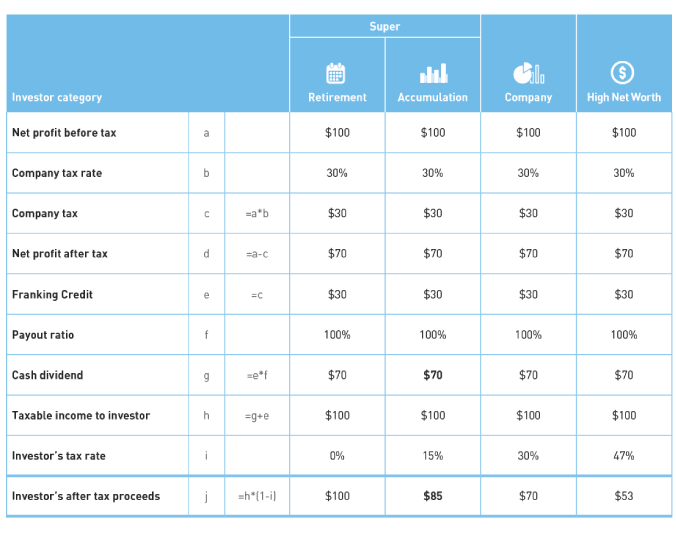
The table set out below shows the impact, with each column representing a different investor category. For example, the second column, labelled ‘Accumulation’ shows how a super fund investor in accumulation phase gets $85 of after-tax value from a $70 fully franked dividend. The performance figures for the Fund only capture the $70 of cash dividend. The uplift goes unreported but is clearly valuable.
Goodman Group (ASX:GMG) (Goodman) and Charter Hall Group (ASX:CHC) (Charter Hall) are both Australian listed property securities that derive earnings from a combination of rental income, development and funds management activities. Goodman is focused on industrial property and diversified geographically with operations in the US, Europe and Asia in addition to Australia and New Zealand. Charter Hall is diversified across multiple property sub-sectors, but the business is focused geographically on Australia.
There are of course many other differences between these two securities, but Charter Hall’s domestic focus results in its corporate earnings being subject to Australian tax, and as a result, Charter Hall pays out franking credits. Goodman’s global business, on the other hand, will likely pay at least some tax in foreign jurisdictions, and these tax payments won’t come with franking credits. All else equal, an Australian investor should prefer the domestic business, because their after-tax returns will be higher.Sometimes it gets even better.
The Cromwell Phoenix Property Securities Fund holds a position in property development company Sunland Group (ASX:SDG) (Sunland). Sunland has been a profitable business for many years and has retained some of its profits to grow the business. As a result, it has built up a significant franking credit balance.
Following a strategic review, Sunland has elected to wind up its business and return all capital to shareholders. Phoenix has held a position in Sunland for many years – we like the business and management team and believe the company has been an excellent steward of shareholders’ capital.
A wind-up of the business may seem like a drastic step, but the share market has never really valued Sunland appropriately, with the stock price trading at a material discount to the book value of the company’s assets for most of its listed life, thereby ascribing negative value to the goodwill of the business. Furthermore, a sizeable franking credit balance has also been ignored by investors. For a tax-aware investor like Phoenix, we find this appealing.
At the risk of over-simplifying the transaction, as Sunland goes through the process of completing projects and selling inventory, it will pay out all cash proceeds as a combination of fully franked dividends and a return of capital. Table 2 shows some key metrics immediately prior to the announcement of the Sunland Group Strategic Plan, and the share price reaction to the announcement on 20 October 2020.
Table 2: Key metrics
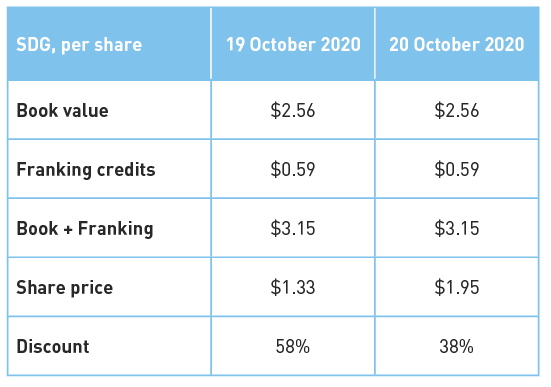
Despite the strong share price reaction to the announcement, Phoenix lifted its exposure to the stock given the increased certainty of the recognition of value.
Over the subsequent 18 months, Sunland have made significant progress towards the strategic goal and has recognised further profits from the sale or completion of several development projects, such that the eventual outcome is likely to be even better than the original estimates.
For Australian taxpayers on low tax rates, such as super funds or foundations, the value of such a transaction is ‘super-charged’. Pun intended. Portfolio construction needs to consider a myriad of factors. Most of them require estimates of the future. At least with tax, the framework for analysis is reasonably steady, and a tax-aware strategy can deliver with certainty in a somewhat uncertain world.
In the lead up to the 2019 Federal Election, Cromwell provided a brief overview and history of franking credits.
Stuart Cartledge
The Cromwell Phoenix Global Opportunities Fund assesses potential investments in a bottom-up manner, selecting the best opportunities, rather than following broad thematics.
Despite this, investment opportunities may have similar drivers – or operate in similar industries – from time-to-time. This is currently the case for the Fund’s exposure to hotel properties – these opportunities all exist for different reasons and have unique risk/reward propositions; however, the true value of each is predominantly derived from the ownership of hotels.
Before examining specific examples, it is worth touching on how to think of the value of a hotel.
Like other types of property, one way to think about valuing hotels is to apply a capitalisation rate to the earnings the asset generates. Unlike some types of property (but much more similar than some realise), hotels need to be refurbished frequently to stay up-to-date and attract customers. Any income should be adjusted lower for a normalised capital expenditure amount.
Those who buy and sell hotels also often think of valuing hotels on a “per key” basis – this describes the hotel’s value relative to the number of rooms available. A well-located, extremely high-end hotel may trade for well above $1 million per key, while a motel in the middle of nowhere would likely trade for less than $100,000 per key.
The per key valuation of a hotel can be used to compare hotel valuations to replacement cost, which is the amount required to replace the hotel from the ground up (inclusive of land). This is important because, if hotels are trading for below replacement cost, it is less likely that new hotels will be supplied in that market. Hotels are extremely sensitive to demand and supply, as anyone who has travelled in peak periods can attest to. As an example, a high-end hotel on the Las Vegas Strip is commonly available for AUD$200 per night. Booking even a basic room in that same hotel during the Las Vegas Formula One event would set you back more than AUD$3,500.
Recognition of the value of hotel properties by listed markets is held back by two components. Firstly, financial results have been negatively impacted by COVID restrictions, meaning that those looking solely at the recent income generated by many properties are underestimating the true earning power. Applying a capitalisation rate to this smaller income number is understating the property’s true value. Secondly, unlike some other forms of property, hotels are held on a company’s balance sheet at the lesser of its depreciated cost or net realisable value. If a hotel was built long ago, this may significantly understate its true value and make it difficult to identify for investors screening for discounts to book value.
With this background detail out of the way, let’s look at some examples in which the Fund invests.
Historically, the world’s leading hotel operators used to own hotel properties and manage their operations. In more recent times, these companies realised they could split the businesses, with one company managing the hotels – requiring very little capital (and, therefore, generating high returns on equity) – and one owning the more capital-intensive properties. Recognising this, Hilton Hotels spun-out its physical real estate in 2016, creating Park Hotels. At the time of the spin, Park comprised Hilton assets from all over the world. Today it is an entirely US-based portfolio of predominantly Hilton-run hotels.
Park owns some of the world’s most iconic hotels, including the 1,921-room Hilton San Francisco Union Square and the 1,878-room New York Hilton Midtown, which both dominate prime blocks in their respective cities. Perhaps more importantly, it owns two exceptional hotels in Hawaii – the Hilton Hawaiian Village Waikiki Beach Resort and the Hilton Waikoloa Village. We previously discussed the importance of replacement cost; however, these two sites are genuinely irreplaceable.
Despite the challenge in assessing the replacement cost of these hotels, a reasonable estimate for Park’s hotels is USD$735,000 per key. At the current share price, Park is trading for less than USD$250,000 per key. Using capitalisation rates from comparable property transactions ascribes a net asset value of $28.50 per share, compared with Park’s period end closing share price of $12.36. With a solid management team in place and a world class array of assets, Park Hotels appears very attractively priced.

While Sotherly Hotels is another US-based hotel owner, it is in a very different situation to Park. As its name suggests, the organisation’s hotels are based in the South of the US, predominantly in states like Florida, Georgia, and North Carolina. These hotels are smaller and more downmarket than Park’s hotels, with many branded as Doubletree by Hilton, the company’s lower upscale brand.
The investment opportunity for Sotherly Hotels is largely tied into its capital structure. Most recently, Sotherly took on too much debt and preferred equity instruments to grow assets. This proved to be ill-advised when COVID hit, and their business was effectively shut down. They stopped paying dividends on their preferred equity, which began to accrue, and the company took on emergency debt.
As things began to improve, they have been able to repay their most costly debt that was taken on in their darkest days. They have also been able to retire some of their preferred equity and have resumed paying dividends on these instruments, reducing arrears. Dividends to regular shareholders can be paid again once the arrears are repaid. At a market capitalisation of just US$37 million, the implied value per key is approximately USD$175,000. This is a long way below replacement cost. As some property investors like to say, you couldn’t build those hotels out of playdough for that price!
Sotherley’s high debt load is a risk, however, which could be destructive should the macroeconomic environment turn more negative as a meaningful reduction in cash flow could make the interest burden extremely difficult. The Fund’s position sizing of approximately 2% of assets acknowledges this risk.

Stamford Land is a Singaporean-based owner of the Stamford hotel portfolio in Australia, and it is run by eccentric Chairman CK Ow. In 2021, Mr. Ow put the entire portfolio on the market for sale. The portfolio attracted bids at multiples of the share price, but the offers did not hit Mr Ow’s target, so he u-turned and decided to raise capital at a massive discount.
Stamford has perpetually traded at a discount to the value of its properties, in part due to governance concerns, but also due to the aforementioned accounting treatment of hotels. Some of these hotels were purchased in the 1990’s and therefore their book value significantly understates their true value. Despite initially raising capital and saying he was no longer selling the hotels, Mr Ow has begun selling some assets. This includes the Stamford Circular Quay, sold as a development site, at a price of more than $2 million per key and the Stamford Plaza Auckland, sold at a price of more than $550,000 per key. Stamford has not yet reported its financial accounts since these transactions closed. When it does, the book value will reflect the sale prices of these properties highlighting some of the company’s latent value.
What the Ow family will choose to do with the money received from these sales, or whether they will sell more properties in the future remains a mystery. However, trading at a big discount to the value of the properties, with a near term revelation of value, we maintain a holding in the company.
Keck Seng is controlled by Ho Kian Guan, one of Singapore’s 50 richest people. Keck Seng predominantly owns upscale hotels across North America and Asia – its major assets include the W Hotel San Francisco, the Sofitel New York, and the Sheraton Saigon Hotel. It also owns residential property in Macau. It has approximately zero net debt, with almost all gross debt held in the form of non-recourse mortgages tied to the US hotels.
Current earnings for these properties understate their true value due to the impact of COVID restrictions. The Sofitel New York was closed for most of 2021 and occupancy through 2022 was meaningfully below current levels. Restrictions in Macau and Vietnam have only recently been lifted and travel is still recovering to pre-covid levels. Keck Seng’s hotels are held on the balance sheet at depreciated cost. These hotels were purchased more recently than those owned by Stamford; however, book value still almost certainly understated their true value. At book value, the hotels are held at less than $175,000 a key, despite being predominantly 5-star properties. Even before considering how much this undervalues the property, Keck Seng’s book value is HKD$8.63 per share. This compares to a share price at period end of HKD$2.85.
Keck Seng’s governance is reasonable, with dividends regularly paid to shareholders and the share count remaining stable over time. Related parties are paid fair salaries and transactions seem sensible. Despite this, there is no reason why this discount is likely to close in the near term.
The stock is illiquid and, while it trades at one of the largest discounts in its history, it has always traded at somewhat of a discount to its fair value. Given the size of the discount and the quality of the underlying properties, Keck Seng appears to be a very attractive investment idea.

Hopefully, the above provides examples of the different ways the Fund is investing in hotel properties. Despite the similarities in the underlying assets held by each, they are all somewhat unique from an investment perspective. Collectively at quarter end, these four investments constituted approximately 10% of fund assets.
For the period, they added a small amount of value relative to global indices, however as described above, they still appear to be attractive investment propositions.
Read more about the Cromwell Phoenix Global Opportunities Fund (Fund), including where to locate the product disclosure statement (PDS) and target market determination (TMD). Investors should consider the PDS in deciding whether to acquire, or to continue to hold units in the Fund.
She was named Young Person of the Year by the Construction Leadership Council (CLC) in 2022, and Energy and Carbon Leader of the Year at the 2021 edie Awards – the United Kingdom’s industry leading sustainability awards –and since 2021 has been the Chair of the Carbon Champion Review Panel, which is convened by the Institution of Civil Engineers (ICE).

As it is for many other people, I find that no two days are alike in my role. My key responsibility is to ensure the delivery of the ESG ambitions and commitments that Cromwell has set out while continually building on this ambition. That entails working closely with every facet of the business, and our value chain, to fully integrate ESG into everything we do.
I am committed to ensuring that we aren’t just talking ESG but delivering tangible action to drive sustained positive change. To achieve this, we need everyone to fully understand what ESG means in their world. As such, part of my role is helping to translate what ESG is and what it looks like in different areas of the business.
We don’t need everyone to be an ESG expert; however, we do need everyone to fully appreciate, and deliver on their part, to ensure Cromwell is an environmentally and socially sustainable business. Another important facet of my role, with the help of my team, is to make sure these initiatives happen at pace – and that we provide guidance, direction, and support whenever and wherever needed.
As cheesy as it sounds, I’ve always wanted to make a difference. I didn’t always know exactly how or in what field, but I’ve always known that I wanted to help make a positive change on the biggest scale possible.
After completing a Bachelor degree in Biology in Southwest France, I realised that the biggest impact I could have would be to help drive positive change within corporate organisations, and thus went on to complete an MBA specialised in sustainable development and environmental management at La Rochelle International Business School. Following my studies, I led a variety of sustainability and ESG roles, always in the most carbon intensive industries, with the aim to achieve my ambition of helping make a difference on the biggest scale possible.
Indeed, the pace of change and maturity regarding sustainability and what it is (and isn’t) has grown exponentially, and I anticipate this will only continue. I expect the breadth of topics will also continue to expand.
For example, some in the industry can still be somewhat biased, and/or have tunnel vision, solely focusing on greenhouse gas emissions and achieving net zero; however, while reducing emissions is crucial, this cannot be at the expense of biodiversity, social value, or natural capital. These topics are all interlinked, and we cannot be successful by focusing on each in isolation. While the industry needs to remain pragmatic, we also need to balance this with a wholistic systems view.
In the spirit of ensuring we aren’t just talking about ESG but delivering tangible action, Cromwell is always actively looking to implement circular and sustainable practices, in addition to constantly seeking opportunities to reduce emissions at scale and at source. Cromwell Property Group has committed to achieve net zero for its entire portfolio for Scope 1, 2 and 3, including tenant emissions and embodied carbon, by 2045 and net zero operational control by 2035.
As a fund manager, a significant proportion of our emissions fall into to our Scope 3 footprint.
Additionally, the business has committed to continuously positively contribute to the communities it operates in and support tenants with their evolving needs. Cromwell has set targets to improve tenant-customer satisfaction to a minimum score of 80% and achieve and maintain an employee engagement score of 80% or higher across the business by 2030.
In terms of what the future holds for Cromwell, the Group recognises the industry challenges relating to environmental, social, or governance topics. While it’s not the easy option, the Group is not shying away from these challenges. As an example, despite the challenges many Cromwell is always actively looking to implement circular and sustainable practices, in addition to constantly seeking opportunities to reduce emissions at scale and at source in the industry face around data quality and availability for Scope 3 emissions, we recognise that this emission scope represents a significant part of the Group’s footprint. We are therefore proactively engaging clients and tenants to obtain Scope 3 data via the roll out of our green lease initiative. We have already achieved 24% roll-out of green leases across our CEREIT portfolio since this initiative was launched. And it’s not just about data collation, Cromwell is proactively engaging its value chain partners about volunteering opportunities within the local community often supporting them with their own ESG agendas.
Several come to mind. The corporate ESG space has suffered from a constant flow of buzz words, jargon, and acronyms that have led the topic to be inaccessible, overwhelming, and confusing for many. While understanding the nuances of the many definitions is important, there has been a significant effort to simplify and harmonise language and approaches.
There is still some way to go in this regard; however, through this effort, we have seen the ESG agenda seep into disciplines that historically it was omitted from.
This simplification effort has provided greater awareness about ESG across the general public, organisations, and governments which, in turn, adds to the increasing pressure for all to demonstrable evidence the tangible actions and ESG results they are and have delivered so far.
With this growing maturity – and understanding as to what is credible and what is greenwashing – I expect we will soon see greater accountability and assurance from regulators and policy makers on corporate ESG commitments made. This will result in raising the industry norms and standards, positive recognition for those that have delivered on their commitments and litigation and penalties for those that are unable to provide quantifiable and robust results of the ESG benefits delivered.
I’m excited about the opportunity to deliver tangible positive change at scale, and not just at Cromwell but in collaboration across the industry with our value chain. Nearly every actor in the industry is faced with the same challenges, and I’m a great advocate of not reinventing the wheel, but rather ensuring that we support and learn from each other. No single organisation can achieve this agenda alone and the opportunity to collaborate at such scale and with so many other disciplines is hugely exciting.
Cromwell’s ESG agenda is a long-term plan that will have to evolve as the ESG agenda matures over the years to come. There is no perfect plan; however, our approach to ensure we recognise, adapt and deliver as the ESG agenda evolves which will ensure Cromwell’s strategy remains aligned to the industry needs.
There are many things I enjoy about my role, but the people I get to meet, engage, and work with is the aspect I enjoy most. Successfully delivering and bringing to life an ESG strategy is a huge team effort that no one person can deliver alone. Thanks to the diversity of my role and the fact that ESG impacts every facet of the organisation and wider industry, I am fortunate to meet many brilliant and inspiring individuals from who I learn a great deal.
In this article, we examine what it means to be an active or passive investor, and compare the two styles that best represent these polar opposites, benchmark unaware and index investing.
Passive investing is the strategy traditionally employed by index funds and Exchange-Traded Funds (ETFs), whereby the manager holds a portfolio that mirrors the index, and no over or underweight strategies are employed. The investment objective of a traditional index fund or an ETF is therefore to track, but not outperform, its chosen index in the most cost effective manner possible.
Passive investing has become increasingly popular in recent years due to low fees and the average active managers’ inability to outperform over the long term. In the United States, index funds now hold nearly half of the listed share market, while the ETF sector in Australia reached a record high $26 billion in funds under management in February 2017.
Exchange Traded Funds (ETFs) are unitised investment funds that replicate an index, with the objective of mirroring the index’s returns. Units in an ETF are traded on the stock market like ordinary securities.
Conversely, active investing is a strategy whereby the manager builds the portfolio by evaluating stocks based on factors such as value, distribution, asset and manager quality. The fund manager can choose to take positions without regard to their size or benchmark weightings, including investing in companies with minor weightings, such as small capitalisation stocks.
The higher fees associated with active investing strategies should be rewarded with investment outperformance.
On a side note, active investing can also work with benchmark aware investing, to a limited extent. A benchmark aware fund manager, while restricted to selecting stocks based on the benchmark weightings, might also engage in strategic active investing by selecting stock weights within defined limits such as 5% either side of the benchmark position.
In the United States, index funds now hold nearly half of the listed share market, while the ETF sector in Australia reached a record high $26 billion in funds under management in February 2017.
Investors need some way of tracking how their investments are performing, relative to the specific market sector, and in most cases, performance is assessed against the most relevant benchmark.
A benchmark is defined by the Australian Securities Exchange (ASX) as “a collection of assets that provide a broad representation of an asset class,” acting as a barometer for its performance. As an example, many Australian Real Estate Investment Trusts (A-REITs) will benchmark their performance by either the S&P/ASX200 A-REIT index, or the wider S&P/ASX300 A-REIT index.
At 31 July 2017, the S&P/ASX300 A-REIT index comprised of 31 companies covering retail, office, industrial, logistics and specialist sectors. Each company has a specific weighting in the index, depending on market capitalisation (company size as measured by stock price). At 31 July 2017, this index had a market capitalisation of $125.3 billion in total.
An index fund manager will build a portfolio purely based on the composition of the index and the weighting of each individual stock. An index fund manager will therefore take no strategic positions and consequently will be expected to return a performance exactly the same as the relevant benchmark.
The domination of certain indices by large capitalisation stocks should be considered as it can significantly reduce diversification for an index investor.
In the case of the S&P/ASX300 A-REIT index, the top 10 index constituents accounted for 86% of the overall index as of 31 July 2017. The performance of a small number of companies therefore can have a material influence on the index’s overall return, and in an index investment strategy, can expose investors to being heavily weighted to a very small number of stocks.
Furthermore, indexes can be heavily weighted to certain sub- sectors. In the case of the S&P/ ASX300 A-REIT index, the retail sector accounts for more than 50% of the benchmark, and this too can impact on overall benchmark performance.
For example, in the year to 30 June 2017, concerns about the retail sector due to the “Amazon effect” hit large-cap retail A-REITs such as Scentre Group, Vicinity Centres and Westfield Corporation particularly hard, with returns of -13.4%, -17.3% and -21.5% respectively.
The S&P/ASX300 A-REIT index also excludes smaller REITs with market caps below $350 million. Some of these have performed well, including Centuria Metropolitan Office (up 25.5% in fiscal 2017) and Australian Unity Office Fund (up 11.4%). In fact, the median performance of the smallest eight A-REITs in the index was a positive 9.9%, although the impact on the total index return was minimal due to the much smaller weighting of these stocks.
In such an environment, benchmark unaware managers have an opportunity to outperform. Without the requirement to maintain benchmark weightings or invest exclusively in benchmark stocks, they can invest in a much wider range of stocks.
A benchmark unaware strategy also allows for the potential to reduce volatility, with the opportunity to diversify across a wider selection of stocks, and no requirement to own a “risky” stock purely because it is part of the index.
For property investors, index and benchmark unaware styles both have advantages and disadvantages, with the benefits of the former including the lower costs, comfort of tracking the index and not being reliant upon an investment manager’s skills. Yet with the performance of the S&P/ASX300 A-REIT index masking wide disparities in stock and sector weights and returns, a benchmark unaware active approach can provide skilful managers with the opportunity to potentially deliver superior returns.
Daniel relies on his extensive experience to help the company navigate the fast-paced world of information technology and understand the risks, challenges, and opportunities that come with operating in a hyper inter-connected world.

I’m the Chief Technology Officer and, though I’m based here in Australia, the remit is across the European and Singapore platforms as well. I am largely responsible for building and implementing our technology capability and IT roadmap, as well as looking at governance to support our current and future infrastructure.
Cybersecurity obviously is a large part of my role – I’d suggest that as much as 25% of my time is spent on cybersecurity initiatives, presentations, and considerations. Of course, many of our governance frameworks that relate to selecting, evaluating, or protecting technology links back to cybersecurity anyway.
It’s a very risk-based approach – we have risks that are managed at a corporate level, but we also need to embed risk assessments into every platform that we consider for implementation – as well as for all the change initiatives we undertake.
So, if there is an upgrade, or if there is some functional change that we are making to our environment, we need to consider all the risks involved.
My father had an IT consulting company, so I was always around computers as a kid. I played a lot of computer games, and I went into a technology degree following school.
After pursing another passion for a short while, I then came back to the industry working with customer relationship management systems (CRM) systems, and spent a lot of time working with manufacturing systems and in investor relations systems.
My first engagement with Cromwell was nearly 20 years ago, and I was designing and implementing an investor management system with Richard Foster, one of Cromwell’s founders. Richard and I would build these big A3 investor reports using a platform called Goldmine – which was Cromwell’s first investor relations platform.
I think I certainly have an aptitude for work in IT – I’m very good at putting things in boxes; I have a lot of skills in developing methodology and proceduralising tasks, and I have a strong technical background, which has been helpful.
Cromwell sets out an annual business strategy – and we, as a technology function, look at the strategy and how it aligns with our roadmap. For instance, if the business wants to increase funds under management, we review our current platforms and capability to examine what we can do to support that goal.
So, when we look at technology factoring into decision-making processes, data obviously plays a large role in everything that we do. Much of the data we hold is stored on platforms that the technology department is largely responsible for – in conjunction with marketing or finance (for example) or whichever team owns the information. We help oversee the security of that information, and the consistency of that information, and help business stakeholders implement governance to manage the information effectively.
A lot of the decisions that we undertake from a business perspective are around streamlining, including questions like, “can we utilise technology to generate efficiencies in the business?” And, you know, a good percentage of the effort that we apply is in trying to identify, and then achieve those efficiencies – and we often succeed.
So, I guess the first question that comes up is, “what is the sensitivity of the information that we’re protecting?”. The most sensitive data we hold is information relating to our investors, so it’s essential we have robust protections in place.
When we look at things from a cybersecurity perspective, we’re looking at four key risk areas: integrity, accessibility, unauthorised access, and unauthorised disclosure. We look at the integrity of the information to make sure that it’s not corrupted, that it’s regularly backed up, and ensuring we have enough controls to protect against deliberate or accidental actions that may compromise files or important data.
We also need to look at accessibility of data– that is, “how can we ensure staff and stakeholders can access the information they need, when they need it?” So, we have systems and interfaces that are dependent on the latest cloud technologies to ensure our staff can securely access the data they need to run the business.
We also ensure that none of the data resides in a specific single location (such as a building’s server room) – we always have data distributed geographically to ensure we can maintain access in the unlikely event of business interruption.
Just as important as accessibility, is our need protect our data from unauthorised access. The two highest profile attacks from last year (Optus and Medibank) both resulted in unauthorised access of information, followed by unauthorised disclosure of that same data. Clearly, these breaches caused significant damage to both company reputation, as well as inconvenience and risk within people’s lives. Cromwell maintains a robust landscape of measures to ensure that the only people who access our data, are those authorised to do so. These measures include tools to confirm a users’ identity (such as multi-factor authentication) as well as tools and procedures to confirm suitable access levels.
We also have a very highly regulated information security management system, ISMS.
This is the basis of our ISO 27001 certification. Every year for the past four years, we have gone through ISO 27001 certification – where an independent auditor reviews and tests our information security management system. They also make recommendations as to where improvements can be made. We have a second external organisation to help us prepare for these audits, so that we can pre-empt issues that may occur. So, we have both internal and external audit functions in that space.
In the unlikely event we experience some kind of breach, we have a cybersecurity incident response plan that is tested every year. These tests involve a wide array of stakeholders from across the business, to ensure we are all aligned to respond to any kind of cyber breach or attack. While we believe our cyber-response capabilities are strong, we are always looking for ways to enhance the way we work, and these tests often highlight opportunities for improvement. We also have a range of vendors that we engage to support us in the unlikely event of a cyber incident.
I think there’s been a lot of activity in the proptech space. Proptech is the application of technology to help optimise the way people buy, sell, research, market, experience, and manage real estate. At Cromwell, we have a proptech working group that involves participants from both Europe and Australia. My primary interest is focused on governance of our proptech initiatives.
For example, let’s imagine we decide to implement a theoretical occupant management system – a system (with associated mobile app) to allow building occupants to order coffee or lunch to their desk; get their dry cleaning picked up and delivered; turn the building lights on and off; or possibly report safety incidents, etc.
Before beginning such an implementation, we’d need to make sure that we understand the requirements and resources necessary to make the implementation successful.
In the event we start deploying the system and realise we have underestimated the resources required to be successful, the damage could be profound – and could severely impact any future technology activation. So, part of our governance is to ensure we fully understand what that implementation looks like before we take the first steps. Sometimes it can just be a matter of managing people’s expectations and enthusiasm.
There seems to be a shift towards presence-based interactions and immersive VR experiences. This is the progression of technology so that, rather than just sitting on a video call and looking at a laptop screen, attendees of a meeting from across the world can all experience sitting in an interactive, immersive virtual reality office space. We know big tech vendors such as Microsoft and Meta are spending huge amounts of money on research and development in this area. While, at the moment, these investments have largely been realised in the gaming market, it’s only a matter of time before these developments start driving mainstream change in the way we work as well.
In my view, I think in 10 years we’ll all have VR headsets to join Microsoft Teams (or Zoom) calls. While we’ll still be using a laptop for documents and information systems, our meeting experiences will be more like a virtual reality-based exercise. We’ll be able join meetings in virtual rooms; we’ll be able to draw on whiteboards; we’ll be able to sit and turn and talk to each other. I think this will be a big improvement in driving the productivity of virtual meetings and, with the current trends in remote working, this technology will improve the productivity of many teams as a whole. It’s a really exciting time!
So, my expectation is that we’ll probably start going down that pathway. Right now, Microsoft’s not quite there, but the licenses that we are buying, and our roadmap, allows us to leverage these developments when the technology is ready.
I like that I’m genuinely able to make a difference. When we sit down as a team to look at a problem, we know that we’ll be able to solve that problem and drive an initiative through to achieving a positive outcome for the business.
My background is in consulting, so I’ve always been able to go and make a difference in businesses. However, in consulting, you find that you just go from organisation to organisation to organisation, making a difference in the same space over and over – you are rarely able to build upon your past accomplishments. At Cromwell, this is an ongoing journey and we’re continually able to leverage the team’s past achievements to improve the future of the business.