Stuart Cartledge, Managing Director, Phoenix Portfolios
Market Commentary
The S&P/ASX 300 A-REIT Accumulation Index rose 13.4% over the June quarter outperforming the broader equity market, despite the S&P ASX 300 Index returning a creditable 9.5%. During the period, many of the global macroeconomic and geopolitical fears that were gripping the market somewhat dissipated, at least in terms of stock market returns.
The benchmark is dominated by Industrial heavyweight Goodman Group (GMG), which recovered strongly over the quarter, closing 21.0% higher, almost recovering to where it began 2025. The more conducive market environment also helped other property fund managers. Qualitas Limited (QAL), led the way, gaining 45.6%, despite limited company specific news. Solid residential house price growth is supportive of QAL’s business. Charter Hall Group (CHC) was also an outperformer, adding 20.1%. A more stable valuation environment and lowered macroeconomic concerns are a pleasant change for CHC’s business. Alternatively, HMC Capital Limited (HMC) was a meaningful underperformer, losing 18.1%, with ongoing issues across its healthcare property business, due to major tenant, Healthscope’s receivership process, along with a delayed settlement of a key asset that was to seed its Energy Transition business. The CEO of that business also departed HMC. It appears as if this will no longer be the growth driver for HMC, that was once anticipated.
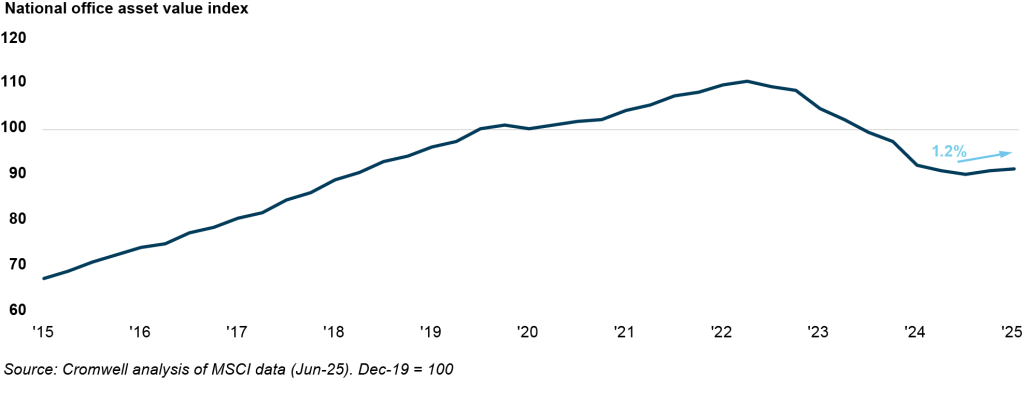
Office property owners were underperformers in the quarter. Recently released external valuations saw limited movement for office properties, with the bulk of portfolios moving within a +/- 2% band. This was characterised by face rent growth offsetting a marginal expansion in capitalisation rates. Mixed rental data however tempered returns. Recent data showed the Melbourne CBD has had the strongest net absorption, but is facing the weakest effective rent growth, with a decline of more than 8% over the past 12 months. These stats were somewhat dominated by Coles planning a move of its head office from its current suburban location to an office building near Southern Cross Railway Station. Absorption numbers were less impressive in Sydney, however effective rents grew 10% over the year, driven by a reduction in incentives. Cromwell Property Group (CMW) lost 6.1% in the quarter, whilst Dexus (DXS) gave up 3.5%. Centuria Office REIT (COF) finished 2.2% higher and Perth-exposed GDI Property Group (GDI) rose 3.9%, still meaningfully underperforming the property index.
Shopping centre owners rose sharply in the June quarter, but still managed to underperform the index. Unibail-Rodamco-Westfield (URW) gained 12.4%, with a positive response to its investor day. Somewhat sadly for local investors, URW announced it would delist from the ASX. After a multigenerational run, this marks the end of offshore Westfield-branded shopping centres’ association with Australia. Locally, Vicinity Centres (VCX) moved 12.3% higher and domestic Westfield shopping centre owner Scentre Group (SCG) lifted 6.0%. Owners of smaller neighbourhood shopping centres also produced solid returns, with Region Group (RGN) up 9.7% and Charter Hall Retail REIT (CQR) adding 10.7%.
Uniformly positive house price growth around the country supported residential property developers during the period. Cedar Woods Properties Limited (CWP) jumped 36.6% higher, as it upgraded full year earnings guidance and restocked it land bank. Peet Limited (PPC) also outperformed, gaining 19.7%, supported by the announcement of a strategic review process. AV Jennings Limited (AVJ) rose 9.9% as it heads towards completion of its takeover. Finbar Group Limited (FRI) underperformed the index, up 0.7%, as its previously announced CEO transition occurred in June.
Market outlook
The listed property sector is in good shape and provides investors with the opportunity to gain exposure to high quality commercial real estate at a discount to independently assessed values. While share market volatility may be uncomfortable at times, the offset is liquidity, enabling investors to rebalance portfolios without the risk of being trapped in illiquid vehicles.
Rising interest rates have been a headwind for many asset classes, with property, both listed and unlisted, a particularly interest rate sensitive sector. In February, the Reserve Bank of Australia made its first cut to the cash rate target since November 2020, heralding a more buoyant environment for the property sector. The February reporting season also saw stocks providing solid updates, valuation stability and an expectation of liquidity returning to the property transaction market. Long term valuations are driven by “normalised” interest costs, meaning the impact of short term hedges maturing is mostly immaterial. A second 25bp interest rate cut was delivered in May 2025. Should current expectations for further interest rate cuts eventuate, the sector should perform well.
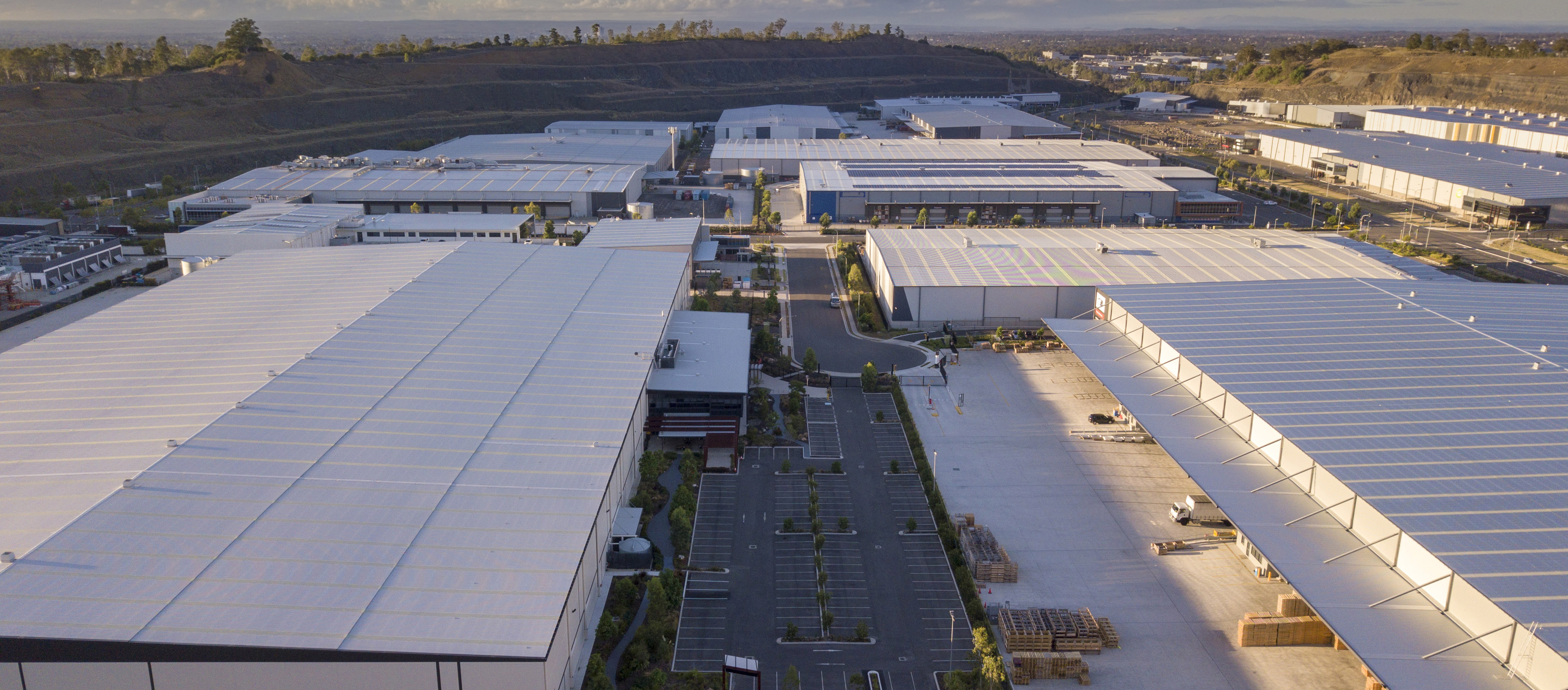
The industrial sub-sector continues to be the most sought after, given the tailwinds of e-commerce growth, the potential onshoring of key manufacturing categories and the decision by many corporates to build some redundancy into supply chains to cope with current disruptions. All of these factors are contributing to ongoing demand for industrial space, which has been evidenced by rapidly accelerating market rents and vacancy rates at historic lows of around 2% in many markets. While rental growth has recently cooled, construction costs remain elevated making additions to supply difficult and thereby prolonging robust conditions.
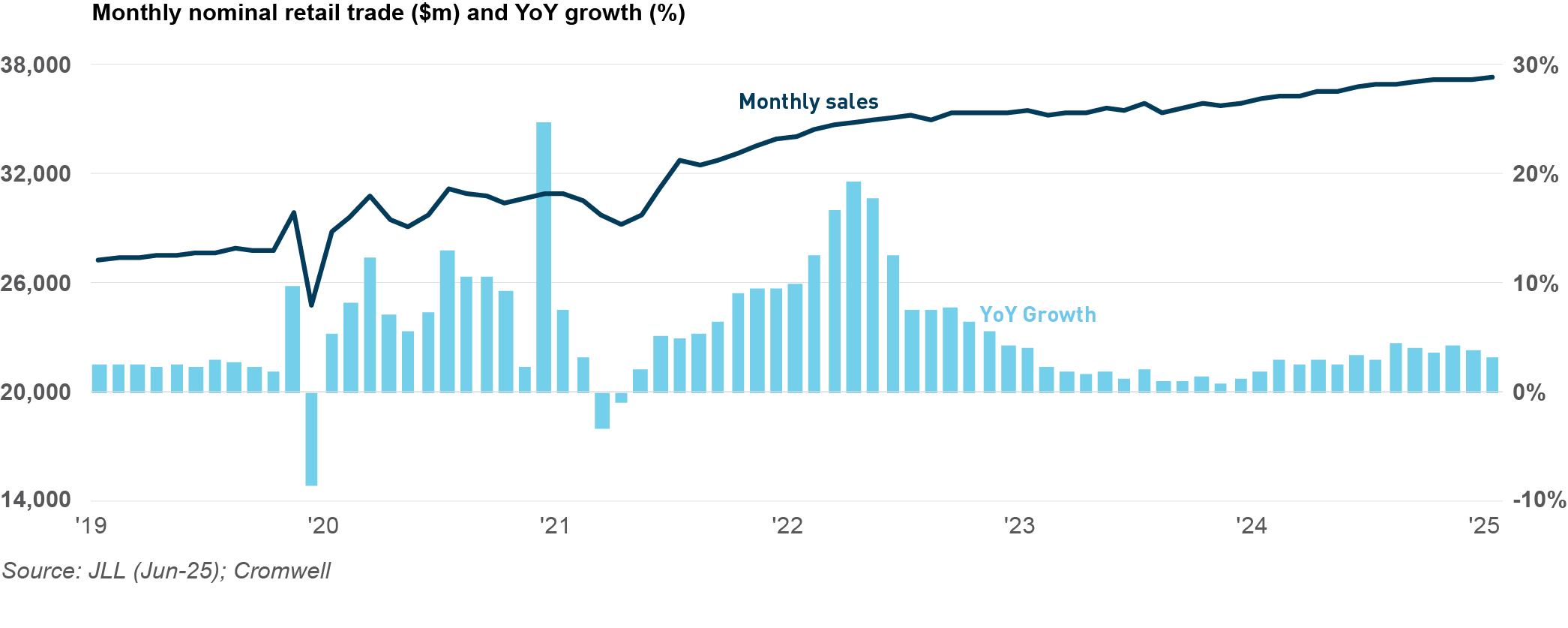
We remain cognisant of the structural changes occurring in the Retail sector with the growing penetration of online sales and the greater importance of experiential offering inside malls. Recent performance of shopping centre owners has however been strong, with consumers showing resilience and share prices moving higher. It is interesting to note the juxtaposition of very high retail sales figures despite very low levels of consumer confidence, no doubt impacted by rising costs of living. Importantly, we are also now seeing positive re-leasing spreads in shopping centres, indicating strengthening demand from retail tenants.
The jury is still out on exactly how tenants will use office space moving forward, but demand for good quality well located space remains solid and there is growing momentum from companies to get staff back into the office. Leasing activity is beginning to pick up, and transactional activity is also returning, with discounts to book values materially reduced. Incentives on new leases remain elevated.
We expect to see limited further downside to asset values in office markets but elsewhere expect market rent growth to largely offset cap rate expansion, particularly in industrial assets. Listed pricing provides a buffer to such movements.
The content above is taken from the Cromwell Phoenix Property Securities Fund quarterly report. Sign up here to be the first to access the latest report and to gain a deeper insight into the Fund’s performance.
Performance commentary
Fill out the form below to view the full commentary.
The June quarter was notable for its geopolitical instability, headlined by Israel’s strikes on Iran and the subsequent involvement of the US. While Iran’s parliament voted to close the Strait of Hormuz and impede oil supplies in retaliation, the closure has not been enforced, and Brent Crude prices are only 4% higher than a month ago1 . Tensions have cooled to some degree and economic implications have been limited, however the situation could deteriorate and affect economic growth and/or inflation in the months and quarters ahead.
The other most newsworthy events, since our last market update, occurred after the completion of the June quarter – the RBA’s July rate decision and Trump’s ‘Liberation Day 2.0’. A cautious RBA elected to adopt a “wait and see” approach, going against market pricing and economists’ expectations to keep the cash rate steady at 3.85% in a split vote (6:3). The Monetary Policy Board wanted to see more evidence that inflation is likely to stay within the target band – namely June quarter CPI (released 30 July) and June employment data (17 July). These data points will be released prior to the next RBA decision in August and, absent a shock outcome, are expected to pave the way for the third cut of 2025. The market is now expecting 64bps of cuts over the remainder of the year2.
In its decision statement, the RBA flagged elevated global uncertainty and the unknown final scope of US tariffs and associated policy responses – on this front, there has been little respite. Reciprocal tariff rates were set to come into force on 8 July (US time) following a 90-day suspension, however the pause was extended until 1 August. Adding to the complexity, Trump proposed several new tariffs in early July including a 50% tariff on copper imports, 200% on pharmaceuticals from countries with “unfair” pricing mechanisms, and 50% on all imports from Brazil. These measures do not distinguish between ally or foe, and while the announcements may be negotiating bluster, the resulting uncertainty further diminishes confidence in the US as a stable and reliable investment destination. Fortunately, the RBA has plenty of capacity to stimulate the Australian economy if this global uncertainty leads to softer domestic growth.
Fortunately, the RBA has plenty of capacity to stimulate the Australian economy if this global uncertainty leads to softer domestic growth.
Office
Analysis of JLL Research data indicates nearly 57,000 square metres (sqm) of positive net absorption was recorded across Australia’s major CBD markets in Q2 2025, marking the first quarter since 2021 where all markets saw demand for space grow. National CBD office demand has now been in positive territory for 11 of the past 12 quarters. Sydney CBD was comfortably the top performing market from a demand perspective, with 23,500 sqm of net absorption and 92,400 sqm over the last 12 months. Melbourne’s CBD benefitted from tenants centralising from Fringe markets, while the Brisbane CBD saw a number of large occupiers expand their footprint.
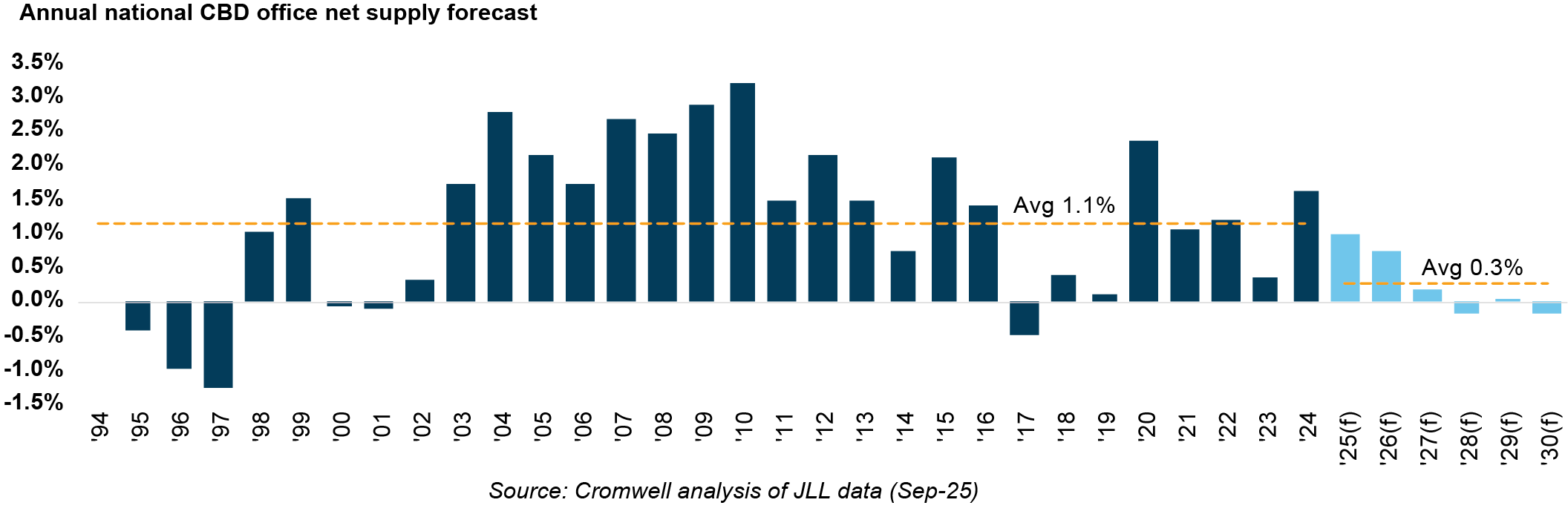
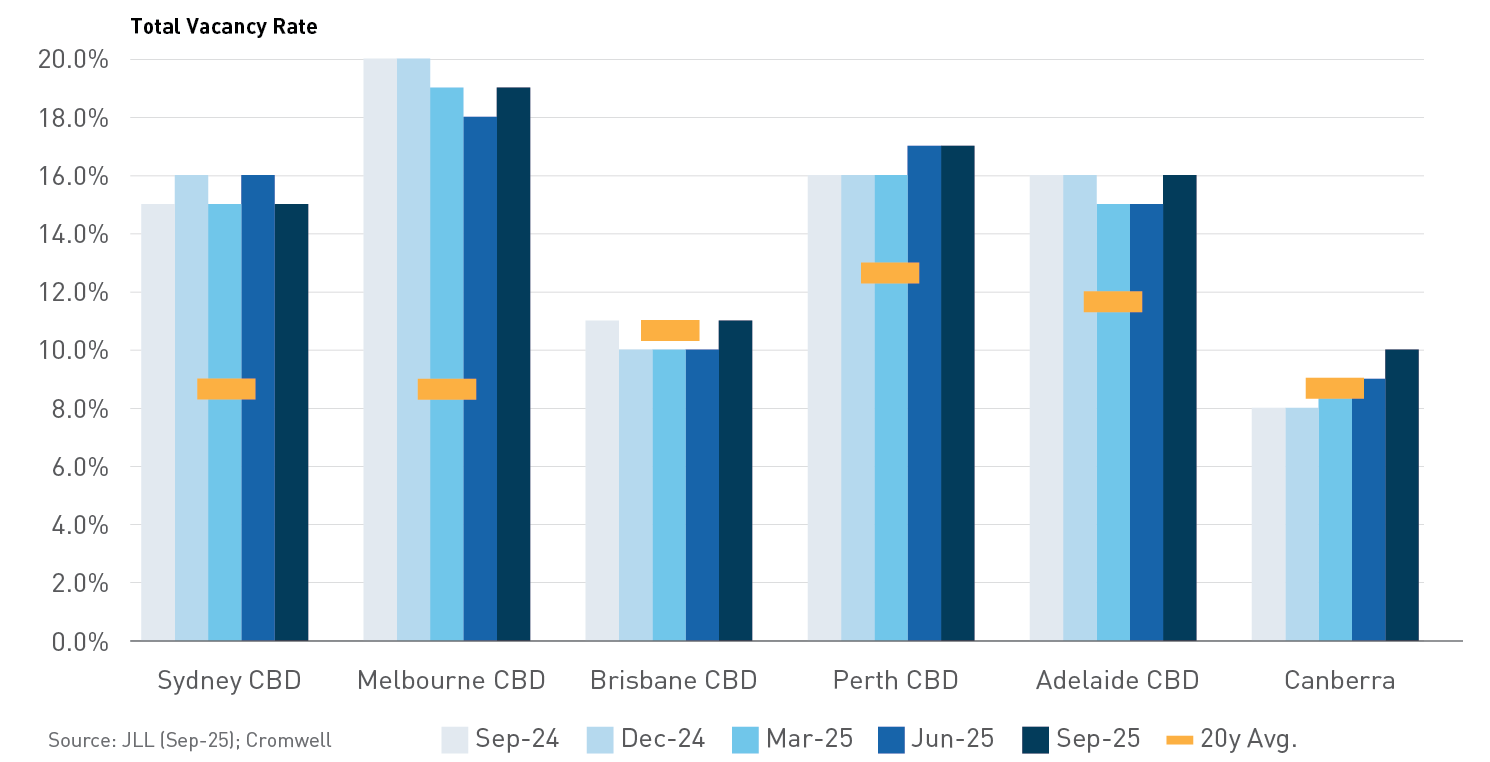
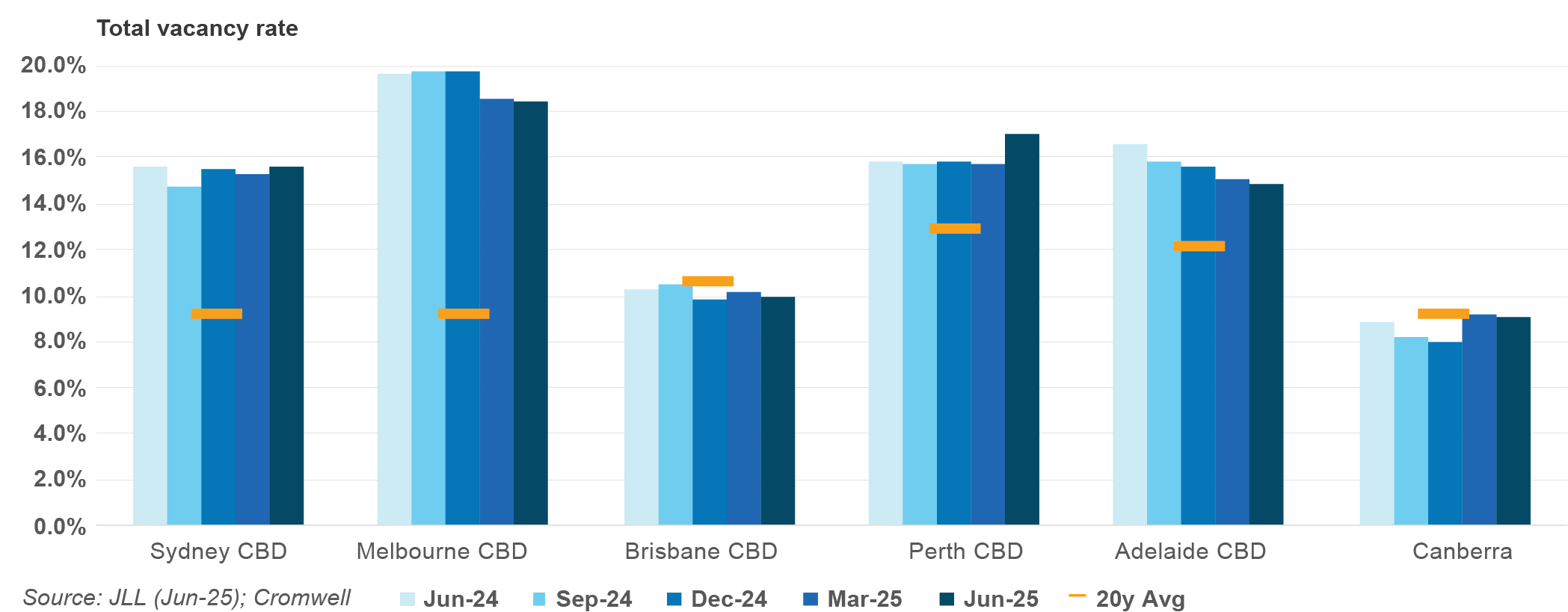
Despite the positive demand result, the national CBD vacancy rate edged 0.1% higher to 15.0% due to supply completions. Perth CBD saw the largest increase in total stock following Cbus/Brookfield’s completion of the premium development ‘Nine The Esplanade’. The rest of the increase in supply largely came from the Sydney CBD market, where a major refurbishment in Circular Quay and a luxury mixed use development were completed. While the vacancy rate increased in these two markets, the Brisbane and Adelaide CBDs both saw a tightening of 0.3% pts. In Canberra, the vacancy rate continues to vary significantly by precinct.
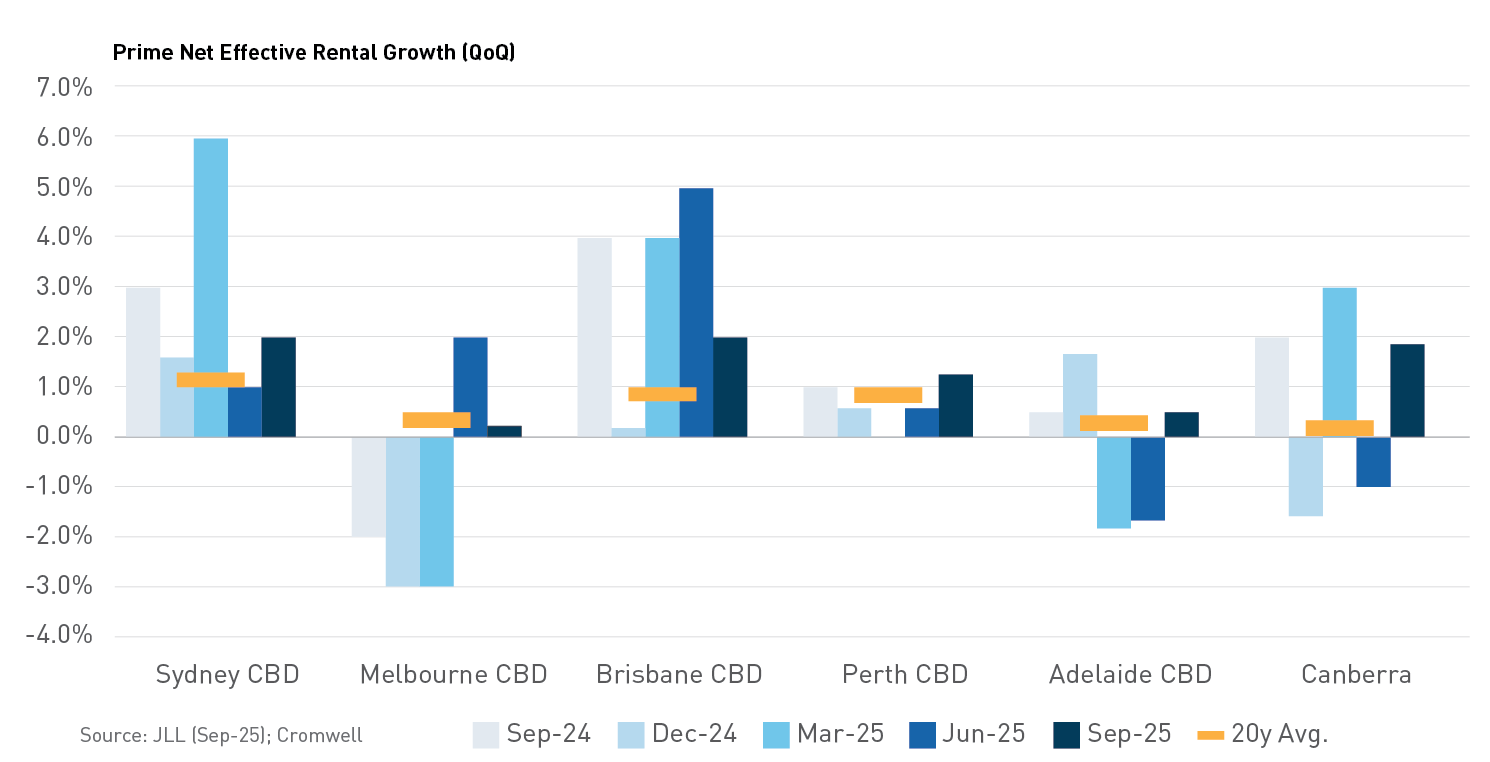
National CBD prime net face rent growth maintained its strong pace (+1.4%), taking annual growth to +6.0%. Brisbane recorded the strongest growth, reflecting the market’s low vacancy rate. Performance was also strong in the Melbourne CBD, where headline rents saw the biggest quarterly jump since 2019. Prime incentives were largely unchanged across all of the CBD markets, with Brisbane CBD (-0.3% pts) and Canberra (+0.3% pts) seeing the biggest movements. This resulted in effective rents – headline rents adjusted for incentives – growing most strongly in Brisbane and Melbourne.
Transaction volume fell to $0.9 billion for the quarter, representing the second-lowest June quarter result since the start of the data series (2007). The weak volume figure was due to a lack of major assets changing hands – the largest transaction this quarter was c$290 million, compared to more than $600 million last quarter. However, on a number of deals basis, this quarter saw more activity than last quarter. From a market perspective, Sydney CBD comprised the greatest share of national volume, while the Brisbane Fringe was the only market where volume exceeded the 10-year average.
There was further evidence that the office valuation cycle is at, or close to, the bottom. Average prime yields were unchanged in every CBD market except Brisbane, where a slight expansion of 6.5bps was recorded.
Getting a read on the strength of the consumer has become more challenging over recent months, with Cyclone Alfred (March), and the unusual timing of the Easter/Anzac Day long weekends both introducing some noise in the data. Purchases of winter clothing supported growth in the most recent monthly data (May), however the pace of growth continues to lag expectations. With the RBA choosing to remain on hold, the drag of consumer pessimism may persist a while longer.
Positively for retail real estate, the biannual vacancy rate was largely unchanged over the last six months. Regional shopping centres saw vacancy decrease from 1.6% to 1.5%, while Neighbourhoods saw a significant decrease of 0.8% pts from December to June. These improvements were offset by a large increase in vacancy rate across the Sub-Regional centre type. From a market perspective, conditions tightened across every centre type in Sydney, while Melbourne was the main driver of higher Sub-Regional vacancy.
Supply remains muted with only 13,600 sqm of Neighbourhood space added to national core retail stock over the quarter. The limited supply pipeline is supporting retail fundamentals, however rents were largely unchanged over the latest quarter. On an annual basis, growth has been strongest in S.E. Queensland.
Retail transaction volume strengthened again over the quarter to total $2.4 billion. The resulted was buoyed by the Neighbourhood sub-sector which recorded its second biggest quarter of deal volume in history at just over $860 million. The elevated volume was skewed by the $450 million sale of St Ives Shopping Village, an unusually large transaction which included some adjoining residential properties and presents development potential. Large Format Retail continued to record elevated deal volume, with significant single tenant assets such as IKEA, Costco, and Bunnings, comprising the majority of this quarter’s activity.
Sub-Regional yields compressed across every market except S.E. Queensland. This centre type has seen the biggest recovery in yields since pandemic highs, and pricing is now approaching pre-COVID levels. Neighbourhood yields also decreased in Perth, while there was no movement across the Regional shopping centre type.
Occupier take-up (gross demand) was in line with last quarter at nearly 800,000 sqm. Transport & Warehousing was the main driver of the result with over 300,000 sqm of gross demand recorded. It was also a solid result across Retail & Wholesale Trade, with demand underpinned by Kmart’s preleasing of a new major distribution centre at Sydney’s Moorebank Intermodal Precinct. This leasing deal contributed to Sydney demand outpacing its five-year average and comprising nearly 40% of national take-up. Perth was the only other market to outperform recent history, with a number of occupiers expanding into larger premises.
Rent growth slowed significantly over the quarter with 16 of 22 markets staying unchanged compared to March. All precincts across Sydney and Perth were flat, while the South East was the only sub-market in Melbourne where rents grew (+0.6%). Adelaide also only had one precinct record growth, the Outer North, which was the top performer nationally (+3.3%). Adelaide has comfortably been the top performing market over the last 12 months, but it was Brisbane that topped the growth charts in June with average growth across its three precincts rising to 1.8%. There was a slight increase in prime incentives in select markets along the East Coast.
Just over 800,000 sqm of supply was completed over the quarter, around 30% more than the quarterly average of the past five years. While supply was below average in Melbourne and Perth, Adelaide saw its second largest quarter of development in history. There is currently nearly 950,000 sqm of space under construction and due to complete in 2025. Even if all of these projects are delivered on time, 2025 will see the lowest level of new supply since 2021. Additionally, actual delivery may slip into subsequent periods given construction delays are persisting.
Industrial transaction volume strengthened after last quarter’s unusually soft showing, totalling over $2.4 billion across 90 deals. Brisbane was a standout as Chinese e-commerce giant JD.com made its first industrial investment in Australia – the Wacol Logistics Hub – for around $250 million. Adelaide also saw elevated transaction activity with the dollar volume running 33% higher than the quarterly average of the past five years. Strong demand for Brisbane assets was reflected in market yields, which compressed by 12-20bps across its three precincts. Perth saw the largest movement in yields with every precinct compressing 25bps, while Sydney and Adelaide also recorded some instances of compression.
Sign up to Insight Magazine
Stay informed about investing strategies, finance news, property market updates, and more by signing up for Insight. Build a solid foundation of investment knowledge to help you make the right investment decisions and guide you in planning your investment journey.
The global economy moved from alert to alarmed when higher-than-expected tariffs were announced in early April. While the ultimate trajectory of trade policy remains a key uncertainty, market anxiety has eased somewhat in recent months as Trump has signalled a readiness to back down if economic conditions deteriorate too sharply. Economists now expect the worst-case scenarios to be avoided, however growth is forecast to be weaker than if trade destabilisation had not occurred.
Australia is somewhat insulated from the impacts of global volatility. Most attention domestically is focused on the RBA and its willingness to stimulate the economy. Growth green shoots were seen in 2024, but momentum has slowed, particularly in consumer-oriented sectors. If a more supportive monetary policy environment is not delivered soon, the transition of the economy from public sector demand to private business investment may become bumpy.
The commercial property market continues to stabilise, with improving sentiment evident in both capital flows and leasing fundamentals. Office appears to have reached an inflection point, while retail and industrial pricing continues to firm. As confidence returns to the asset class and institutional capital re-engages, identifying compelling opportunities will increasingly depend on a deep understanding of asset quality and positioning.
How did the Cromwell Funds Management fare this quarter?
Cromwell Direct Property Fund (DPF, the Fund)
The entire DPF portfolio underwent a valuation in advance of the Fund’s Liquidity Event. Compared to prior valuations completed between June and October 2024, the six directly held assets fell by 0.60%. Two assets saw an uplift and one remained flat, primarily due to strong rental growth across Queensland markets.
Considering DPF’s partial ownership of Energex House in Brisbane (Cromwell Riverpark Trust), and the ATO building in Dandenong (Cromwell Property Trust 12), the total change was just 0.90%. Energex House remained flat, while the ATO building declined by 13%, attributed to a 1% increase in the capitalisation rate. This adjustment was made by the independent valuer based on comparable sales evidence in the Melbourne office market.
As at 30 June, DPF’s portfolio, now valued at $537.2 million on a look-through basis, is 96.6% occupied with a weighted average lease expiry of 3.4 years.
Most assets within the DPF portfolio are multi-tenanted buildings, with a significant concentration located in Brisbane. In the current market, particularly in Brisbane, we continue to observe strong effective rental growth. The portfolio’s shorter Weighted Average Lease Expiry (WALE) presents a strategic advantage, enabling the Fund to capitalise on rental reversion opportunities as leases expire and are renegotiated.
This staggered lease expiry profile allows space to be progressively repriced to current market rates, supporting earnings growth. Additionally, the shorter WALE provides flexibility to reposition assets and attract higher-paying tenants, further enhancing the portfolio’s income potential and long-term value.
Just under half of the gross passing income is derived from Government and Listed companies or their subsidiaries. Cromwell’s asset management team have negotiated over 10,000sqm of leasing this financial year across 23 transactions, with several larger deals currently in advanced stages of negotiation. The largest completed deals occurred at 545 Queen Street in Brisbane, including a 6-year lease on over 2,100sqm to a new tenant, and a 2-year lease extension on 1,600sqm to an existing Federal Government tenant.
Cromwell Property Trust 12 (C12)
Cromwell Property Trust 12 is nearing the end of its second term in October this year. In September, investors in C12 will receive a Notice of Meeting and Explanatory Memorandum, which will propose an extension of the Fund’s term through to December 2027. The Explanatory Memorandum will contain market data and commentary to help investors decide whether they wish to extend the trust term or take the asset to market. The ATO building remains 99.3% leased, with only minor ground floor vacancy and a WALE of 5.1 years. Since its inception in 2012 with an initial portfolio of three assets, C12 has delivered strong performance. Despite recent valuation adjustments, the Fund has achieved an equity internal rate of return (IRR) of approximately 11.7%, reflecting its long-term success.
Footnotes
Cromwell analysis of MarketWatch data (9 July)
ASX (8 July)
About Cromwell Direct Property Fund
Read more about Cromwell Direct Property Fund, including where to locate the product disclosure statement (PDS) and target market determination (TMD). Investors should consider the PDS and TMD in deciding whether to acquire, or to continue to hold units in the Fund.
The S&P/ASX 300 A-REIT Accumulation Index gave back some of the gains seen in the previous quarter, dropping 6.1%. Property stocks underperformed …
We often showcase the impressive results of office fitouts conducted by Cromwell within our assets, which help secure rental income by driving tenant retention and attracting new tenants. But what does the fitout process actually involve? Cromwell combines a unique blend of tenant focus and expertise, backed by a strong track record of managing and delivering complex refurbishments and integrated tenant fitouts. We collaborate with multiple stakeholders to ensure projects are completed on time, within budget, and to the highest specifications.
In this edition, we sit down with the architects from Gray Puksand, along with our dedicated Development and Leasing teams, to delve into the processes behind the Cromwell office fitout. Cromwell occupies two floors in the Cromwell Direct Property Fund’s 100 Creek Street asset in Brisbane.
What were the initial steps involved in a fitout project?
Brendan Sim, Cromwell Development Manager: We begin our fitout projects by thoroughly understanding the tenant or prospective tenants’ requirements through a series of meetings and workshops. In this case, the tenant, Cromwell wanted a post-COVID workspace that was comfortable, inclusive, functional and timeless to minimise need for future refurbishment. Key requirements included fostering in-office collaboration, creating areas for different types of work, ensuring accessibility and incorporating sustainable practices. Flexibility for future growth and reconfiguration was also essential.
With these requirements in hand, we created a comprehensive project brief and conducted a competitive design and construct tender process, ensuring that the selected contractor had the expertise to meet both budgetary and sustainability goals. Gray Puksand was chosen as the architect. From there, we collaborated closely with both contractors to refine the design, ensuring it met all the tenants needs and goals. This collaborative approach is crucial to efficiently addressing challenges and ensuring a fitout project’s success.
Since 2010, Cromwell has applied the Soft Landings Framework to ensure long-term performance and tenant-focused outcomes. This framework involves engaging stakeholders to critically appraise design and construction, delivering solutions that meet user needs and provide support through all phases of use. Key consultants, contractors, and suppliers commit to an aftercare plan beyond project completion, ensuring ongoing responsibility and interest in the project’s success.
How did you integrate a new way of working into the design?
Maria Correia, Gray Puksand: In answer to the brief, we introduced the “Cromwell Lifestyle” concept. This concept embodies a curated experience that connects people, spaces, and technology, promoting community, wellbeing, and learning. Central to our approach was a deep understanding of Cromwell’s post-COVID needs and values.
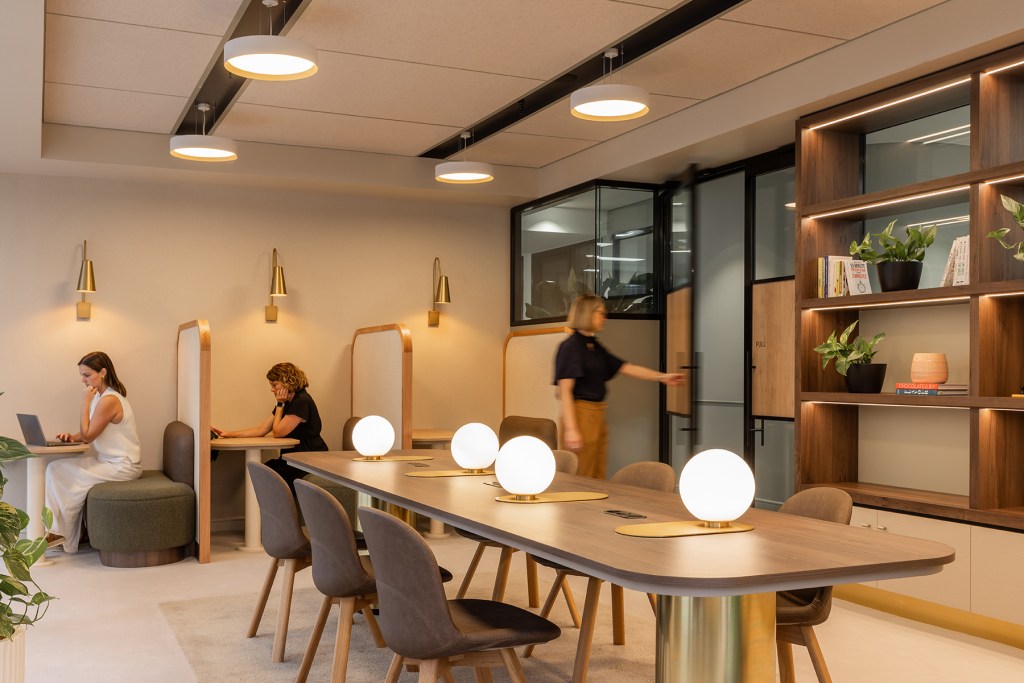
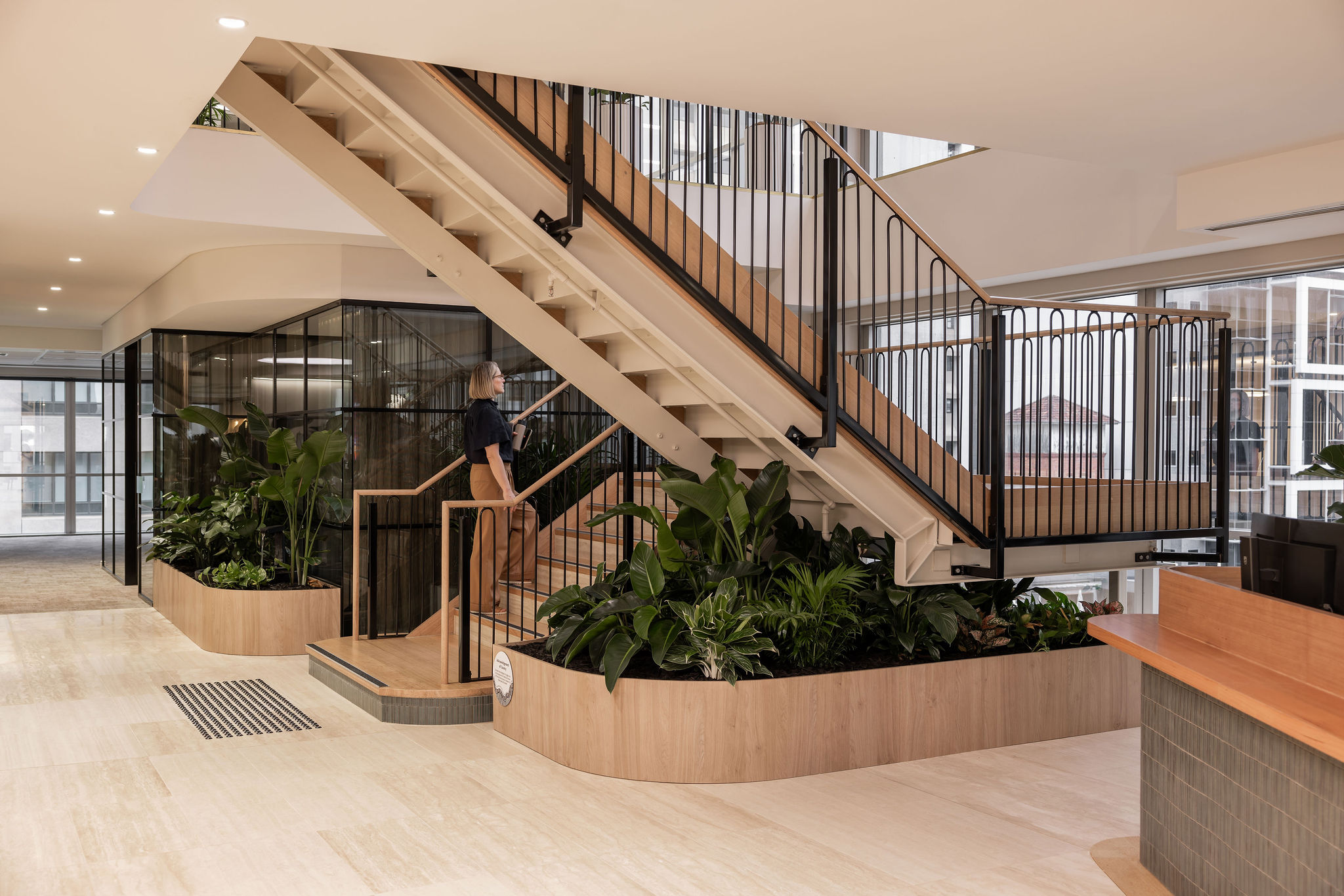
The inclusion of native plants, natural light, and a light colour palette created a sense of place that felt authentically Queensland. We addressed diverse user needs by incorporating varied settings, such as collaborative zones, focus rooms, a sunroom, a library, wellness rooms, and a multifaith room. This allows staff to find spaces that suit their work styles, enhancing productivity and comfort.
The emotional aspect of our design drew inspiration from residential and hospitality spaces, creating environments that felt special and encouraged staff to engage. By blending functional and emotional elements, we crafted a workspace that not only met but exceeded the brief, fostering a strong sense of belonging and culture among staff.
By blending functional and emotional elements, we crafted a workspace that not only met but exceeded the brief, fostering a strong sense of belonging and culture among staff.
What were the key challenges and successes of the project?
Brendan Sim, Cromwell Development Manager: We are proud of our track record of delivering projects on time, to scope and to budget. Despite having four separate contractors working simultaneously within the building, we delivered the project under budget and handed it over early.
Cromwell is a strong believer in integrating ESG principles into every aspect of our operations. With this project, we aimed to create a pinnacle example of what we can achieve on behalf of tenants and are proud to have met an extensive list of goals.
We prioritised reuse and refurbishment wherever possible to reduce fitout costs, waste and embodied carbon, recycling 92 workstations and 132 desk chairs from our existing fitout and purchasing second-hand desks and chairs from marketplace for focus rooms. The existing intertenancy staircase was refurbished and reclad. We achieved a 96% waste diversion from landfill, including the removal of the existing fitout to make way for the Cromwell fitout and ensured a fully electric site with no use of fossil fuels.
We understand that ESG encompasses more than just environmental impacts. We achieved a 50:50 gender diversity across the project delivery team and 3.75% First Nations procurement based on contract value. Furthermore, 84% of the work was completed within 7 am – 5 pm, Monday to Friday, which is more socially sustainable for people working on-site.
Maria Correia, Gray Puksand: Sustainability was a cornerstone of the project. We used climate-positive materials and implemented energy-efficient LED lighting with sensors. Cradle-to-cradle certified carpets and refurbished workstations extend the workspace’s lifecycle, contributing to a regenerative circular economy. Our approach ensures durability, easy repair, and repurposing, reducing costs and waste.
How do you optimise a fitout design?
Brendan Sim, Cromwell Development Manager: When creating a fitout, we focus on using the space effectively. This is obviously important to a tenant so that they can get the most out of a space. For example, in the Cromwell fitout we transformed what would be a “dead” space – the back of house corridor – into a functional locker and storage area. We placed all meeting rooms and focus rooms at the buildings core, while positioning office desks, where staff would spend most of their time, around the perimeter of the space to ensure ample natural light throughout the day. Modularity throughout the fit-out design was a clear focus. This will allow meeting rooms or break out spaces to be amended efficiently to accommodate workstations pods or other break out spaces as the requirements of the business evolve over time, giving Cromwell the ability to grow within the current floorplate.
Maria Correia, Gray Puksand: As we move to the AI workplace and the uncertainty of what that will bring, prioritising the ‘human’ component of the workplace will be critical. The design acknowledges the diverse needs of the workforce, recognising that individuals have varying working styles and preferences. The workplace settings at Cromwell are thoughtfully designed to encourage collaboration and inclusivity, providing spaces for socialising and connecting. Additionally, areas like the library, sunroom, wellness room, multifaith room, and focus rooms cater to individual needs, offering retreats for focus and relaxation.
What are the current trends and cultural shifts in the office landscape, and how are these influencing your designs?
Maria Correia, Gray Puksand: Cultural shifts in workspace design have evolved significantly over the past few decades, driven by changes in work practices, technology, employee preferences, and broader societal trends. There are several trends emerging some of which we have integrated into the Cromwell workspace however with the rise of the AI workplace, I think moving forward it would be good to focus on the ‘human centric’ workplace trends outlined below.
Health and Wellness Focus
With the rise of workers health and wellbeing due to the stresses of work and the sedentary nature of desk work more and more business are embracing designs that prioritise employee health and wellness, including features like ergonomic furniture, biophilic design (integrating nature into the workspace), natural light, and spaces for relaxation. We integrated this design trend throughout the Cromwell workspace.
Employee-Centred Design
Employee feedback is increasingly being sought to shape workspace design. Cromwell undertook an extensive amount of consultation with their users to arrive at the brief. We then conducted some informal group interviews to further understand user’s needs. This “user-centric” approach allowed us to all consider the preferences, needs, and behaviours of employees, fostering a sense of ownership and satisfaction. This collaborative design process informed our design approach to create open spaces for group gatherings e.g. breakout / town hall and quieter more intimate social spaces e.g. library.
Work-Life Integration
Work-life balance was often viewed as a separate concept from work, with offices being places where work and personal life were strictly separate. Modern workspace designs are focused on work-life integration, offering amenities that make the office a more comfortable and accommodating place to work, such as wellness rooms, daycare facilities, or even spaces for socialising. Our Concept of ‘The Cromwell Lifestyle’ begins to bring to life this Work-life integration to help users balance personal and professional responsibilities, leading to higher job satisfaction and engagement.
How does the fitout help with leasing activity at 100 Creek?
Stephen Rutter, Cromwell National Manager Project Leasing: We tailor our leasing strategy to each building by listening to tenants, staying attuned to market trends, and developing spaces accordingly. At 100 Creek Street, our approach includes a mix of cold shells, warm shells, and speculative fitouts when marketing spaces for lease.
Cold Shell: A blank canvas that allows tenants to customise the space to their specific needs.
Warm Shell: Provides a head start with some basic infrastructure in place.
Speculative Fitout: A plug-and-play solution, ideal for tenants without a dedicated team to manage a new fit-out, making it easier for them to move into a new tenancy.
The fit-out has significantly enhanced the appeal of 100 Creek Street. We walk prospective tenants through the space to showcase the building’s flexibility and the high-quality office fit-outs that can be achieved.
The fit-out serves as an excellent example for prospective tenants interested in cold shell spaces, demonstrating the transformation from a blank canvas to fully functional offices that meet modern working demands. This project has set a new benchmark for office spaces in the area. Combined with the Business Hub, an important facility for tenants—particularly small-to-medium tenants—who wish to use boardroom or training facilities but don’t have access to these as part of their own tenancy, and the local amenities, it makes 100 Creek Street a highly desirable location.
As of March 30, 2025, 100 Creek Street boasts a 94.2% occupancy rate.
Related posts
What’s coming for commercial property in 2025?
Santa has come and gone, prawn-induced food comas have ended, and workplaces and schools have started to hum again after the summer break……
Brisbane Fringe continues to be one of the top-performing office markets nationally, with only the Brisbane CBD and Canberra having tighter vacancy ra…
Cromwell’s green trifecta for 6-star NABERS Energy ratings
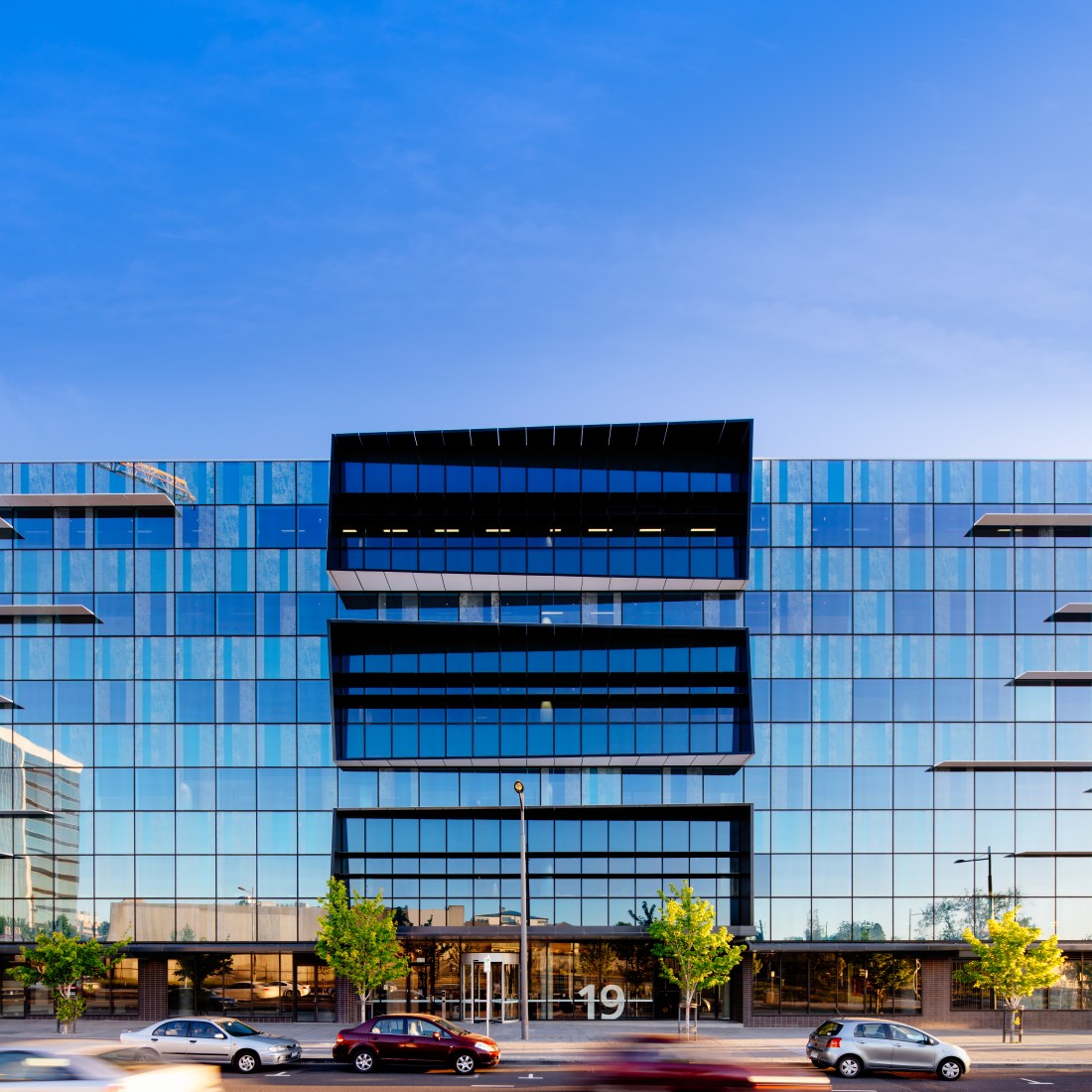
Cromwell is proud to announce significant achievements in sustainability with three more assets across our portfolios recently achieving a 6.0-star NABERS Energy rating: 540 Wickham Street in Fortitude Valley, 420 Flinders Street in Townsville, and 19 George Street in Dandenong.
NABERS (National Australian Built Environment Rating System) offers reliable and comparable sustainability measurements across various building sectors. In Australia, a NABERS Energy rating is mandatory for office buildings over 1,000 square metres being sold or leased, with 6.0-stars being the highest achievable rating. Achieving a high NABERS rating is not just a regulatory requirement but a mark of excellence in environmental performance. Top-rated NABERS buildings are highly sought after by blue-chip and government tenants, underscoring their value and desirability. These ratings signify a commitment to sustainability, leading to significant cost savings, enhanced marketability, and a positive environmental impact.
Our property team continually explores ways to optimise energy efficiencies and future-proof our assets to allow us to continue to deliver financial returns for investors while reducing environmental impacts. This proactive approach ensures that our buildings meet the highest standards of sustainability, as evidenced by our recent 6.0-star NABERS Energy ratings.
HQ North, 540 Wickham Street, Fortitude Valley
The team has been continuously optimising our HQ North asset through various initiatives. Following the decommissioning of the gas-fired power cogeneration facility at HQ North in FY23, the operational building’s gas usage for 2024 has dropped 98%, now limited to hot water units for the End-of-Trip facilities and bathrooms.
In November 2023, we installed a 158kW capacity solar PV system, which now meets approximately 15% of the building’s annual electricity demand. Additionally, by optimising the building management system, upgrading to LED lighting in common areas, and switching to GreenPower in January 2024, we have achieved a 66% reduction in scope 2 emissions.
These combined, continuous improvement efforts have earned HQ North a prestigious 6.0-star NABERS Energy rating. We continue to seek efficiencies for the asset with the electrification of the domestic hot water units currently under review. Timing for their replacement is dependent on budget planning and a holistic evaluation of the embodied carbon across the units’ life cycle to ensure the most sustainable long-term outcome.
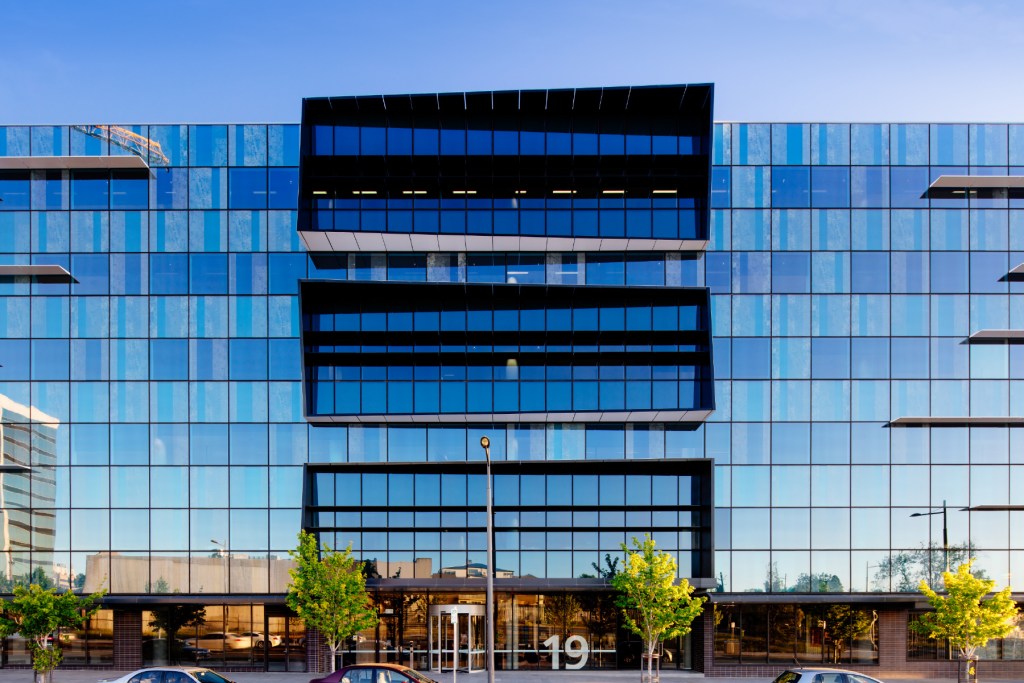
19 George Street, Dandenong
Similarly, the recent investment in a 100kW capacity solar PV at 19 George Street, Dandenong, is already yielding results, accounting for 9.4% of total site energy. As the system was installed partway through the year (operational for 7 months), this figure does not yet represent its full-year performance. The solar generation has helped reduce reliance on grid electricity and supported lower operational emissions and energy costs. Together with 100% accredited GreenPower, the site achieved 55.3% renewable energy use and a 6.0-star NABERS Energy rating.
Part of the Cromwell Direct Property Fund portfolio, and tenanted by a government organisation, this achievement underscores Cromwell’s commitment to sustainability and energy efficiency across both our funds and investment portfolios.
The building’s onsite solar generation plays a key role in supporting the tenant’s net zero by 2030 target, by reducing emissions associated with its tenancy. While these are considered Scope 3 emissions for the tenant, they contribute to lowering the environmental impact of leased space, a growing focus in government sustainability strategies. Cromwell’s use of 100% accredited GreenPower complements the onsite solar, further reinforcing our commitment to providing low-carbon, future-ready assets for government tenants.
420 Flinders Street, Townsville
The final asset to achieve the upgraded 6.0-star NABERS Energy rating is another Cromwell Direct Property Fund asset, 420 Flinders Street, Townsville, with 99.3% of the building’s energy now sourced from renewables. This result was supported by a strategic investment in a 39.9kW onsite solar PV system, which contributes 6.2% of the site’s total energy.
Installed in mid-2024, the system’s current performance does not yet reflect a full 12 months of operation. Despite installation challenges due to weather and structural constraints, it has delivered strong early results. Alongside 100% accredited GreenPower, the investment has significantly reduced the building’s operational emissions.
Cromwell’s commitment to sustainable excellence
Cromwell now has six assets with 6.0-star NABERS Energy ratings and six assets with 5.5-star Energy ratings within its fund and investment portfolios demonstrating our dedication to optimising our assets pushing the boundaries of what is possible in sustainable building practices. Our lowest Energy rating is a 5.0-stars, reflecting our high standards and commitment to excellence.
Related posts
What’s coming for commercial property in 2025?
Santa has come and gone, prawn-induced food comas have ended, and workplaces and schools have started to hum again after the summer break……
Brisbane Fringe continues to be one of the top-performing office markets nationally, with only the Brisbane CBD and Canberra having tighter vacancy ra…
Stuart Cartledge, Managing Director, Phoenix Portfolios
Market Commentary
The S&P/ASX 300 A-REIT Accumulation Index fell 6.6% over the March quarter under-performing the broader equity market, despite all the geopolitical tensions gripping investors’ minds.
The benchmark is dominated by Industrial heavyweight Goodman Group (GMG), which performed poorly over the quarter, closing down just over 20%. For more on GMG, see the Performance Commentary section of the latest quarterly report. Sticking with the Industrial sub-sector, while a very different investment proposition to GMG, recently listed DigiCo REIT, with its focus on digital infrastructure including data centres was also a very weak performer, down 32.6%. There is little doubt around the demand for ever increasing data centre capacity, but we also expect a significant supply response around the world, and like all things technology related, making long term forecasts is difficult. Anchored by more traditional industrial sheds, both Dexus Industria REIT (DXI) and Centuria Industrial REIT (CIP) posted positive returns of 2.0% and 3.6% respectively. CIP comprises 87 high quality assets, located in core urban infill markets and delivered like-for-like income growth of 6.4% for the first half of the 2025 financial year. The stock is benefitting from striking new leases at material premiums to expiring leases. That premium averaged 50% for the 7% of the portfolio that re-leased during the 6 months to December 2024. CIP closed the quarter at a 25% discount to its underlying book value and is well held in the Fund.
Office property owners saw a rebound from the very weak December quarter, with Dexus (DXS) up 6.3%, Centuria Office REIT up 4.6% and Mirvac Group (MGR), which holds an office-heavy investment portfolio up 11.5%. Other office names were more subdued with Abacus Group (ABG) and Cromwell Property Group both posting less than 1% falls. There is growing chatter, along with some fundamental improvements in office metrics, that the turning point in office markets is close. Depending on your perspective, it seems that owners of quality prime assets such as MGR are in the “flight to quality” camp, while owners of a wider range of office assets point to a “flight to value”. Phoenix has a blend of exposures to the office sector but is predominantly in the young and prime end of the market where cashflows look strongest.
Among the larger style shopping centre owners, Unibail-Rodamco-Westfield (URW), which owns Westfield branded centres in the USA, UK and continental Europe rose 10.3%. URW has a December year-end, so the results announced in February were for the full year. Tenant sales were up 4.5% and footfall up 2.6% over the prior year. The company also made a somewhat surprising announcement to retain its exposure to its US assets, having previously indicated a “radical reduction” in that geography. Scentre Group (SCG), owner of the domestic Westfield-branded malls, did less well and posted a small positive return for the quarter. Interestingly, SCG is looking to rezone many of its vacant land sites around its malls, having already received rezoning approval at Westfield Hornsby in Sydney and Westfield Belconnen in Canberra that now provides the opportunity for large scale residential development at both sites. Vicinity Centres (VCX) and Charter Hall Retail REIT produced solid returns over the quarter, up 7.6% and 13.7% respectively.
Property fund managers showed huge variation in outcomes over the quarter. Aside from GMG referred to elsewhere, Qualitas Limited (QAL) which focuses largely on real estate debt products, closed down 12.2%, Centuria Capital closed down 10.4%, while at the other end of the spectrum was Charter Hall Group (CHC) which closed up 12.8%. With asset values stabilising, and strong inflows via the wholesale partnerships channel, CHC upgraded guidance for the full year and now expects to deliver earnings growth of approximately 7%.
Market outlook
The listed property sector is in good shape and provides investors with the opportunity to gain exposure to high quality commercial real estate at a discount to independently assessed values. While share market volatility may be uncomfortable at times, the offset is liquidity, enabling investors to rebalance portfolios without the risk of being trapped in illiquid vehicles.
Rising interest rates have been a headwind for many asset classes, with property, both listed and unlisted, a particularly interest rate sensitive sector. In February, the Reserve Bank of Australia made its first cut to the cash rate target since November 2020, heralding a more buoyant environment for the property sector. The February reporting season also saw stocks providing solid updates, valuation stability and an expectation of liquidity returning to the property transaction market. Long term valuations are driven by “normalised” interest costs, meaning the impact of short term hedges maturing is mostly immaterial. Should current expectations for further interest rate cuts eventuate, the sector should perform well.
The industrial sub-sector continues to be the most sought after, given the tailwinds of e-commerce growth, the potential onshoring of key manufacturing categories and the decision by many corporates to build some redundancy into supply chains to cope with current disruptions. All of these factors are contributing to ongoing demand for industrial space, which has been evidenced by rapidly accelerating market rents and vacancy rates at historic lows of around 2% in many markets. While rental growth has recently cooled, construction costs remain elevated making additions to supply difficult and thereby prolonging robust conditions.
We remain cognisant of the structural changes occurring in the Retail sector with the growing penetration of online sales and the greater importance of experiential offering inside malls. Recent performance of shopping centre owners has however been strong, with consumers showing resilience and share prices moving higher. It is interesting to note the juxtaposition of very high retail sales figures despite very low levels of consumer confidence, no doubt impacted by rising costs of living. Importantly, we are also now seeing positive re-leasing spreads in shopping centres, indicating strengthening demand from retail tenants.
The jury is still out on exactly how tenants will use office space moving forward, but demand for good quality well located space remains solid and there is growing momentum from companies to get staff back into the office. Leasing activity is beginning to pick up, and transactional activity is also returning, with discounts to book values materially reduced. Incentives on new leases remain elevated.
We expect to see limited further downside to asset values in office markets but elsewhere expect market rent growth to largely offset cap rate expansion, particularly in industrial assets. Listed pricing provides a buffer to such movements.
The content above is taken from the Cromwell Phoenix Property Securities Fund quarterly report. Sign up here to be the first to access the latest report and to gain a deeper insight into the Fund’s performance.
Performance commentary
Fill out the form below to view the full commentary.
Events of the March quarter have been completely overshadowed by President Trump’s Rose Garden address on 2 April where he announced a universal 10% tariff would be applied to all US imports from 5 April, with higher tariffs to be applied from 9 April against countries with trade surpluses with the US. Taking the measures as announced, the US’s effective tariff rate is expected to increase to around 25%, a level last seen in the early 1900s2.
In the near-term, a key impact to markets and the economy is heightened volatility and uncertainty. Indeed, product exemptions and a 90-day pause on the higher tariff rates (excluding China) have already been announced. While one of Trump’s stated objectives is to incentivise investment into US manufacturing, it will be challenging for companies to commit substantial capital and resources when the landscape could shift significantly by the time these words go to print, let alone the several years which would be required to reorganise supply chains and build facilities.
Equity and bond markets have seesawed as the prospect of stagflation – higher inflation and lower growth – shakes confidence. Positively for Australia, we’re better positioned than most to weather the storm. On the whole, direct trade impacts should be limited given the US only accounts for 4% of Australian exports3. Indirect impacts via a weaker Asian economy are a risk, and the extent of policy support in China will be closely watched. The floating Australian dollar is acting as a shock absorber, depreciating in value and enhancing the attractiveness of our key commodity exports.
Economic conditions at home are also in good shape. The labour market is healthy without being so tight as to cause inflationary wage pressures, the public sector is in a position to provide supportive spending if needed, and the RBA has scope to stimulate the economy via monetary policy. In February, the RBA made its long-awaited first interest rate cut, reducing the official cash rate to 4.1%. Looking ahead, National Australia Bank (NAB) expects further easing, forecasting a 50bps cut in May, followed by 25bps reductions in July, August, and November—potentially taking the cash rate to 2.85% by year-end. Other major banks predict a slightly slower pace, but all anticipate a more supportive interest rate environment, which bodes well for increased transactional activity and continued market recovery.
Looking ahead, National Australia Bank (NAB) expects further easing, forecasting a 50bps cut in May, followed by 25bps reductions in July, August, and November—potentially taking the cash rate to 2.85% by year-end.
Office
Analysis of JLL Research data indicates nearly 44,000 square metres (sqm) of positive net absorption was recorded across Australia’s major CBD markets in Q1 2025, marking the fifth consecutive quarter of space demand growth. The composition of demand was different from previous quarters, with Brisbane CBD the only market to contract and Melbourne CBD the top performer. This was the first time since early 2019 that Melbourne recorded the strongest growth in net demand, with the result underpinned by Coles’ 30,000 sqm centralisation from Hawthorn East into Docklands. Notably, this quarter also saw the largest gap in space demand between large4 and small occupiers nationally since before the pandemic, with large occupiers leading the way. Again, this was underpinned by leasing activity in Melbourne CBD.
The positive demand result and limited supply completions combined to lower the national CBD vacancy rate from 15.2% to 14.9%. Melbourne CBD was the big winner, with vacancy tightening by 1.2%pts. Sydney CBD vacancy also decreased, with every precinct except the Western Corridor tightening. Softer demand over the quarter led to Brisbane CBD’s vacancy rate rising, however it remains lower than the long-term average. The increase in Brisbane was driven entirely by Secondary grade stock – Prime vacancy remained at 7.3% and is below the long-term average, while Secondary vacancy increased by 0.8%pts. Canberra maintained its position as the tightest market in the country, however the vacancy rate did increase due to the completion of a new A grade development.
National CBD prime net face rent growth (+1.9%) accelerated over the quarter, taking annual growth to +5.6% which is its strongest pace since early 2018. While face rents in Perth and Adelaide were unchanged, all of the other CBD markets recorded quarterly growth well in excess of the long-term average. Prime incentives decreased in the Sydney CBD Core as some Premium assets recorded strong leasing outcomes. As a result, Sydney CBD Core delivered its strongest net effective rental growth since 2017 and the best outcome across the major CBDs. Incentives also declined slightly in Brisbane CBD, ensuring effective rental growth stayed in double-digit territory on an annual basis. Elevated vacancy in Melbourne CBD continued to put upwards pressure on incentives, dragging effective rental levels lower.
Transaction volume fell to $1.4 billion after a solid final quarter of 2024. Sydney CBD maintained its position as the top preference for capital, accounting for 73% of activity. Offshore capital was active again, with Japanese investor Daibiru making the largest acquisition of the quarter (135 King St). The trajectory of deal flow in Sydney will be watched closely over coming quarters, given it tends to act as a bellwether for the capital market cycle. Activity in Melbourne was very muted, weighed down by weaker property fundamentals and associated investor cautiousness. Average prime yields were unchanged across every CBD market and most non-CBD markets.
Sign up to Insight Magazine
Stay informed about investing strategies, finance news, property market updates, and more by signing up for Insight. Build a solid foundation of investment knowledge to help you make the right investment decisions and guide you in planning your investment journey.
Retail sales growth has improved from the lows of 2023-24 but is yet to kick up materially. The tailwinds of moderating inflation, lower interest rates, and government cost-of-living supports are competing against a pessimistic and cautious consumer. While confidence was improving through the first quarter of the year, tariff uncertainty has now dampened sentiment.
Amidst stable demand, supply remains very constrained. There were only 13,000 sqm added to national core retail stock over the quarter, comprising two greenfield Neighbourhood centres servicing new housing estates. Muted supply has supported retail space market fundamentals and rental growth over the past year. While rents were largely unchanged across Regional and Sub-Regional centres this quarter, Neighbourhood centres recorded solid growth of 0.4% led by Sydney and Perth.
While retail transaction volume fell compared to last quarter, the $1.6 billion of deals done represented the second-strongest March quarter result in the history of the data series (back to 2007). The strong outcome was largely driven by large format retail and Regionals, with solid support from Sub-Regionals. Centuria’s acquisition of Logan SuperCentre ($115 million) was the dominant large format trade, while Northland Shopping Centre and Cockburn Gateway comprised the Regional deals. Northland was notable in being Victoria’s largest retail transaction since 2018.
This quarter provided further evidence that the cycle has started to turn for the retail sector. Regional shopping centre yields compressed in every market, while Sub-Regional yields compressed in every market bar Sydney.
Occupier take-up (gross demand) continued to hold up, totalling just under 800k sqm which was the strongest March quarter in three years. While Transport, Postal & Warehousing, Manufacturing, and Retail & Wholesale Trade remained the top three industries from a demand perspective, it was the smaller and more volatile industries such as Professional Services, Mining, and Construction which experienced the strongest increase in demand relative to historical levels. Sydney recorded the highest level of gross space demand, headlined by Aldi’s pre-lease of an 87,000 sqm cold storage facility which is due to complete in 2027. The precinct this site is located in, Sydney Outer Central West, accounted for 37% of national demand and 86% of Sydney demand over the quarter.
Rent growth remains above the long-term average despite a weakening of demand relative to supply. Growth was more broad-based than last quarter, with face rents increasing in 17 of 22 precincts. The smaller markets of Adelaide and Perth recorded the strongest rental growth over the quarter, with Adelaide providing all of the top three precincts. Prime incentives continued to nudge higher across the east coast and Perth, reflecting a more competitive leasing environment.
Supply completions over the quarter were concentrated in Melbourne, as has generally been the case over the past five years. The West precinct was again the main provider of new space, however Melbourne South East was not far behind. It was a particularly muted quarter for development in Sydney, with only 43k sqm reaching completion versus the five-year quarterly average of more than 170k sqm. While a substantial pipeline of 1.5 million sqm remains under construction and due to complete in 2025, actual supply delivered may prove to be spread out over a longer horizon given projects continue to be delayed.
Industrial transaction volume fell below the quarterly average of the last five years as no major portfolio deals occurred. While Sydney accounted for the largest share of transactions by dollar value, Brisbane was the most active market compared to its historical average. Despite a relatively quiet quarter of dealmaking, there are signs the valuation cycle is starting to turn for industrial. Sydney, the bellwether market, recorded yield compression across most precincts.
Outlook
Where the global economy lands as a result of trade protectionism will depend on the duration barriers are in place, the extent of any retaliatory measures, and outcomes of trade negotiations. The situation is shifting on a daily basis, and the resultant uncertainty is having a dampening effect on economic activity.
While Australia is less exposed to the economic consequences than many other countries, there is a risk that growth weakens, and this could soften leasing demand in the near-term as companies take a cautious approach to investment and expansion. In this kind of environment, high-quality assets providing stable income from blue chip, resilient tenants are desirable.
Increased uncertainty may also affect liquidity in commercial property capital markets. Positively, Australia’s standing as a stable and reliable investment destination offering attractive returns has arguably been enhanced over the past month, and this could support acquisition activity from offshore capital. During this period of heightened volatility, focusing on underlying property fundamentals and sticking to a long-term strategy should hold investors in good stead.
Cromwell Direct Property Fund – March 2025 Quarterly Update
Below is the latest quarterly update for the Cromwell Direct Property Fund (the Fund), where we share key developments, portfolio performance, and what’s coming up in the months ahead.
The Fund’s next Liquidity Event—its Periodic Withdrawal Opportunity—is proposed to commence in July 2025. Investors will receive an information pack in May, which will include market commentary and helpful insights to support your decision on whether to redeem some or all of your investment or remain invested as the market enters the recovery phase.
The Liquidity Event is designed to occur every five years, although the timing can be adjusted under certain circumstances. Under the current indicative timetable, investors will be able to submit withdrawal requests between 1 July and 5pm (AEST) on 31 July 2025.
For Unitholders who invest directly in the fund, requests must be submitted to our registry provider, Boardroom Pty Limited, using the specific Withdrawal Request form which will be provided to you via email, and uploaded to the Fund’s webpage, before the Notice Period commences.
For indirect investors, please consult your Adviser or IDPS operator who will submit requests on your behalf5.
Requests must be submitted to our registry provider, Boardroom Limited, using the specific form included in your information pack and available on the Fund’s webpages.
Redemptions will be processed in accordance with the Fund’s rules and may be funded through a mix of new capital, debt (subject to gearing limits), and potential asset sales. Depending on the number of requests received, and the liquidity available to the Fund from those sources, withdrawals may be paid in instalments over time, rather than as a single lump sum.
Full details will be provided in the information pack. If you have any questions about the Liquidity Event or would like to discuss your options, our Investor Services Team is here to assist.
Portfolio performance
The Fund’s portfolio continues to perform strongly, with occupancy at 96.5% and a weighted average lease expiry (WALE) of 3.6 years.
Our expert in-house Facilities Management team demonstrated exceptional responsiveness in early March as Cyclone Alfred approached South-East Queensland. Although downgraded to an ex-tropical cyclone by landfall, the storm caused damage to glazing at the 545 Queen Street building in Brisbane due to airborne debris. Emergency safety works were completed within days, with repairs managed efficiently in collaboration with specialist consultants and insurers.
Tenant engagement and Environmental, Social, and Governance (ESG) initiatives
Cromwell Funds Management continues to prioritise tenant engagement and ESG performance across the Fund’s assets. A variety of tenant-focused initiatives were delivered this quarter, including Welcome Back to Work, Valentine’s Day activations, International Women’s Day, the Share the Dignity drive, and Earth Hour. These events enhance tenant satisfaction and support strong lease renewals in a competitive market.
There were also several ESG milestones achieved:
Flinders Street, Townsville received its first 6-star NABERS Energy rating, a 5.5-star Water rating, and increased its Renewable Energy Indicator to 99.3%, thanks to its use of 100% green power since January last year.
Solar installations across multiple assets have led to reductions in base building electricity consumption by up to 27% over the past 6–9 months.
Results from the latest tenant survey showed that 61% of respondents consider ESG factors important or very important in their leasing decisions.
Recent building enhancement
A major upgrade to the heating system at 100 Creek Street, Brisbane, was completed during the quarter. This project included the installation of electric duct heaters, mechanical switchboards, and an upgrade to the Building Management System (BMS), ensuring a comfortable environment for tenants during the winter months. The works were delivered with minimal disruption and came in just under budget—a testament to the expertise of our Projects Team.
Footnotes
Data sourced from various ABS publications, except where otherwise specified
CBA, 9 April 2025
NAB, 2 April 2025
Large occupiers are those greater than 1,000 sqm
IDPS Operators are not required to complete the Withdrawal Request Forms. Operators can lodge withdrawal requests for their underlying clients by sending the registry electronic messages to redeem via Calastone.
About Cromwell Direct Property Fund
Read more about Cromwell Direct Property Fund, including where to locate the product disclosure statement (PDS) and target market determination (TMD). Investors should consider the PDS and TMD in deciding whether to acquire, or to continue to hold units in the Fund.
The S&P/ASX 300 A-REIT Accumulation Index gave back some of the gains seen in the previous quarter, dropping 6.1%. Property stocks underperformed …
Why listed property deserves a place in investors’ portfolio – A conversation with Stuart Cartledge
Listed property has long been a staple for investors seeking sustainable income and exposure to commercial real estate. Yet, in recent times, some asset consultants and researchers have shifted allocations toward global real estate investment trusts (GREITs), citing concerns about concentration risk in the Australian market. To explore why listed property still deserves a place in a well-diversified portfolio, we sat down with Stuart Cartledge, Managing Director of Phoenix Portfolios, to discuss the opportunities in listed property, diversification strategies, and how Phoenix approaches the market.
What opportunities does listed property provide for investors?
According to Stuart, one of the key benefits of listed property is the ability to gain exposure to commercial real estate in a diversified and liquid manner.
“The key issue that most of us have with commercial real estate is that we don’t have enough money to achieve diversification, and we may not have a long enough investment horizon to forfeit the need for liquidity,” he explains.
Unlike direct property ownership, where selling can take months or even years, listed property allows investors to buy and sell easily on the stock market, providing much-needed flexibility.
Beyond liquidity, listed property also offers sustainable, forecastable income streams. Most investments in the sector generate returns through ownership and rental income, with long-term leases often secured by blue-chip or government tenants. This makes the income more predictable compared to other asset classes.
A listed property investment typically derives the majority of its return through the ownership and rental of commercial real estate. Investors gain proportional ownership in a portfolio of commercial property assets, along with professional management to collect rent, maintain buildings, and, most importantly, distribute income to unitholders. Commercial real estate is typically leased on long-term contracts, often to blue-chip or government tenants, making the income stream reasonably forecastable and reliable.
Diversification
Liquidity
Regular income stream
Professional management
Long leases to quality tenants
Small investment through proportional ownership
How do you manage concentration risk and uncover opportunities?
Stuart acknowledges the concentration risk in the local listed property market, particularly in index-heavy names like Goodman Group, which dominates traditional benchmarks. However, Phoenix Portfolios takes a benchmark-unaware approach, expanding its investment universe to include a much broader set of opportunities.
“To assist us in creating the best risk/return trade-off, we have expanded the universe of potential holdings to be around three times the size of the benchmark portfolio,” Stuart explains.
This allows Phoenix Portfolios to uncover hidden opportunities, particularly in smaller property stocks that are often overlooked by large institutional investors. The research process involves fundamental analysis, meeting management teams, and conducting site visits to assess long-term value.
Another key differentiator for Phoenix Portfolios is its focus on after-tax returns, which is particularly relevant for Australian investors.
“We fully value the franking component of any dividend or distribution because we know our investors will,” Stuart notes. This approach enhances after-tax outcomes, making listed property even more attractive for Australian investors.
Webinar: Why your client's portfolio needs a slice of property
Would you like to explore how listed property could fit into your clients’ portfolios? Watch our webinar recording, where Stuart Cartledge, Managing Director of Phoenix Portfolios and the portfolio manager of the Cromwell Phoenix Property Securities Fund, shares key benefits and strategies for investing in the sector.
Speaker
Stuart Cartledge, Managing Director, Phoenix Portfolios
Webinar details
Property can be a powerful addition to a well-balanced portfolio, offering solid asset backing, inflation protection, and diversification benefits that differ from bonds and equities. But how can advisers navigate the complexities of listed property and identify the best opportunities?
Join Stuart as he shares insights on:
The role of property in portfolio construction and risk management
How securitised property works and the diverse opportunities available
The tax considerations that can impact investment outcomes
Why active management is key to accessing the best opportunities in domestic listed property
With decades of experience in listed property investments, Stuart brings deep market insights and a proven track record of identifying attractive yet overlooked opportunities.
Maximise the benefits of listed property exposure without concentration and geopolitical risks
Stuart Cartledge, Manager Director, Phoenix Portfolios
Listed property has long been a trusted avenue for investors seeking sustainable income and exposure to commercial real estate. However, recent trends have seen some asset consultants shift towards global property securities, raising questions about concentration risk in the local market. A broader, benchmark-unaware approach can help investors navigate these risks while maximising long-term returns.
The case for listed property
Navigating sector and stock concentration within the Australian listed property market can be challenging. However, there are compelling reasons to maintain exposure to listed property as part of a diversified portfolio:
Listed property has consistently outperformed global property markets
The sector has the ability to generate tax-advantaged income
It helps mitigate geopolitical instability risks
It reduces currency risk compared to global property investments
The Cromwell Phoenix Property Securities Fund is a highly-rated, award-winning fund that follows a benchmark-unaware strategy, removing the concentration risk of investing in the index. It focuses on total return outcomes for investors, aiming to outperform the S&P/ASX 300 A-REIT Accumulation Index over the long term while maximising franking credits where possible.
Our approach seeks to uncover opportunities that maximise after-tax returns while delivering lower total risk compared to both the benchmark and global listed property investments.
Key benefits of investing in the Fund:
Access to Australian tax structures, including franking credits and deferred tax, to boost after-tax returns
No withholding tax, unlike global property investments
Reduced exposure to international volatility and currency risks
Opportunities in under-researched, often overlooked stocks
Strong long-term benchmark outperformance, maximised after-tax returns, and lower total risk compared to global property investments
The importance of franking credits
The Cromwell Phoenix Property Securities Fund is managed to maximise after-tax returns—the real measure that matters to investors. However, the funds management industry typically reports returns on a pre-tax basis, often under-pricing the value of franking credits.
Over the 3-, 5-, and 10-year periods to 30 June 2024, the Fund delivered an average uplift from franking credits of 0.84%, 0.71%, and 0.52%, respectively—effectively topping up investors’ income.
Webinar: Why your client's portfolio needs a slice of property
Would you like to explore how listed property could fit into your clients’ portfolios? Watch our webinar recording, where Stuart Cartledge, Managing Director of Phoenix Portfolios and the portfolio manager of the Cromwell Phoenix Property Securities Fund, shares key benefits and strategies for investing in the sector.
Stuart Cartledge, Managing Director, Phoenix Portfolios
Webinar details
Property can be a powerful addition to a well-balanced portfolio, offering solid asset backing, inflation protection, and diversification benefits that differ from bonds and equities. But how can advisers navigate the complexities of listed property and identify the best opportunities?
Join Stuart as he shares insights on:
The role of property in portfolio construction and risk management
How listed property works and the diverse opportunities available
The tax considerations that can impact investment outcomes
Why active management is key to accessing the best opportunities in domestic listed property
With decades of experience in listed property investments, Stuart brings deep market insights and a proven track record of identifying attractive yet overlooked opportunities.
Colin Mackay, Research & Investment Strategy Manager, Cromwell Property Group
Santa has come and gone, prawn-induced food comas have ended, and workplaces and schools have started to hum again after the summer break. As the festive cheer starts to dissipate, now is a good time to look ahead at what the balance of the year has in store for us. This article touches on five key macro developments expected to influence commercial property performance and investment over 2025.
1. Rate cuts
After hopes of a late-2024 rate cut were dashed in October by resilient labour data, attention turned to 2025 for the turning of the economic cycle and a return of looser monetary policy supportive of stronger growth. Financial markets were pricing a 90% probability of a rate cut prior to the RBA’s decision on 18th February, an expectation shared by most economists. The central bank didn’t disappoint, reducing the cash rate for the first time in over four years.
Governor Bullock’s post-meeting comments struck a hawkish tone, drawing attention to the upside risk to inflation that a tight labour market still poses and appearing to reflect a preference for a relatively measured and cautious cutting cycle. The market now expects two additional cuts this year, with economists generally forecasting a further 1-3 cuts. Because these cuts are expected by the market, instruments like Australian Government 10-year bonds have likely already ‘priced in’ most of the change – and so long-term bond yields may not see significant movement from their current level of around 4.5%1 even as further cuts occur.
Regardless, rate cuts should be a net positive for commercial property by supporting a stabilisation of asset pricing, increasing transaction activity, and easing cost of debt pressures. An ‘easier’ monetary policy environment should also stimulate the economy, which is a benefit for a growth asset class like commercial property where tenants’ demand for space is linked to economic activity such as jobs growth, retail consumption, and trade volumes.
In downturns, nimble private investors tend to trade commercial property more actively than institutional holders. This cycle has been no different, with private buyers making up 45% of acquisitions (by dollar volume) from 2022-23, up from 32% in the five years prior. As 2024 progressed, offshore institutional capital thawed and allocated to the Australian market, becoming the dominant buyer type. Such investors have been involved in some of the headline transactions of the year, including Sydney office towers 55 Pitt Street, 255 George Street and 10-20 Bond Street.
Over the course of 2025, we expect domestic institutional capital to join the party and step up acquisition activity. This expectation reflects the turning of the cycle which appears to be occurring, and the stabilisation of prices that should continue as the cycle enters its next phase.
Deepening of the capital pool and increased activity from institutional buyers will be important precursors to price recovery – with more competition comes more aggressive bidding for assets. This competitive shift will likely be felt in specific asset segments (e.g. premium office) before others, and to differing degrees. While markets and segments that follow the cycle (rather than lead it) may face a slower price recovery, acquirers can benefit from a longer ‘buying window’ where sentiment (and pricing) is yet to align with property fundamentals.
3. Stronger consumers
Consumers have been buffeted since 2022 by various cost-of-living pressures, spearheaded by surging inflation, higher interest rates, and bracket creep. These contributed to a stark fall in consumer confidence, subdued retail sales growth, and tough trading conditions for businesses that cater to households more broadly.
In good news for 2025, many of these headwinds are abating.
Headline inflation has slowed from a peak of 7.8% in December 2022 to 2.4% as at December 20242. Lower inflation is benefitting the real (inflation-adjusted) spending power of households.
The arrival of rate cuts will lead to a decrease in what is the biggest expense for many Australian households.
The Stage 3 tax cuts went live from July and are improving households’ disposable (post-tax) incomes.
With a federal election approaching, we may also see additional assistance for households announced in the first half of the year as politicians try to shore up support before voters head to the polls.
An improved outlook is starting to become evident in stronger consumer confidence measures, setting the stage for stronger retail sales growth. While rising disposable incomes will be welcomed by retailers across all categories, we believe long-term consumption trends will continue to provide outsized benefits to shopping centre assets which are resilient to e-commerce competition and more heavily weighted towards ‘essentials’.
4. Improved market sector
The labour market has been remarkably resilient considering the broader economic slowdown – jobs growth of 2.5% was recorded over the year to September 2024, in stark contrast to GDP growth of only 0.8%3. However, the robust outcome was largely driven by the non-market sector, comprised of industries such as education, healthcare, and public administration, where demand is not determined by typical market forces or the business cycle. During this period, the non-market sector accounted for 94% of the jobs created and market sector jobs growth was a meagre 0.2%.
Demand for office space is correlated with white collar jobs growth, which is largely represented by the market sector. Although headline jobs growth may slow in 2025, market sector jobs growth should accelerate from its low base due to the anticipated rate cuts, which benefit industries exposed to the business cycle. This is expected to contribute to stronger jobs growth in the typical ‘office-using’ industries, positively impacting office space demand, reducing vacancy rates, and enhancing rental growth conditions.
While the outlook for office market conditions appears more favourable over the next twelve months, the risk of asset obsolescence remains elevated due to shifting ways of working and amenity preferences. Property selection will be a key driver of outperformance for investors.
5. Geopolitical uncertainty
Geopolitical uncertainty was a key feature of 2024. It was the biggest election year in history globally, with 80 countries heading to the polls and incumbents’ power diminishing in over 80% of the elections held4. At the same time, conflict in the Middle East escalated and the Russia-Ukraine war continued unabated.
It looks set to be much of the same in 2025. While most of the election outcomes are now known, implications for the global and domestic economies are yet to become evident. Trade policy is top of mind following Trump’s campaign trail promise of 60% tariffs on Chinese goods, 25% on Mexican and Canadian imports, and 10% on imports from all other countries. While negotiations are underway and such extreme tariffs are unlikely, increased protectionism of some degree is anticipated and could lead to retaliatory measures including counter-tariffs. Similarly, tariffs are typically viewed by economists as inflationary and may stoke cost-of-living pressures once again, particularly if combined with fiscal stimulus. But it’s also possible that disrupted global trade has a deflationary effect if confidence and growth take a significant hit. It is a time of known unknowns.
Whatever occurs, times of volatility and uncertainty often reward quality and security. Assets with strong tenant covenants and stable cashflow are well placed, as are those with enduring location advantages. Shifting trade dynamics are of particular relevance to industrial property and assets which can cater to manufacturing occupiers may benefit from an increased focus on domestic industry.
5b. A Broncos premiership
The author is unable to provide supporting data for this prediction.
A year with something for everyone
Economic growth should improve in 2025 as the RBA lifts its foot off the interest rate brake pedal, easing pressures on household wallets and business investment. A stronger economy is a positive for commercial property as increased consumption, jobs growth, and trade volumes underpin leasing demand.
Lower interest rates should also support the continued stabilisation of asset pricing, as capital markets normalise after several years of constrained liquidity and elevated debt costs. A stable price environment will be more conducive to improved transaction activity and subsequently valuation recovery.
There are some potential speed bumps which could sap momentum, not least of which is the geopolitical landscape. Given the environment of uncertainty, flight to quality is a theme which will likely continue to play out over 2025, rewarding assets that can provide investors with stable and secure income.
RBA (as at 12th February 2025)
December 2024 Quarterly CPI, ABS (29 January 2025)
ABS September Labour Account and National Accounts (Dec-24)
Market Outlook, Westpac (Dec-24)
Related posts
DigiCo REIT: The hottest initial public offering for several years
Phoenix was peppered with questions about DigiCo REIT (DGT) in the lead up to the stock’s Initial Public Offering (IPO). This article provides……
Three years after COVID lockdowns: The evolution of the office workplace
Late 2021 saw the last of the COVID-19 lockdowns in Australia, specifically, Melbourne, which experienced some of the longest lockdowns globally, ended its final major lockdown on 22 October 2021. Just over three years later, what does the landscape of working from home (WFH) and subsequent office workplaces look like in Australia?
The evolution of WFH
The demand for workplace flexibility has been growing since 2015, but the COVID-19 pandemic acted as a catalyst, accelerating this trend. According to the Australian Bureau of Statistics1, 36% of employees regularly worked from home in August 2024, slightly down from 37% in 2023 and 40% in 2021. To put those figures into context, pre-COVID-19 levels were around 30-32%.
The main reasons for working from home in 2024 were flexibility (25%), operating a home-based business (23%), catching up on work after hours (21%) and saving money/ spending less time commuting (12%). Interestingly, there is no consensus on the optimal number of days to work from home; older generations tend to prefer more time in the office compared to Millennials and Generation X. A 2024 Wellness at Work study2 by Australian HR platform Employment Hero found people who spent more time WFH improved their work-life balance and mental health. 73 per cent of professionals believe all companies should offer flexible work options to employees3.
Employers may have a different view.
The KPMG 2024 CEO Outlook4, published in November 2024, revealed that 83% of the 1,325 CEOs surveyed expect a full return to the office by 2027. This marks a significant increase from the 64% who held this expectation in 2023. Again, this expectation only increases with age, as indicated in the chart below.
In late 2024, several organisations mandated a return to the office. For instance, Amazon requires employees to work from the office five days a week starting 2 January 2025, to enhance collaboration and company culture. Dell increased its office mandate from three to five days a week in September 2024, citing productivity and collaboration as key reasons. Flight Centre and Tabcorp also mandated full-time office work to foster a “winning culture.” The public sector continues to review flexible arrangements and primary workspaces as work from the office continue to be a hot topic across governments.
Many CEOs employees who return to the office with favorable assignments, raises, or promotions4. However, some employees prefer the convenience of working from home, even if it results in fewer promotions. A survey by Deel found that 45% of respondents would consider taking a pay cut for a fully remote job, and 75% of individuals under the age of 54 indicated they would leave their job if flexible work options were not available5.
Clearly, there is a significant gap between employees’ preferences and employers’ willingness to support remote work. As this tension continues, it becomes increasingly important for employers to create office environments that attract employees. So, what does the optimal modern office look like?
The optimal modern office
Location and surrounding amenities – As employers strive to lure their employees back into the office, factors such as office location, commute time, and access to public transport have become critical. Local amenities like cafes, bars, and restaurants also play a significant role in attracting employees.
Adaptable workplace design – Flexible, multi-use spaces are essential, including dedicated areas for individual online meetings and focused work. This adaptability supports various work styles and needs.
Social and collaboration spaces – With collaboration being a key reason for bringing people back to the office, spaces that facilitate in-person collaboration and informal social interactions are a must.
Office technology – High-quality video conferencing tools, reliable Wi-Fi, and collaborative software such as apps, which inform when colleagues will be in the office, are essential to support seamless communication between remote and in-office employees.
Health and wellness – Environmental features like natural light and better air quality now rank highly. Incorporating wellness rooms, fitness areas, and ergonomic furniture can enhance employee well-being and productivity.
Adapting to meet the needs of the market
Snapshot of a Cromwell office asset
Since acquiring 207 Kent Street in 2013, Cromwell has continuously adapted the property to align with tenant needs. Our integrated property management model ensures that we manage properties in accordance with our investors’ interests while meeting tenant expectations. Regular market analysis and tenant engagement inform strategic enhancements that maximise occupancy, satisfaction, and income potential.
207 Kent Street, Sydney
Location and amenity – The 20-level A-grade property occupies a premium position overlooking Darling Harbour and is adjacent to Sydney’s Barangaroo office precinct, Australia’s new hub for global financial and professional services. It is a short 5-minute walk from Wynyard Station via Wynyard Walk and is close to bus and ferry services.
Adaptable workplace design – Early on, we recognised that the COVID-19 work from home experience would permanently alter tenant expectations and office space use. On Level 14, we faced a challenging floor plate shape, which required innovative thinking to redesign the space for post-pandemic needs. At that time, few tenants had witnessed or understood what an optimal post-COVID workspace would entail. To aid decision-making, prospective tenants needed to see a modern fit-out showcasing flexible multipurpose zones, open collaboration areas, workspace options, breakout entertainment areas, retreat spaces, and smart IT connectivity.
By providing designers with a reverse brief and budget, we met these requirements and illustrated what an optimised space could look like. This effort resulted in a new 5-year full-floor lease with ERM, signed just four weeks after practical completion. Since then, we have modernised several other fit-outs in the building, achieving positive leasing outcomes.
Social and collaboration spaces for tenants – Recently, we repurposed a previously underutilised and challenging-to-lease area on Level 6, transforming it into a versatile third space for tenants. This area now includes a fully equipped kitchen, breakout areas, a business lounge, and two multifunctional and configurable rooms available for use by all building occupants.
Another key area for socialising and collaboration is the lobby, which has seen continuous enhancements over the years. The latest upgrade transforms it into a vibrant entry space that offers a sophisticated yet welcoming first impression. Designed to be functional for both tenants and visitors, the lobby features enhanced wayfinding, various seating configurations to accommodate different needs, and local Indigenous artwork, including a stunning 5m x 10m piece by a Gadigal artist.
Health and wellness – Cromwell has adapted the end-of-trip facilities at 207 Kent Street to cater to the increasing number of tenants who prefer to ride or walk to work or seek a quick workout during lunch. We transformed a dated, dark end-of-trip (EOT) facility on Level 5 into a bright, inviting space for daily use. The upgraded facility now boasts doubled amenities and, through innovative design solutions, improved energy-efficient lighting and high-quality ventilation. These enhancements have resulted in high tenant satisfaction and positive feedback from leasing agents and prospective tenants.
What do changes in working patterns mean for office landlords?
Growth in occupied space
The increase in workers returning to the office is contributing to improved conditions in the office property market and a more stable environment. Our December quarterly update for direct property highlighted another positive quarter for office space fundamentals. JLL Research data shows over 30,000 sqm of positive net absorption was recorded across major CBD markets, taking the total to over 160,000 sqm for 2024. This marks the strongest year for net demand since 2019.
Tenants shifting space requirements
CBRE Research6 analysed around 880 leasing decisions in Australia since 2021 to understand office tenant behavior. In 2024, smaller tenants continued to expand due to increasing headcounts and the need for collaborative spaces. Larger tenants, however, have been contracting their footprints due to hybrid work models, though this trend is slowing. By early 2024, the contraction rate for spaces over 3,000 sqm decreased to 13% from 21% in 2023. Tenants with 1,000 to 3,000 sqm spaces have shifted to a 5% growth in 2024, compared to a -1% average in 2023. This indicates that many larger tenants have already “right-sized” their spaces to match the number of in-office employees, ensuring efficient space utilisation.
Diverging performance
Not all buildings have the location and amenity benefits tenants are seeking, or the physical attributes (e.g. layout/size) necessary to provide a variety of flexible spaces including wellness facilities. As tenants exercise their power of choice, assets with the right ingredients are outperforming those that are unable to evolve in line with shifting preferences. The widening gap between ‘winners’ and ‘losers’ is evident across all office segments, from B Grade to Premium.
The ability to drive outperformance through expert asset management has also intensified. Shifts in tenant preferences and regulatory requirements are occurring faster than before, requiring an active approach to ownership which stands out from the pack and underpins leasing success.
Conclusion
The post-COVID office landscape in Australia has undergone a significant transformation, driven by evolving employee preferences and employer expectations. While remote work remains popular, with many employees valuing flexibility and improved work-life balance, a notable shift towards hybrid and in-office work is evident. Employers are increasingly mandating office returns to foster collaboration and company culture, despite some resistance from employees.
The optimal modern office now prioritises location, adaptable design, social and collaboration spaces, advanced technology, and health and wellness features. These elements are crucial in attracting and retaining talent, ensuring productivity, and maintaining high occupancy rates.
For office landlords, the return of workers to offices is stabilising the market, with positive net absorption figures and a trend towards upgraded premises. Improved demand is flowing to assets that have evolved in line with shifting preferences, resulting in a performance gap between the haves and have nots. Economic conditions, including lower inflation and anticipated interest rate cuts, are expected to support leasing demand and capital growth.
As the workplace continues to evolve, the ability to adapt and meet tenants’ changing needs will be key to success in the commercial property market.
Footnotes
Working arrangements, Australian Bureau of Statistics (Aug-24)
Wellness at Work Report, Employment Hero (2024)
Have the Rules of Etiquette Changed in Today’s World of Work?, Deel (Nov-24)
KPMG 2024 CEO Outlook: Top CEOs see through global turbulence by betting big on AI, KPMG (2024)
Changing patterns of work, Australian Institute of Health and Welfare (Sep-23)
CBRE Research – Australian Office, CBRE (Q3-2024)
Related posts
What’s coming for commercial property in 2025?
Santa has come and gone, prawn-induced food comas have ended, and workplaces and schools have started to hum again after the summer break……
Brisbane Fringe continues to be one of the top-performing office markets nationally, with only the Brisbane CBD and Canberra having tighter vacancy ra…