

31123
Person typing on a laptop

Learn

November 27, 2025

CEO Update

Jonathan Callaghan, Chief Executive Officer, Cromwell Property Group


We recently held our Annual General Meeting, where we reflected on a transformative year for Cromwell. FY25 marked a turning point as we simplified our business, strengthened our balance sheet, and laid the foundation for sustainable growth. I am pleased to share some of the key achievements and strategic initiatives that position us for an exciting future.


Operational highlights

Our Investment Portfolio continues to perform exceptionally well. Occupancy sits at a sector-leading 97.6%, and our weighted average lease expiry remains strong at 5.0 years. During the year, we leased over 51,000 square metres, including a landmark 15-year pre-lease to the Commonwealth Government at our Barton, ACT development—a future flagship asset for our Investment Management business.


Financial performance

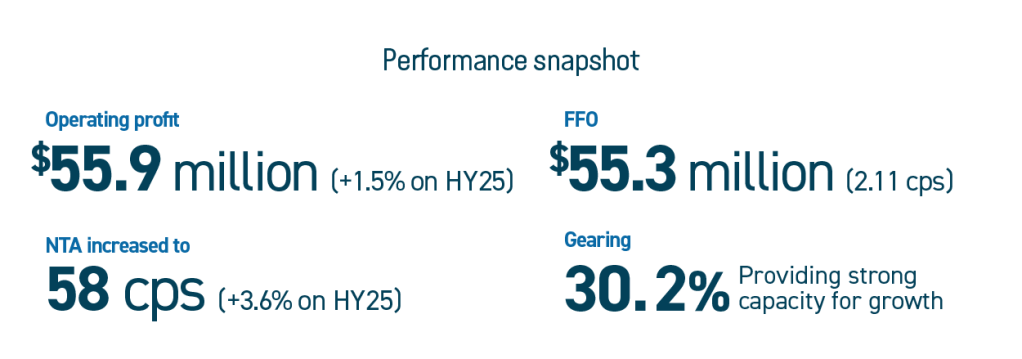
We delivered an operating profit of $108.6 million and funds from operations of $105.7 million, equating to 4.0 cents per security. While these figures reflect the impact of our European exit and prior-year one-off fees, they underscore the resilience of our Australian earnings base. Importantly, we reduced Group gearing from 38.9% to 28.2% through $1.6 billion in non-core asset sales, and we now have $504 million in deployable liquidity. This strong position enables us to provide distribution guidance for FY26 of 3.0 cents per security—the first time in several years—supported by secure income streams, 69% of which come from Government and other blue-chip tenants.

Strategic direction

Our strategy is clear: transition toward a capital-light investment management model while maintaining a high-performing portfolio. Recent initiatives demonstrate this approach in action.

Landmark Barton, ACT development

We have commenced development of a fully electric, 6-star rated office building in Barton, ACT, for a Commonwealth Government tenant. This project, due for completion in 2027, will be a prime opportunity to attract capital partners when the time is right.


Growth in AUM through strategic industrial portfolio acquisition

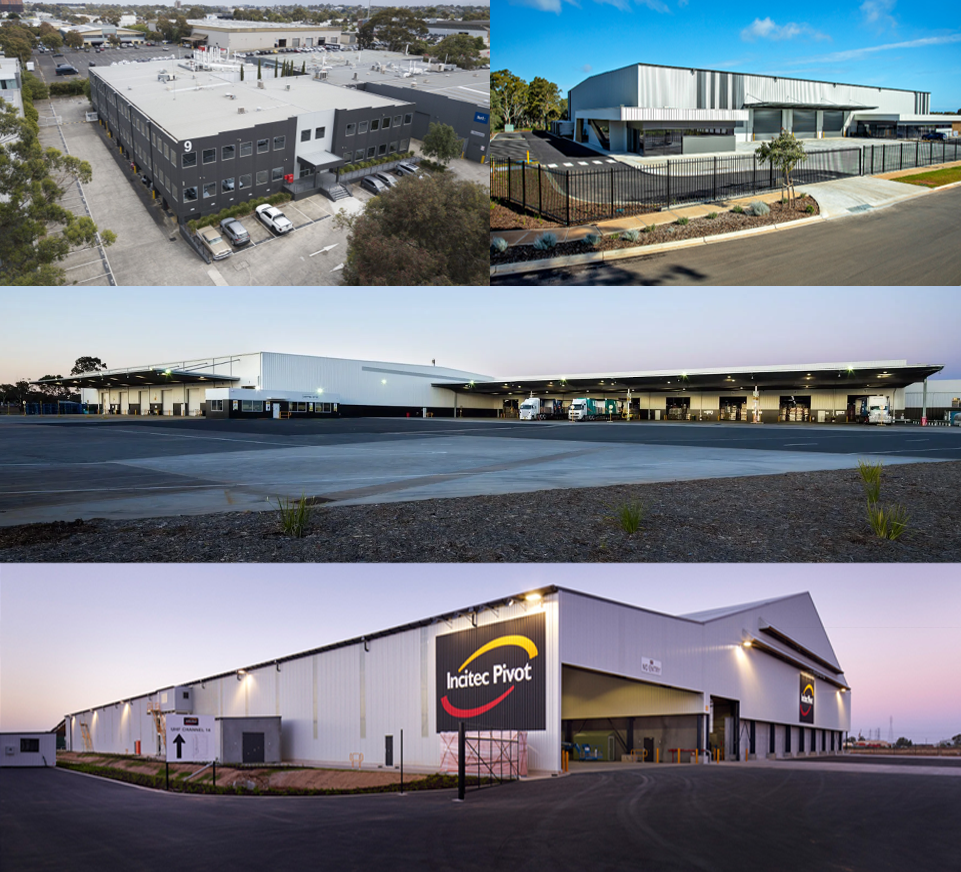
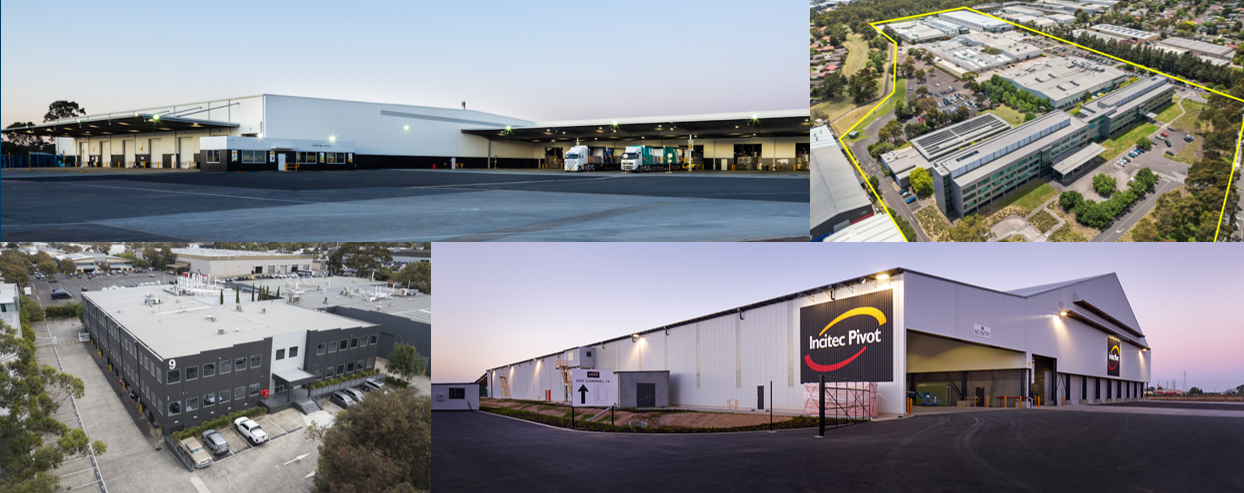
We have entered into a conditional agreement to acquire a 19.9% interest in Straits Real Estate’s Australian Industrial portfolio and its management platform, Terre Property Partners. The portfolio comprises seven high-quality industrial assets with total value of $470 million, located in key logistics hubs across Victoria and South Australia.

The acquisition will cost $47.6 million for the portfolio stake and $2 million for the Terre Property Partners platform. It will be funded from existing group liquidity and is expected to deliver stable, recurring income to the Group through distributions from our partial portfolio ownership and fund management fees. This transaction will grow assets under management by approximately $540 million, which includes two single assets also currently under Terre Property Partners’ management.

This strategic acquisition aligns well with Cromwell’s existing portfolio, enhancing asset and income diversification while strengthening our position through new capital partnerships.


Looking ahead

Cromwell will continue to expand its Funds Management platform through organic growth, scaling existing products, and strategic acquisitions. We will leverage our strong capital position and improving market conditions to accelerate growth, drive recurring fee income, and deliver long-term value for our investors.

Read more about the latest strategic developments

Strategic industrial portfolio acquisition
Cromwell expands AUM with strategic industrial acquisition

The Straits Trading Company Limited (SGX:S20) (“Straits Trading”), through its wholly-owned subsidiary Straits Real Estate Pte. Ltd. (“SRE”), and Cromwell Property Group (ASX:CMW) (“Cromwell”) today announced a strategic partnership to enhance their industrial and logistics platform across Australia.

Read more
Cromwell Funds Management skyscraper
AGM Chair and CEO Address

The 2025 financial year marked a pivotal chapter in Cromwell’s transformation. Thanks to the dedication and focus of our team, we’ve made substantial progress in simplifying the business and strengthening our financial position.

The successful divestment of $1.6 billion in non-core assets, including a complete exit from our European platform, was a major milestone.

Read more
New landmark development, Barton, ACT
Cromwell Unveils Landmark Project and Debt Refinance

Cromwell Property Group (ASX:CMW) (Cromwell or The Group), today announces it has entered into an agreement for lease with a Commonwealth Government entity to develop a 19,800 sqm office building in Barton, ACT. This project marks a significant milestone in Cromwell’s new strategic growth phase.

Read more
Person typing on a laptop

Learn

November 14, 2025

Turning operations into strategic advantage: Cromwell’s Facilities Management Team leads the way

Cromwell’s Facilities Management (FM) team has been named FM Organisation of the Year by the Facilities Management Association of Australia — a recognition that reflects not just operational excellence, but strategic value. The FM unit consistently outperforms industry benchmarks, proving that focused leadership and smart execution can drive enterprise-wide impact. For investors, this signals Cromwell’s ability to deliver the deep expertise and capability typically associated with large-scale organisations, while maintaining the agility, responsiveness, and personalised service of a boutique team. Below is an overview of the team’s key achievements that contributed to this national recognition, along with insights into how a high-performing FM function supports investor outcomes through enhanced asset performance, tenant satisfaction, and operational resilience.

The role of Facilities Managers

Facilities Managers oversee the day-to-day operations of Cromwell’s buildings, ensuring they are safe, efficient, and aligned with tenant needs. Their responsibilities span maintenance, compliance, sustainability, and service delivery — all of which directly influence tenant satisfaction and asset performance. At Cromwell, the FM team plays a pivotal role in translating strategic objectives into operational outcomes, working closely with Asset Managers to ensure every decision supports long-term portfolio value.

Array
(
    [slides] => Array
        (
            [0] => Array
                (
                    [media_type] => image
                    [image] => Array
                        (
                            [image] => Array
                                (
                                    [ID] => 37822
                                    [id] => 37822
                                    [title] => HexFlix Aerial - 540 Wickham Street Fortitude Valley-0126
                                    [filename] => HexFlix-Aerial-540-Wickham-Street-Fortitude-Valley-0126.jpg
                                    [filesize] => 28594129
                                    [url] => https://www.cromwell.com.au/wp-content/uploads/sites/2/2025/11/HexFlix-Aerial-540-Wickham-Street-Fortitude-Valley-0126.jpg
                                    [link] => https://www.cromwell.com.au/?attachment_id=37822
                                    [alt] => 
                                    [author] => 39
                                    [description] => 
                                     => 
                                    [name] => hexflix-aerial-540-wickham-street-fortitude-valley-0126
                                    [status] => inherit
                                    [uploaded_to] => 37621
                                    [date] => 2025-11-06 08:23:24
                                    [modified] => 2025-11-06 08:23:24
                                    [menu_order] => 0
                                    [mime_type] => image/jpeg
                                    [type] => image
                                    [subtype] => jpeg
                                    [icon] => https://www.cromwell.com.au/wp-includes/images/media/default.png
                                    [width] => 6008
                                    [height] => 4000
                                    [sizes] => Array
                                        (
                                        )

                                )

                            [alternate_images] => 
                            [mobile_image] => 
                            [tablet_image] => 
                        )

                     => Array
                        (
                            [video_type] => file
                            [autoplay] => 
                            [video_file] => 
                            [video_embed] => 
                            [image_placeholder] => Array
                                (
                                    [image] => Array
                                        (
                                            [image] => 
                                            [alternate_images] => 
                                            [mobile_image] => 
                                            [tablet_image] => 
                                        )

                                )

                        )

                    [title_block] => Array
                        (
                            [title] => 
                            [emphasise_title] => 
                            [emphasised_text] => real foundations.
                            [emphasis_style] => script
                            [content] => 
                        )

                    [text_width] => constrained
                    [button_group] => Array
                        (
                            [buttons] => 
                        )

                    [button_alignment] => left
                    [button_direction] => horizontal
                )

        )

    [banner_placement] => inner
    [media_position] => full
    [full_height] => banner-short-height
    [banner_logo] => 
    [content_alignment] => left
    [block_theme] => Array
        (
            [block_theme] => Array
                (
                    [] => 
                    [background_colour] => theme-white
                    [block_padding] => section-padding-medium
                    [add_anchor_id] => 
                    [anchor_id] => 
                )

        )

)

Performance that drives value

Cromwell’s Facilities Management (FM) team’s tenant-first mindset continues to deliver industry-leading tenant satisfaction results. Their performance places them in the top quartile of peers in the Future Forma survey, with standout results in service-request responsiveness.

For investors, this translates into higher tenant retention, reduced vacancy risk, and more stable income streams. By actively engaging with tenant feedback, including insights from the annual Future Forma survey, the team addresses asset-specific issues and enhances the overall experience across the portfolio — a key factor in protecting and growing long-term asset value.

With a data-driven approach and strong ESG leadership, the team has supported Cromwell in achieving Net Zero Scope 2 market-based emissions and maintaining top-tier NABERS and Green Star ratings. Initiatives such as solar installations, operational optimisation, and GreenPower procurement have contributed to a 95% reduction in Scope 1 and 2 market-based emissions intensity. Safety and compliance have also been strengthened through the implementation of a new incident management dashboard, real-time risk reporting, and ISO 14001 and ISO 45001 recertifications — reinforcing a culture of accountability and continuous improvement.

Key milestones

Recent initiatives have delivered measurable improvements across tenant experience, environmental performance, and operational efficiency:

  • Continued to achieve strong tenant satisfaction outcomes in the Future Forma survey, maintaining top-tier performance.
  • Record NABERS results, with six assets achieving 6.0-star ratings and six reaching 5.5-stars through lifecycle-aligned optimisation.
  • Cromwell’s first NABERS Waste Ratings via Bintracker and tenant education
  • Enhanced incident reporting in partnership with AESC, improving safety oversight and responsiveness.
  • Agile Work Framework tailored to FM, supporting psychosocial safety, retention, and team performance.

These milestones reflect the team’s commitment to continuous improvement and strategic alignment with Cromwell’s ESG and operational goals.

Learning experiences driving service excellence

Cromwell’s FM team fosters a culture of continuous learning to enhance service delivery, embedding insights into daily operations and strategic planning.

A key learning has been the value of high-quality data in driving smarter decisions. Improved visibility of energy, water, waste, emissions, and safety metrics has enabled targeted interventions with measurable environmental, financial, and safety outcomes. For example, tenant usage data informed plant room tuning and LED upgrades, boosting energy efficiency and comfort.

Lessons from solar installations have streamlined future rollouts, while feedback loops including post-implementation reviews and tenant surveys have strengthened engagement, contributing to a strong FM satisfaction score, well above industry benchmark.

Insights from pilot programs and Bintracker have shaped waste education campaigns and supported Cromwell’s first NABERS Waste Ratings. All change initiatives are developed collaboratively by the Facilities Leadership team and broader FM representatives, ensuring solutions are fit-for-purpose and genuinely support operational needs—making day-to-day processes easier and more effective.

Array
(
    [slides] => Array
        (
            [0] => Array
                (
                    [media_type] => image
                    [image] => Array
                        (
                            [image] => Array
                                (
                                    [ID] => 37907
                                    [id] => 37907
                                    [title] => Website_Project-Page-Landing-Size-1920px-w-x-1080px-h-scaled
                                    [filename] => Website_Project-Page-Landing-Size-1920px-w-x-1080px-h-scaled-1.jpg
                                    [filesize] => 505392
                                    [url] => https://www.cromwell.com.au/wp-content/uploads/sites/2/2025/11/Website_Project-Page-Landing-Size-1920px-w-x-1080px-h-scaled-1.jpg
                                    [link] => https://www.cromwell.com.au/turning-operations-into-strategic-advantage-cromwells-facilities-management-team-leads-the-way/website_project-page-landing-size-1920px-w-x-1080px-h-scaled/
                                    [alt] => 
                                    [author] => 39
                                    [description] => 
                                     => 
                                    [name] => website_project-page-landing-size-1920px-w-x-1080px-h-scaled
                                    [status] => inherit
                                    [uploaded_to] => 37844
                                    [date] => 2025-11-07 01:20:19
                                    [modified] => 2025-11-07 01:20:19
                                    [menu_order] => 0
                                    [mime_type] => image/jpeg
                                    [type] => image
                                    [subtype] => jpeg
                                    [icon] => https://www.cromwell.com.au/wp-includes/images/media/default.png
                                    [width] => 2560
                                    [height] => 1440
                                    [sizes] => Array
                                        (
                                        )

                                )

                            [alternate_images] => 
                            [mobile_image] => 
                            [tablet_image] => 
                        )

                     => Array
                        (
                            [video_type] => file
                            [autoplay] => 
                            [video_file] => 
                            [video_embed] => 
                            [image_placeholder] => Array
                                (
                                    [image] => Array
                                        (
                                            [image] => 
                                            [alternate_images] => 
                                            [mobile_image] => 
                                            [tablet_image] => 
                                        )

                                )

                        )

                    [title_block] => Array
                        (
                            [title] => 
                            [emphasise_title] => 
                            [emphasised_text] => real foundations.
                            [emphasis_style] => script
                            [content] => 
                        )

                    [text_width] => constrained
                    [button_group] => Array
                        (
                            [buttons] => 
                        )

                    [button_alignment] => left
                    [button_direction] => horizontal
                )

        )

    [banner_placement] => inner
    [media_position] => full
    [full_height] => banner-short-height
    [banner_logo] => 
    [content_alignment] => left
    [block_theme] => Array
        (
            [block_theme] => Array
                (
                    [] => 
                    [background_colour] => theme-white
                    [block_padding] => section-padding-medium
                    [add_anchor_id] => 
                    [anchor_id] => 
                )

        )

)

Elevating industry standards

Beyond internal performance, Cromwell’s FM team contributes to sector-wide advancement. They actively participate in:

  • Property Council of Australia working groups
  • NABERS stakeholder panels
  • Industry events such as the Queensland FMA’s World FM Day, where Head of Facilities Management, Chris Eske presented on “Thriving in a World of Change”

Internally, quarterly FM forums distil site-level insights into technical guidelines and procurement frameworks, driving consistent performance uplift. Externally, Cromwell shares learnings through Insight magazine, LinkedIn, and its website — offering replicable models for peers seeking to improve sustainability and service delivery.

Conclusion

Cromwell’s FM team exemplifies how operational capability can be transformed into strategic value. Through leadership, innovation, and a relentless focus on tenant experience and sustainability, the team continues to deliver outcomes that exceed industry benchmarks. Their achievements support Cromwell’s organisational goals and contribute to raising the standard of facilities management across the sector.

Update: The awards concluded on 4 December, and we’re proud to announce that Cromwell’s Facilities Management team has been named FM Organisation of the Year. Congratulations to the entire team on this outstanding achievement!

Person typing on a laptop

Learn

August 8, 2025

Stock in Focus – BWP Trust

No More Bunnings Snags!!!

Phoenix Portfolios Managing Director, Stuart Cartledge


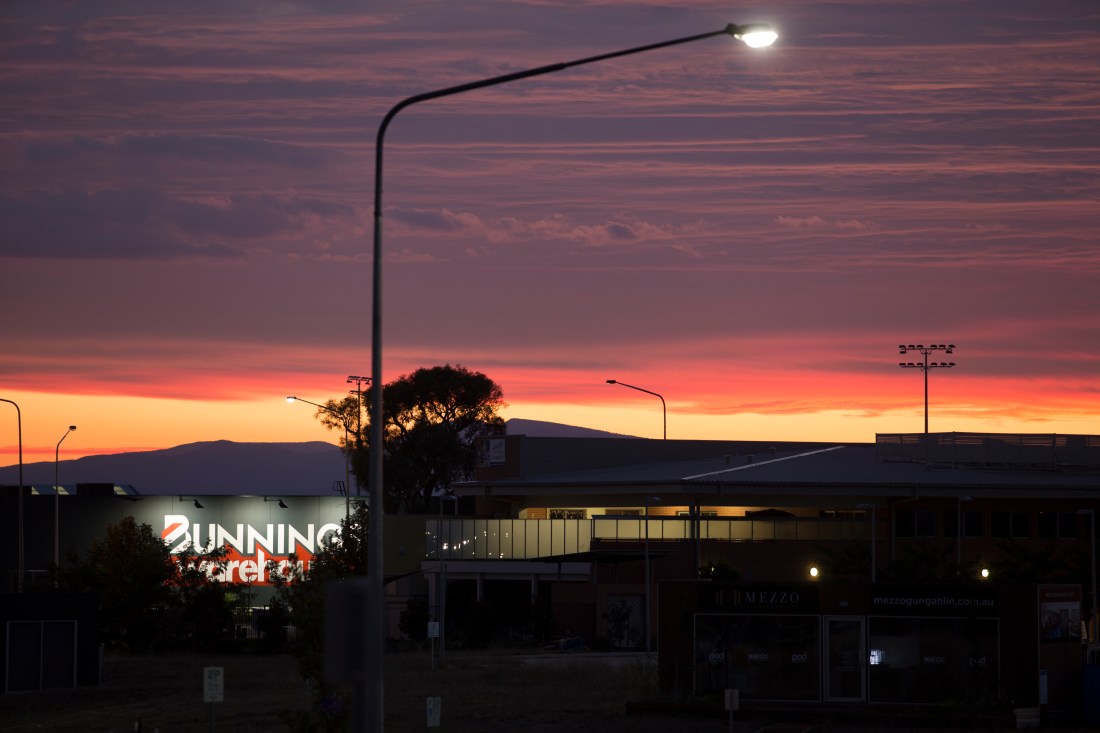
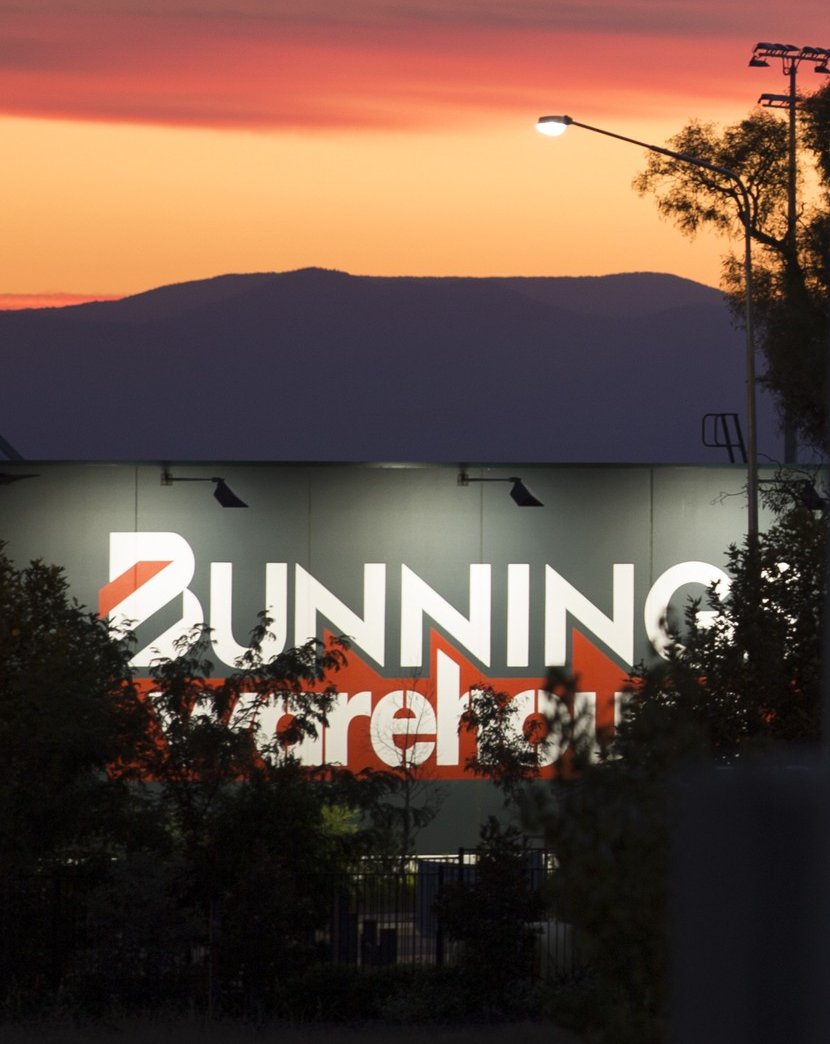
Phoenix has long discussed the importance of assessing governance in its investment process. The much-repeated Charlie Munger quote “show me the incentives and I will show you the outcome,” rings as true today as when he first said it. As such, we have maintained a preference for internally managed vehicles over those managed externally by fund managers focused on growing their funds under management. In June, BWP Trust (BWP) announced a major transaction, comprising the internalisation of management, along with a lease reset for many of the Bunnings tenanted properties owned by the trust. These interlinked transactions removed two of the key “snags” that were holding back our investment in the stock.

Snapshot

Key update
In June, BWP Trust announced two major changes:
  1. Internalisation of management – Ending its external management by Wesfarmers, BWP paid $142.6 million (10.6x FY26 EBIT) to take control.
  2. Lease reset – Extended lease terms on 62 Bunnings properties, increasing the WALE from 4.6 to 9.5 years, boosting property value by an estimated $50 million.
Why it matters
  • Better alignment: Internal management means decisions now serve unitholders directly, as opposed to serving the dual interests of unitholders and the external manager.
  • Cost savings: Expected to save over $5 million annually, with 2% dividend accretion in FY26.
  • Improved asset quality: Longer leases make properties more attractive and saleable.
  • Capital investment: $86 million committed to property upgrades, with $56 million rentalised and $30 million co-funded with Bunnings.
Valuation and outlook
  • BWP now trades at $3.52/unit, a 7% discount to its pro-forma NTA of $3.79/unit.
  • Historically traded at a premium due to strong tenant (Bunnings) and reliable dividends.
  • Due to the above changes, Phoenix has started buying BWP units again.

A brief history

BWP conducted an initial public offering (IPO) in 1998, initially comprising 16 hardware retail properties tenanted by Bunnings Warehouse and 4 properties under development, to be tenanted by Bunnings. These properties were vended into the trust by Wesfarmers, the owner of the Bunnings Warehouse business. 99 million units were to be issued to public shareholders, with 33 million units subscribed to by Wesfarmers, all at an offer price of $1.00 per unit. Of the 20 initial properties, 15 are still owned by BWP. Their valuation has increased from $133.1 million to $644 million today, representing growth of 6% per annum. The IPO portfolio was vended to BWP at an initial yield of ~9.0%, whilst the most recent valuation showed a capitalisation rate of 5.4%. Despite this, much of the value appreciation has been driven by rent growth, with increases in rental payments growing 4.3% per annum for the properties held since IPO. Returns to shareholders have also been solid, with BWP producing a total return of 11.8% per annum since IPO.

It is not only per share metrics that have grown. The units on issue have grown to 713.5 million, increasing more than 4x when compared to 1998. Much of this equity issuance did occur in capital raises above, or near net tangible asset backing. This growth may well have served BWP unitholders well, diversifying the portfolio and creating a more relevant entity, but it is worth acknowledging that on a per share basis, unitholders would have done perfectly well merely holding onto the initial portfolio. It is not questionable that the external manager of BWP, Wesfarmers, has very clearly benefited from this growth, as the recent transaction proves.

These interlinked transactions removed two of the key “snags” that were holding back our investment in the stock.

Coming to today

How much has Wesfarmers benefitted from BWP’s growth? In June, BWP announced it would internalise management of the company, paying Wesfarmers $142.6 million, representing 10.6x the management company’s estimated 2026 Financial Year (FY26) earnings before interest and tax (EBIT). In FY26 this will produce cost savings to BWP of more than $5 million, however this likely understates the true savings, as this includes transaction costs (associated with this deal) and does not include benefits of additional scale. The deal is also 2% accretive to the FY26 dividend. As fees are charged as a percentage of assets under management, growth under the old structure would naturally lead to an increase in management costs. Adding an additional Bunnings property to an internally managed vehicle, however, should barely make a difference to administration costs. This creates a better alignment of interests, meaning any decision to grow is more likely to be solely in the interests of unitholders, as opposed to serving the dual interests of unitholders and the external manager.

Connected to this deal is the announcement of an extension and reset of the lease terms of 62 Bunnings leases. This increases the weighted average lease expiry (WALE) of Bunnings tenanted properties owned by BWP from 4.6 years to 9.5 years. An independent expert has assessed that this is likely to increase the value of the properties owned by BWP by ~$50 million. This may understate the true value uplift as it does not directly consider the optionality inherent in the leases. Bunnings tend to have options embedded in their leases to extend the lease. The options have a cap and collar of 10%, meaning the rent can only increase or decrease as much as 10% upon option exercise. As Bunnings controls the option, they will likely exercise it on any strongly performing stores and likely won’t on any underperforming stores, which are more likely to be in inferior locations. With the WALE having decreased to 4.6 years this was a key concern. The lease extension does not extinguish this concern, however, it does push it out 5 years. Additionally, Bunnings properties with longer WALEs are meaningfully more saleable, with recent transactions very supportive of independent valuations.

The final element of the transaction is a commitment to capital expenditure by BWP. $56million of this is to be rentalised at a fair rate, whilst an additional $30million will be equally and jointly funded by BWP and Bunnings to improve some older properties. This amount won’t be rentalised, however should support asset values and prove a commitment by Bunnings to stay in that space.

What to do about it?

For much of its history, BWP has traded at a premium to its net tangible asset backing. A strong, prominent covenant and steadily growing dividends attracted a large retail shareholder base to the stock, supporting valuation over time. Given elevated share prices, along with an awareness of negative optionality and an external management structure with poor incentives, Phoenix has very rarely held any position in BWP1. As at the end of June, BWP traded at $3.52 per unit, approximately a 7% discount to the pro-forma net tangible asset backing of $3.79 per unit. The capitalisation rate used to deduce this value compares favourably to recent transactions. All told, this transaction removes two “snags” with investing in BWP. Namely, a relatively short WALE, creating a large degree of uncertainty in the short to medium term and perhaps more importantly, aligns incentives between BWP’s management and those of independent unitholders2. Phoenix has also been impressed with the quality of BWP management and board members and the transactions they have undertaken.

Given this and the stock’s reasonable valuation, the portfolio has begun purchasing BWP units for the first time in a long time. Owning a rock solid portfolio of properties leased to one of the strongest tenants in Australia, with a strong, efficient and aligned management team, at a discount to somewhat conservative independent valuations, seems like a worthy investment.

1 Phoenix has briefly held positions in BWP in times of temporary weakness, but quickly reduced the position as it returned to fair value.

2 The proposed remuneration framework laid out in the meeting booklet is top quartile for property companies under coverage, with remuneration outcomes closely linked to shareholder returns.

About Cromwell Phoenix Property Securities Fund

Read more about Cromwell Phoenix Property Securities Fund, including where to locate the product disclosure statement (PDS) and target market determination (TMD). Investors should consider the PDS and TMD in deciding whether to acquire, or to continue to hold units in the Fund.

Person typing on a laptop

Learn

August 8, 2025

Stock in Focus – Hammond Manufacturing

Jordan Lipson, Fund Manager, Cromwell Phoenix Global Opportunities Fund


More than 100 years ago, Oliver Hammond was on the way to supporting a nine-person family in a small house behind train tracks in Guelph, Ontario, Canada. Seeking to improve the family’s life, Oliver set up a pedal-powered lathe in a backyard shed. Oliver and his two sons worked in the business until Oliver’s early death, at which point his wife, Lillian, continued the business with her sons and daughters. Foot power soon gave way to electricity, and the company, then known as O.S. Hammond and Son began producing radio sets, battery chargers and related devices.

Snapshot

Background

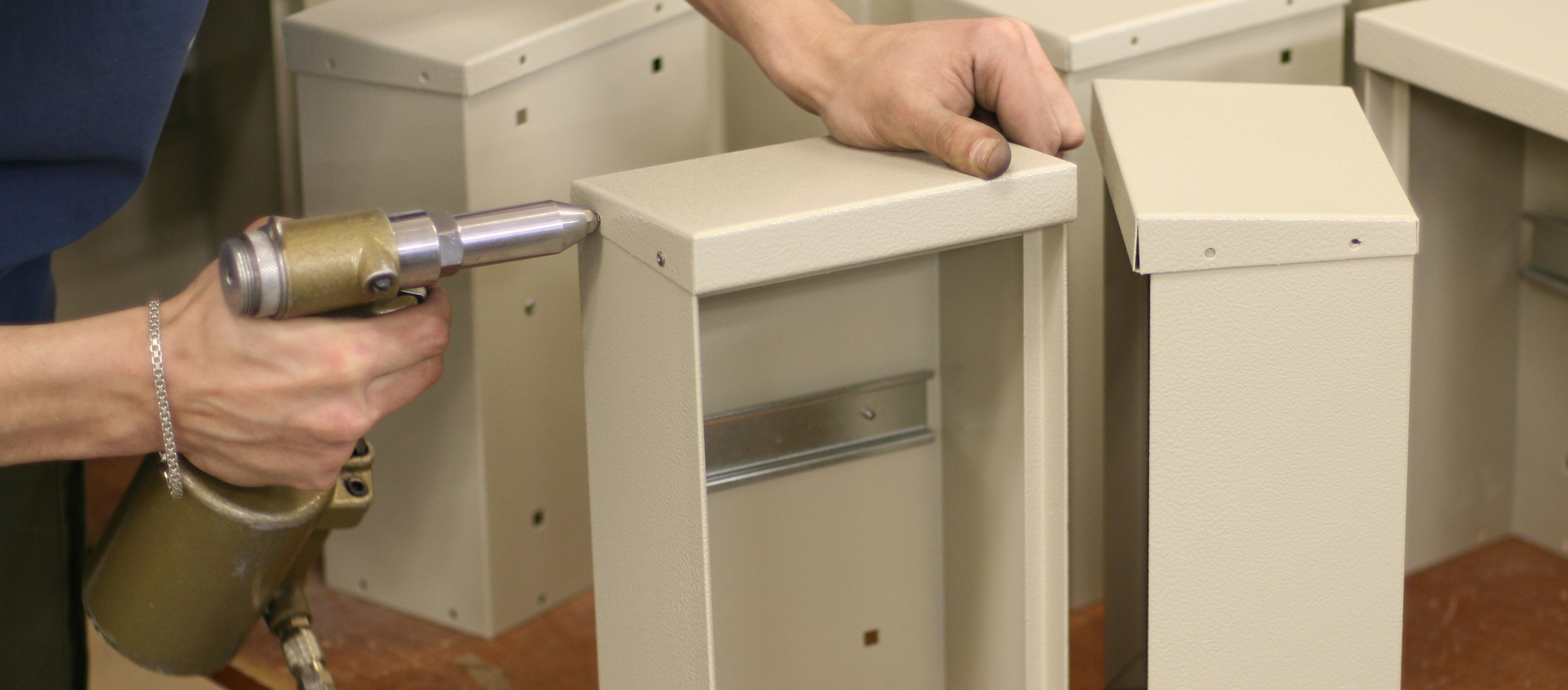
Founded over 100 years ago in Guelph, Ontario, Hammond Manufacturing (HMM) started as a family-run business making radio sets and battery chargers. Today, it focuses on electrical enclosures, racks, and cabinets. In 2001, the company split into two:

  • HMM (enclosures) with Robert Hammond as Chair and CEO and controlling shareholder of HMM
  • Hammond Power Solutions (HPS) (transformers) with William Hammond as Chair and controlling shareholder of HPS

Both are listed on the Toronto Stock Exchange and serve similar markets, but their valuations differ significantly.

Valuation gap: HMM vs. HPS
  • HPS: Market cap over $1.5 billion1, trades at 17x earnings, with strong investor relations and analyst coverage.
  • HMM: Market cap just over $100M, trades at 6x earnings, with minimal investor outreach and limited public float (40% owned by CEO Robert Hammond).

Despite HMM’s solid growth (10% revenue and 25% EBIT CAGR over 7 years), it remains undervalued.

Strengths of HMM
  • Conservative, long-term focus: CEO Robert Hammond emphasizes security and stakeholder value.
  • Customer-first approach: High inventory levels and custom solutions ensure fast delivery and strong relationships.
  • Property ownership: Owns over 500,000 sq ft of facilities, held at depreciated cost—adding hidden value.
  • Clean financials: Transparent reporting and disciplined capital allocation.
Valuation potential
  • Comparable company: Nvent (owner of Hoffman, HMM’s main competitor) trades at 18x EBITDA.
  • Recent deal: Nvent bought Trachte (similar business) for 12x EBITDA.
  • If HMM were valued similarly, its share price could be 4x higher.
Outlook
  • HMM trades at a deep discount to both earnings and book value.
  • While a takeover is unlikely (due to Robert Hammond’s conservative approach), the business is well-positioned for long-term value creation.
  • Investors may need patience, but the current price offers a compelling opportunity.

1 All currency in this commentary refers to Canadian Dollars unless otherwise noted.

Array
(
    [slides] => Array
        (
            [0] => Array
                (
                    [media_type] => image
                    [image] => Array
                        (
                            [image] => Array
                                (
                                    [ID] => 35796
                                    [id] => 35796
                                    [title] => insight51_hammond_banner
                                    [filename] => insight51_hammond_banner.jpg
                                    [filesize] => 735602
                                    [url] => https://www.cromwell.com.au/wp-content/uploads/sites/2/2025/07/insight51_hammond_banner.jpg
                                    [link] => https://www.cromwell.com.au/stock-in-focus-hammond-manufacturing/insight51_hammond_banner/
                                    [alt] => 
                                    [author] => 8
                                    [description] => 
                                     => 
                                    [name] => insight51_hammond_banner
                                    [status] => inherit
                                    [uploaded_to] => 35622
                                    [date] => 2025-07-16 03:29:45
                                    [modified] => 2025-07-16 03:29:45
                                    [menu_order] => 0
                                    [mime_type] => image/jpeg
                                    [type] => image
                                    [subtype] => jpeg
                                    [icon] => https://www.cromwell.com.au/wp-includes/images/media/default.png
                                    [width] => 3864
                                    [height] => 1700
                                    [sizes] => Array
                                        (
                                        )

                                )

                            [alternate_images] => 
                            [mobile_image] => 
                            [tablet_image] => 
                        )

                     => Array
                        (
                            [video_type] => file
                            [autoplay] => 
                            [video_file] => 
                            [video_embed] => 
                            [image_placeholder] => Array
                                (
                                    [image] => Array
                                        (
                                            [image] => 
                                            [alternate_images] => 
                                            [mobile_image] => 
                                            [tablet_image] => 
                                        )

                                )

                        )

                    [title_block] => Array
                        (
                            [title] => 
                            [emphasise_title] => 
                            [emphasised_text] => real foundations.
                            [emphasis_style] => script
                            [content] => 
                        )

                    [text_width] => constrained
                    [button_group] => Array
                        (
                            [buttons] => 
                        )

                    [button_alignment] => 
                    [button_direction] => horizontal
                )

        )

    [banner_placement] => inner
    [media_position] => full
    [content_alignment] => left
    [block_theme] => Array
        (
            [block_theme] => Array
                (
                    [] => 
                    [background_colour] => theme-white
                    [block_padding] => section-padding-none
                    [add_anchor_id] => 
                    [anchor_id] => 
                )

        )

)

In the 1930s, Hammond created its first electrical racks and cabinets, the products that make up the core of Hammond Manufacturing’s business today. With the exploding demand for electrification in the 1950’s and 1960’s, Hammond became a meaningful supplier of electrical transformers, alongside its enclosures, racks and cabinets. In 2001, the business was split, with the transformer division spun into a new company, Hammond Power Solutions (HPS), and the enclosures business remaining with Hammond Manufacturing (HMM). Robert Hammond is Chair and CEO and controlling shareholder of HMM, while William Hammond is Chair and controlling shareholder of HPS. Both businesses are listed on the Toronto Stock Exchange, serve similar end markets and have similar growth drivers, yet their valuations could not be more different.

A tale of two Hammonds

HPS has unequivocally delivered great results in recent times, with growth driven by demand from data centres as well as other industrial applications. HPS also has a highly professional investor relations function, with detailed quarterly results presentations, slick ESG reporting and analyst coverage by major Canadian investment banks. HPS has been rewarded with a fair valuation. It has a market cap above $1.5 billion1 and trades on a price to earnings ratio above 17x. While HMM’s business hasn’t quite kept pace with HPS’s eye watering growth, over the past seven years it has grown revenues at approximately 10%

per annum and earnings before interest and tax (EBIT) at a rate of approximately 25% per annum. For all this good work, HMM has been “rewarded” with a price to earnings ratio of approximately 6x. HMM’s market capitalisation is just above $100 million, and shares are almost 40% owned by Robert Hammond leaving limited free float, partly explaining the cheap valuation. Furthermore, HMM’s investor relations function is almost non-existent, with a website out of the early 2000s and major updates from the Chairman limited to concise yearly letters in a mostly black and white annual report. As an example,
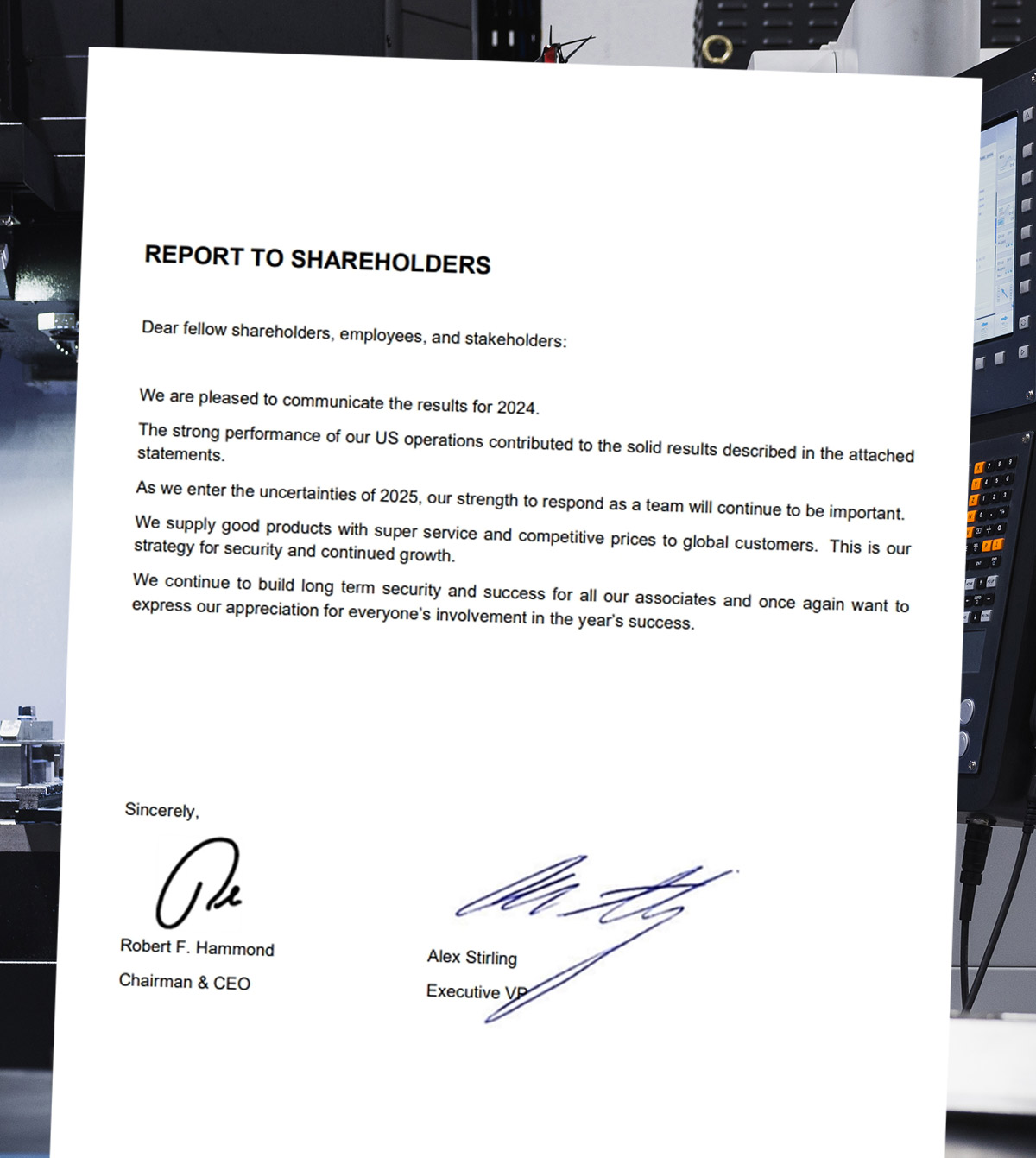
the entirety of the most recent letter can be seen here.

The lack of shiny presentations is not of concern. The financial statements are remarkably clean and understandable, and capital allocation priorities are clear, reasonable and focused on long term stakeholder outcomes. This is preferable to well marketed presentations, with highly adjusted earnings figures, which do not resemble the earnings power of the business. Despite this, it may in part explain some of HMM’s cheap valuation.

A safe and secure business

Despite the fast pace of growth, Robert Hammond values running a secure, conservative business. He ends each yearly letter stating, “we continue to build long term security and success for all our associates”. Still retaining family business values, there is a focus on promoting within and allowing “associates” to build a career at HMM. As Robert Hammond describes, “Grandma Lillian” taught the importance of customer service excellence and making your word your bond. This can be clearly seen in the strategy of HMM. It maintains significantly higher inventory levels than competitors so customers can receive their mission critical products in quick time. This held the company in relatively good stead during the COVID-affected period when supply chains came under pressure and demand meaningfully accelerated. The customer focus can be seen in the hands-on customisation options provided to customers and deep relationships with distributors, with sales staff even going on some distributor’s podcasts to spruik their wares.

Beyond this, HMM owns most of its manufacturing and corporate property footprint. This property is held at depreciated cost on its balance sheet. These properties have been acquired over a long period of time, including its main facility and corporate head office in Edinburgh Rd, Guelph, which was built in 1953. More recently, a 97,000 square foot facility was built when it became clear the existing production facilities were a constraining factor to the business. The property portfolio totals more than 500,000 square feet. HMM trades at a discount to its unadjusted book value, however applying a (very) conservative Despite the fast pace of growth, Robert Hammond values running a secure, conservative business. He ends each yearly letter stating, “we continue to build long term security and success for all our associates”. Still retaining family business values, there is a focus on promoting within and allowing “associates” to build a career at HMM. As Robert Hammond describes, “Grandma Lillian” taught the importance of customer service excellence and making your word your bond. This can be clearly seen in the strategy of HMM. It maintains significantly higher inventory levels than competitors so customers can receive their mission critical products in quick time. This held the company in relatively good stead during the COVID-affected period when supply chains came under pressure and demand meaningfully accelerated. The customer focus can be seen in the hands-on customisation options provided to customers and deep relationships with distributors, with sales staff even going on some distributor’s podcasts to spruik their wares.

Beyond this, HMM owns most of its manufacturing and corporate property footprint. This property is held at depreciated cost on its balance sheet. These properties have been acquired over a long period of time, including its main facility and corporate head office in Edinburgh Rd, Guelph, which was built in 1953. More recently, a 97,000 square foot facility was built when it became clear the existing production facilities were a constraining factor to the business. The property portfolio totals more than 500,000 square feet. HMM trades at a discount to its unadjusted book value, however applying a (very) conservative valuation to its property portfolio, HMM trades at a more than 40% discount to its book value, despite a strong return on assets and quality reinvestment opportunities. This exercise is somewhat theoretical as it is unlikely HMM will sell its properties, but ownership does allow for the security the business craves and increases the quality of its earnings.

A comparison

The largest competitor to HMM’s electrical enclosure business is Hoffman, which is wholly owned by US-listed business Nvent. The enitre company has a market capitalisation of more than USD$12 billion and owns related businesses such as those that produce cable management and power management products. Nvent recently acquire Trachte, a business that manufactures control buildings, for USD$695 million, or a price of 12x its forecast earnings before interest, tax, depreciation and amortisation (EBITDA). The company was at pains to equate the quality of this business to its enclosures business, with the CEO stating, “these control buildings are essentially larger enclosures.” If HMM were to be valued at Trachte’s acquisition multiple its share price would be four times higher (without adjusting for HMM’s property ownership). Nvent itself is valued at an enterprise value to EBITDA ratio of approximately 18 times. Valuing HMM at this multiple produces silly outcomes for HMM’s potential equity returns. Nvent’s enclosure business does have higher earnings margins and return on assets than HMM, but much of this is attributable to the fact this segment does not include apportioned centralised costs. In addition, Nvent runs with a leaner inventory profile and does not own its property.

Nvent has refined its portfolio acquiring new businesses and selling those it that no longer fit into its “connect and protect” businesses. In Nvent’s most recent earnings call, its CEO stated, “And on the acquisition M&A pipeline question, I would like to say that where we play in this Connect and Protect space, it’s about a $100 billion opportunity. And remember, at $3-plus billion, we’re one of the larger players. So it’s very fragmented. And I think there’s a lot of opportunities.” HMM’s business would fit perfectly for Nvent’s desires, as there would no doubt be an abundance of synergies to extract. It is highly likely that this would be anathema to Robert Hammond, who prefers to run a more secure, but less efficient business focussed on all stakeholders, including customers and employees. However, it is likely that Nvent would pay many multiples of today’s share price to acquire HMM.

Array
(
    [slides] => Array
        (
            [0] => Array
                (
                    [media_type] => image
                    [image] => Array
                        (
                            [image] => Array
                                (
                                    [ID] => 35799
                                    [id] => 35799
                                    [title] => insight51_hammond_banner_2
                                    [filename] => insight51_hammond_banner_2.jpg
                                    [filesize] => 888589
                                    [url] => https://www.cromwell.com.au/wp-content/uploads/sites/2/2025/07/insight51_hammond_banner_2.jpg
                                    [link] => https://www.cromwell.com.au/stock-in-focus-hammond-manufacturing/insight51_hammond_banner_2/
                                    [alt] => 
                                    [author] => 8
                                    [description] => 
                                     => 
                                    [name] => insight51_hammond_banner_2
                                    [status] => inherit
                                    [uploaded_to] => 35622
                                    [date] => 2025-07-16 03:31:29
                                    [modified] => 2025-07-16 03:31:29
                                    [menu_order] => 0
                                    [mime_type] => image/jpeg
                                    [type] => image
                                    [subtype] => jpeg
                                    [icon] => https://www.cromwell.com.au/wp-includes/images/media/default.png
                                    [width] => 3864
                                    [height] => 1700
                                    [sizes] => Array
                                        (
                                        )

                                )

                            [alternate_images] => 
                            [mobile_image] => 
                            [tablet_image] => 
                        )

                     => Array
                        (
                            [video_type] => file
                            [autoplay] => 
                            [video_file] => 
                            [video_embed] => 
                            [image_placeholder] => Array
                                (
                                    [image] => Array
                                        (
                                            [image] => 
                                            [alternate_images] => 
                                            [mobile_image] => 
                                            [tablet_image] => 
                                        )

                                )

                        )

                    [title_block] => Array
                        (
                            [title] => 
                            [emphasise_title] => 
                            [emphasised_text] => real foundations.
                            [emphasis_style] => script
                            [content] => 
                        )

                    [text_width] => constrained
                    [button_group] => Array
                        (
                            [buttons] => 
                        )

                    [button_alignment] => 
                    [button_direction] => horizontal
                )

        )

    [banner_placement] => inner
    [media_position] => full
    [content_alignment] => left
    [block_theme] => Array
        (
            [block_theme] => Array
                (
                    [] => 
                    [background_colour] => theme-white
                    [block_padding] => section-padding-none
                    [add_anchor_id] => 
                    [anchor_id] => 
                )

        )

)

Where to from here?

These valuation exercises are important to do, but an instant realisation event is highly unlikely. HMM does however trade at a price to earnings ratio of approximately 6x and a meaningful discount to any assessment of true book value. These valuation levels imply the business is antagonistic to shareholders or that earnings aren’t sustainable. On the first count, Robert Hammond is a major shareholder and receives below market remuneration. He has also previously discussed that HMM shares are owned by hundreds of employees. On the second, while HMM’s end markets are very much cyclical, the business has produced operating profits each year since 2002 and is the beneficiary of some industries facing an elongated period of secular growth. One such example is the growth in data centre development.

All in all, it is hard to say when and if HMM’s shares will reflect fair value. Its management are long-term oriented and clearly care about all stakeholders. Similarly, precisely assessing HMM’s fair value is challenging and will likely be different to an acquirer, relative to a continuation of the status quo. What can be said is the current share price reflects a very meaningful discount to fair value. We will wait patiently for this value to be reflected while Robert Hammond and the HMM team work to make the business even more valuable in the future.


1 All currency in this commentary refers to Canadian Dollars unless otherwise noted

Cromwell Global Opportunities Fund Performance

For more in-depth performance commentary on select undervalued international securities, sign up to the Cromwell Global Opportunities Fund quarterly update!

Person typing on a laptop

Learn

May 14, 2025

Stock in Focus – Nam Cheong Limited

Jordan Lipson, Portfolio Manager of the Cromwell Phoenix Global Opportunities Fund


The Cromwell Phoenix Global Opportunities Fund added 2.1% in absolute terms over the March quarter, outperforming global indices large and small. Nam Cheong Limited (NCL) was the biggest contributor, rising meaningfully as investors become more comfortable with its post-bankruptcy future. This article delves into NCL’s journey, its strategic partnerships, and the factors contributing to its compelling risk/reward opportunity.

Almost 70 years ago, a 14-year-old Tan Sri Datuk Tiong Su Kouk (Tan Sri) was given 3.40 Malaysian Ringgit (less than AUD 2) to start a career as a fishmonger. A hard work ethic and a focus on customers ensured early success. In his 20s, Tan Sri saw the benefits of technology from Japan, in particular the newly discovered food freezing technology. Malaysians were initially unwilling to trust that frozen food would be edible, so Tan Sri gave out frozen food for free to convince customers to buy his produce. This innovation led to the creation of CCK Consolidated, a vertically integrated leader in frozen foods in Malaysia, which is still in business, controlled by Tan Sri and listed on the Malaysian Stock Exchange. Staying close to the seas, Tan Sri subsequently partnered with Chinese shipbuilders to start a business known as Nam Cheong Limited (NCL).

NCL today is the owner of 36 offshore support vessels (OSVs) which service the Malaysian offshore energy sector. Running NCL has been anything but smooth sailing. The company built and acquired as many boats as it could during the last offshore drilling boom, heavily relying on debt, much like others in the industry. This business is exceptionally cyclical and NCL was forced to initially restructure its debt in 2018 to meet payments to creditors. Whilst business was hardly thriving, things somewhat steadied, until the COVID-19 pandemic caused oil prices to retreat and cripple the OSV business.

This led to NCL declaring bankruptcy. Share trading was halted, and negotiations began with lender banks. With a recovery on the horizon, after meaningful negotiations, the final restructure agreement was signed and approved on 1 March 2024. Under the terms of the deal, much of the debt would be converted to equity, Tan Sri would provide more capital to the business in return for new equity, and the remaining debt would be converted into “equity friendly” liabilities, to be repaid over an extended period at below market interest rates.

Array
(
    [slides] => Array
        (
            [0] => Array
                (
                    [media_type] => image
                    [image] => Array
                        (
                            [image] => Array
                                (
                                    [ID] => 34753
                                    [id] => 34753
                                    [title] => insight50_namcheong_image2
                                    [filename] => insight50_namcheong_image2.jpg
                                    [filesize] => 1294900
                                    [url] => https://www.cromwell.com.au/wp-content/uploads/sites/2/2025/04/insight50_namcheong_image2.jpg
                                    [link] => https://www.cromwell.com.au/stock-in-focus-nam-cheong-limited/insight50_namcheong_image2/
                                    [alt] => 
                                    [author] => 8
                                    [description] => 
                                     => 
                                    [name] => insight50_namcheong_image2
                                    [status] => inherit
                                    [uploaded_to] => 34194
                                    [date] => 2025-05-01 09:15:50
                                    [modified] => 2025-05-01 09:15:50
                                    [menu_order] => 0
                                    [mime_type] => image/jpeg
                                    [type] => image
                                    [subtype] => jpeg
                                    [icon] => https://www.cromwell.com.au/wp-includes/images/media/default.png
                                    [width] => 1800
                                    [height] => 1200
                                    [sizes] => Array
                                        (
                                        )

                                )

                            [alternate_images] => 
                            [mobile_image] => 
                            [tablet_image] => 
                        )

                     => Array
                        (
                            [video_type] => file
                            [autoplay] => 
                            [video_file] => 
                            [video_embed] => 
                            [image_placeholder] => Array
                                (
                                    [image] => Array
                                        (
                                            [image] => 
                                            [alternate_images] => 
                                            [mobile_image] => 
                                            [tablet_image] => 
                                        )

                                )

                        )

                    [title_block] => Array
                        (
                            [title] => 
                            [emphasise_title] => 
                            [emphasised_text] => real foundations.
                            [emphasis_style] => script
                            [content] => 
                        )

                    [text_width] => constrained
                    [button_group] => Array
                        (
                            [buttons] => 
                        )

                    [button_alignment] => 
                    [button_direction] => horizontal
                )

        )

    [banner_placement] => inner
    [media_position] => full
    [content_alignment] => left
    [block_theme] => Array
        (
            [block_theme] => Array
                (
                    [] => 
                    [background_colour] => theme-white
                    [block_padding] => section-padding-none
                    [add_anchor_id] => 
                    [anchor_id] => 
                )

        )

)

Phoenix in the Market

Phoenix has followed the OSV market for some time, with the domestic Cromwell Phoenix Opportunities Fund initially investing in MMA Offshore (MRM). This investment was a significant contributor to performance as it eventually received a takeover bid at a robust valuation. This portfolio has also successfully invested in industry leader Tidewater (NYSE:TDW) previously. Both these investments provided relevant background for assessing NCL upon its restructure and eventual relisting on the Singapore Stock Exchange. In particular, valuations could be more precisely assessed using the independent expert’s report associated with MRM’s takeover.

What happened next?

Upon relisting, NCL’s shareholders included the banks who had converted their debt to equity, prior NCL investors who had been diluted and were forced to hold their shares through bankruptcy for 4 years and Tan Sri, who was unlikely to trade his shares. Unsurprisingly, the banks were large scale sellers upon relisting, trying to recoup some of their investment as quickly as possible. Furthermore, any potential buyers would have to assess both complex financial statements and detail provided in the bankruptcy documents to gain an understanding of the current state of the NCL business.

Despite the rocky history, the truth was that business was booming. As a result of the cyclical downturn in the sector, the number of OSVs in operation had shrunk materially and there was no prospect of any new vessels being built, given that day rates were less than half of what was needed for newbuilds to break even. Further aiding NCL is Malaysian law, which preferences Malaysian-flagged vessels for Malaysian offshore activities, which are dominated by state owned enterprise, Petronas, which has increased activity in recent periods. NCLs fleet is also (almost incomparably) young at just over 7 years old. NCL’s current financials are encumbered by existing contracts, which were set at historic day rates. Profitability is likely to improve when these contracts conclude, and pricing is reset at current market rates.

Upon relisting, NCL traded at less than SGD 0.15 per security. Sadly, we missed this initial opportunity, however after assessing the detail of the transaction, we initially purchased a stake in NCL at SGD 0.365 per security. Using somewhat conservative estimates, NCL’s market net asset value (NAV) was assessed to be at least SGD 1.30, making this opportunity appear highly attractive. It is worth noting that NCL is not at all promotional, continues to have (temporarily) complex financials, and does not provide market updates beyond legal requirements.

Tan Sri does however have a history of solid governance and has demonstrated care for stakeholders, so we were happy to partner with him over the medium term as NCL’s value became evident. This has occurred more rapidly than anticipated, with NCL finishing the period at a share price of SGD 0.66. We sold some of our holding in NCL during the quarter as the risk/reward proposition has now become less compelling and to limit position sizing given the volatile nature of the OSV sector.

Cromwell Global Opportunities Fund

Value of $100 invested at inception


Past performance is not a reliable indicator of future performance

Conclusion

At period end, NCL remains a top 5 holding as it continues to trade at a substantial discount to NAV. Recent market updates have been mixed, with the global OSV industry somewhat slowing due to the decline in the oil price. However, Malaysian competitor Keyfield Services recently released a strong result and provided an optimistic outlook statement. In particular, Keyfield stated “based on supply and demand analysis of OSVs in Malaysia, there will be a critical shortage of AHTS < 80MT beyond 2030, unless owners acquire new vessels”. These vessels represent the majority of NCL’s NAV. There is no doubt NCL operates in a cyclical industry which has seen countless bankruptcies over time, so an investment is not without risk. However, with a young fleet, market tailwinds, extremely shareholder friendly debt and an aligned controlling shareholder, NCL still represents a compelling risk/reward opportunity.

Cromwell Global Opportunities Fund Performance

For more in-depth performance commentary on select undervalued international securities, sign up to the Cromwell Global Opportunities Fund quarterly update!

Person typing on a laptop

Learn

February 10, 2025

Celebrating five years: Cromwell Phoenix Global Opportunities Fund

The Cromwell Phoenix Global Opportunities Fund marks five years of disciplined management and strategic investments in attractive, yet overlooked, global securities. Over this period, the Fund has consistently delivered strong returns, outperformed benchmarks, and navigated diverse market conditions with agility and expertise. Each milestone reflects the Fund’s commitment to uncovering value in unique opportunities, fostering long-term success for its investors.

Explore the key moments and achievements that have defined its journey below.


YEAR 0


Created to meet investor demand for global diversification

The Cromwell Phoenix Global Opportunities Fund (Fund) is launched to provide access to overlooked international securities.

YEAR 1-2


Focused on building a strong, risk-adjusted track record
(closed fund)


15.7%p.a.*    Total returns

Outperforming Vanguard Total World Stock ETF benchmark by 0.3% p.a.

*As at 31 December 2021. Past performance is not indicative of future performance

YEAR 3


Opened to retail investors

Ensures strategic advantage by enabling investments in small-cap stocks and diverse listed structures.


8.8%p.a.*    Total returns

Outperforming Vanguard Total World Stock ETF benchmark by 3.6% p.a.

*As at 31 December 2022. Past performance is not indicative of future performance

YEAR 4


Outperforming market benchmarks


10.3%p.a.*    Total returns

Outperforming Vanguard Total World Stock ETF benchmark by 1.0% p.a.

*As at 31 December 2023. Past performance is not indicative of future performance

YEAR 5


Five year milestone


13.5%p.a.Total returns

Outperforming Vanguard Total World Stock ETF benchmark by 0.7% p.a.

*As at 31 December 2022. Past performance is not indicative of future performance

Need more information?

Book a Q&A session with our Investor Relations team or catch up on the latest insights into the Cromwell Phoenix Global Opportunities Fund via our webinar recording.

About Cromwell Phoenix Global Opportunities Fund

Read more about Cromwell Phoenix Global Opportunities Fund, including where to locate the product disclosure statement (PDS) and target market determination (TMD). Investors should consider the PDS and TMD in deciding whether to acquire, or to continue to hold units in the Fund.

Person typing on a laptop

Learn

January 2, 2025

Cromwell: where our future lies post-European exit

On 15 May 2024, Cromwell announced the sale of the Cromwell Polish Retail Fund for €285 million ($465 million) to Star Capital Finance, a diverse real estate investor based in Prague.

Later that month, Cromwell informed the market that we had entered into a binding agreement for the sale of our European fund management platform and interests – including the Cromwell Italy Urban Logistics Fund and Cromwell European REIT – for a total consideration of €280 million ($457 million) to a Geneva-headquartered, multi-strategy real estate investment manager, Stoneweg SA Group.

Speaking on the European platform sale agreement at the time, Cromwell Chair Dr Gary Weiss said, “this is a turning point for Cromwell to focus on leveraging the exceptional team we have in Australia; to drive value from our local asset and funds management business.”

“In the current operating environment, numerous options were considered to simplify and de-risk the business, and we believe that this transaction will provide the debt reduction and working capital needed to move forward in a focused and value-accretive way.”

Now, with the sale of the European fund management platform sale finalised, Cromwell is completing the simplification of the business, and entering the next exciting phase of our strategy.

We are continuing to refocus on traditional property sectors primarily in Australia – a market in which we have a proven record of active asset management, driving value through enhanced leasing activities, asset upgrades, and ESG repositioning.

In this article, we will examine some of the property sectors that have been identified for future investment, following the settlement of the European platform. Our investment approach is guided by both top-down and bottom-up analysis, with consideration given to a number of cyclical, structural, and secular drivers of performance – such as behavioural shifts, demographic demands, economic factors, market fundamentals, and investor requirements.

This is a turning point for Cromwell to focus on leveraging the exceptional team we have in Australia; to drive value from our local asset and funds management business.
Dr Gary Weiss – Chair, Cromwell Property Group

Office building investment

In Australia, Cromwell manages an investment portfolio of $2.2 billion and funds management platform of $1.5 billion. Central to our business success has been, and will remain, office buildings in large metropolitan centres. We view several segments of the sector as favourable for investment, including Core/Core+ Value Add, Creative Fringe, and ESG Rejuvenation.

Core/Core+ Value Add

The ‘core’ category of office property investments includes a focus on high-quality, stable properties located in prime markets – particularly capital city CBDs. The hallmark of core investments is their ability to generate consistent, long-term income through different cycles and market conditions. These properties form the foundation of Cromwell’s current Australian investment portfolio.

While the office sector continues to face challenges due to global market pressures, there are nuances across and within markets regarding vacancy rates and rental growth outlooks. In Brisbane, for example, the CBD vacancy rate is at the lowest level since 2012, and occupied space has increased since the onset of the pandemic, contributing to higher rents1. Similarly, the majority of Australian CBD buildings remain well-occupied, with real estate investment research company CBRE estimating more than half of all office buildings have vacancy of less than 5%2. This disconnect between sentiment and actual market conditions presents opportunities for investors to acquire quality office assets at attractive prices.

At this point in the cycle, we also see substantial opportunity to generate additional value for investors by leveraging the skills and expertise of our in-house property and project management teams. Delivering carefully considered capital improvements, space fit-outs, and a targeted leasing strategy, can reposition an asset’s appeal to potential occupiers. This process has been successfully repeated by Cromwell across our assets in recent years.

207 Kent Street third space – CoLab at Kent

In early 2025, Cromwell will open our newest third space – CoLab at Kent – at our 207 Kent Street property in Sydney. Construction began mid-year after Australian interdisciplinary design practice Hot Black was engaged to design a space that would meet the diverse needs of our current and future tenants. The new third space will encompass a 365sqm area on Level 6 of the building. Features will include:

  • A refreshment area
  • A kitchen/breakout area
  • A business lounge
  • 25-person training/multi-purpose room
  • A 70-person training/multi-purpose room
  • Quiet and focus areas
  • Furniture/equipment storage space


Creative Fringe

Fringe markets are adjacent to major CBDs and provide a number of the same agglomeration and accessibility benefits as CBD precincts, while offering proximity to diverse amenity and a unique cultural feel. In particular, non-traditional and difficult-to-replicate office assets within fringe markets, such as converted warehouses or heritage buildings, often strongly appeal to growing technology and creative industries and support the cultural and brand identity of a firm. This is increasingly important as providing an engaging and dynamic workplace and employee experience becomes more of a central focus.

A key advantage of targeted opportunities in the ‘Creative Fringe’ is the ability to better cater to smaller occupiers. These tenants have been exhibiting a stronger propensity for in-office, face-to-face work, and have been growing most strongly over the last five years in terms of both headcount and office space3. This trend is contributing to the performance of fringe markets, which have ranked first, second, and third for net space demand since the onset of the pandemic4. Given their location, they can also be a more affordable option for tenants, reducing the risk of financially induced downsizing and providing a runway for rental growth if demand conditions remain conducive.


ESG Rejuvenation

To ensure that Cromwell maintains optimal returns for investors over the longest possible duration – that the assets we manage generate the returns expected – we need to ensure that Environmental, Social, and Governance (ESG) practices are genuinely integrated and brought to life across all the activities we undertake, across all our investments.

Given the current delays in commercial building construction across Australia, refurbishing existing assets to meet ESG requirements has the potential to be a more , time-efficient – and simultaneously the “greener” option – as opposed to constructing new buildings for tenants. Indeed, preserving original buildings as much as possible will be critical to achieving our net zero targets.

We have the opportunity to identify buildings that are lagging in ESG specifications and apply our collective knowledge to implement strategies and initiatives to enhance ESG ratings and performance. Such improvements can expand the pool of potential tenants, increase net income (via higher rents or lower operational expenses), and support a stronger asset valuation.

Cromwell has already made progress in this space over the past two years, including the McKell building electrification project in Sydney; completion of our solar programme installation; and replacement of HVAC facilities at other locations.

By identifying and modifying existing properties to align more effectively with the long-term sustainability goals of our tenants; our investors’ expectations; and changing market demands, we can create assets that provide long-term, ‘future proof’ returns for investors.

Medical offices and community support services

The healthcare and social assistance sector remains an essential and growing industry, accounting for 8% of the Australian economy5 and 16% of employment6. Healthcare property encompasses a range of asset types, from hospitals to medical centres, life science facilities and specialist disability accommodation. While some sub-sectors – such as private hospitals – are facing well publicised issues, we believe medical centres/offices are resilient to these challenges and well placed to benefit from several demand tailwinds. These assets are essential to communities across the country, providing a range of primary and secondary care such as GP, specialist, and allied health services.

Why target for investment?

Supply of healthcare services across the country is currently being outpaced by demand, which is being driven by long-term demographic trends, such as population growth, the ageing population, and longer life expectancy. Additionally, lifestyle factors such as poor diets and lack of exercise, coupled with improved detection and diagnostics, are seeing the rate of disease incidence increase on an age-standardised basis. This environment is resulting in health service pressures and longer wait times – necessitating a greater focus on more efficient models of care.

We believe shifting towards primary and preventive care is critical to achieving a more sustainable healthcare system, and that medical centres are an important component in that shift. Providing care in a non-hospital environment, such as a medical centre, can:

  • be cheaper due to lower overheads;
  • reduce the risk of infection and deliver better health outcomes;
  • enhance patient comfort and satisfaction; and
  • improve convenience, due to the proximity to local communities.

The shift from hospital to non-hospital care is already underway, as evidenced by spending and policy prioritisation. Latest available data shows growth in primary healthcare expenditure outpaced growth in spending on hospitals from 2011-12 to 2012-227. Additionally, a number of policies have been announced that put greater emphasis on primary and preventive care, including a $99 million Federal Government initiative to connect frequent hospital users with a GP to reduce the likelihood of hospital re-admission; $79 million to support the use of allied health services for multidisciplinary care in underserviced communities; and $3.5 billion to triple GP bulk billing incentives.

Medical centres are an increasingly important part of the essential and growing healthcare industry, representing efficient and fit-for-purpose facilities that can help alleviate the capacity constraints of hospitals and improve the sustainability of the health system. Tenants are typically stable, long-term occupiers, which have higher rates of lease renewal compared to traditional office space8.

We believe medical centres’ alignment with demand trends and Government healthcare spending priorities, together with attractive investment characteristics, such as CPI-linked income and defensive land holdings, puts them in a favourable position compared to other healthcare property investments.

Large format retail (LFR) property

Large format retail currently accounts for approximately 24% of all retail sales in Australia9– or an estimated $102.3 billion – according to June 2024 data from the industry’s peak body, the Large Format Retail Association. Large format retail now makes up more than 35% of all retail floor space in Australia10.

The sector emerged in the 1970s with the development of stand-alone retail stores that sold homemaker products, including furniture, floor coverings, homewares, or whitegoods – a consumer need that had been previously met by traditional department stores.

Why target for investment?

As an investment, large format retail property can offer a more attractive yield and lower capex requirements compared to other sectors, given the simplicity of the property type’s physical structure and associated infrastructure.

In addition, large format retail has faced competition from industrial uses for new sites, constraining supply and contributing to one of the lowest vacancy rates on record11.

Like healthcare property, increases in demand for large format retail shopping centres are closely linked to strong population growth, particularly within the ‘household formation’ lifestyle stage – the period of time that couples or families are establishing a place to live. By extension, high migrant-driven population growth at present is increasing demand for these resources, as these people find and fit-out their new homes.

Urbanisation and smaller households provide another source of demand. The number of occupied dwellings is growing faster than the overall population12, meaning there is a need for more rooms to be furnished and greater demand for the shopping centres that primarily cater to home-oriented retail categories.

Importantly, the sector has proven to be relatively resilient to online shopping – with consumers preferring to ‘touch and trial’ homewares in easy-to-navigate shopping centres with substantial convenient parking.


Small lot industrial property

Industrial property has been the top-performing real estate sector over the past decade13, propelled by strong rental growth as demand for space outpaced development of new supply.

‘Small lot’ industrial refers to industrial assets that are typically smaller than 8,000sqm; support a variety of occupier uses; can be multi-tenanted; and are often located in urban ‘infill’ areas. These assets differ from ‘big box’ assets, which are larger; often logistics-oriented; usually single-tenanted; and situated further from the heart of metropolitan areas, given their size.

Why target for investment?

In 2024, customer demand, scarcity of supply, along with a diverse tenant base, are key drivers for rental growth in this sector. Small lot industrial properties’ proximity to customers is a significant benefit for tenants – occupiers are able to provide customers with products faster, and more flexibly, at the time promised and with lower delivery costs. Being in proximity to customers has the potential to provide stronger rental growth – given that transport is the biggest cost for logistics operators, a location that reduces transport costs is worth paying more in rent for.

The small lot industrial sector caters to an array of industries and uses, from warehousing through to manufacturing. As different industries have different demand drivers and can thrive at different points of the property cycle, having a diverse tenant pool provides leasing optionality.

Often overlooked by institutional capital due to a lack of scale, and by passive private investors due to escalating active management requirements, small lot industrial offers compelling total return opportunities for those with the expertise and capability to identify and improve underappreciated assets.

Convenience retail property

Convenience retail property assets are generally smaller, standalone shopping centres – often anchored by supermarkets – that service the surrounding suburbs by providing convenient access to essential goods and services.

Why target for investment?

Convenience retail centres have consistently been the top-performing centre types over the past 30 years14. These centres have been shown to provide resilient, inflation-adjusted cashflow that is less exposed to the cyclicality of discretionary spending – cashflow which is largely underpinned by blue chip, national tenants.

In 2024, convenience retail is an in-demand sector with less long-term uncertainty than discretionary shopping centres. This is partially due to their alignment to long-term shifts in consumer preferences – from goods (big screen TVs, home theatres, etc.) to groceries, services, and experiences. A major driver for these shifting preferences is the cultural and lifestyle changes consumers are making, which has implications for which retail categories can sustain growing rents.

Convenience retail is also less exposed to the competition impacts of e-commerce – people like to pick their own apples, and haircuts are yet to be made available online! While the rise of online shopping may have some impact on incremental space demand, much of the once-off impact has been incorporated into rents and valuations.


Conclusion

Cromwell has a strong record in traditional property sectors locally, driven by our exceptional team who deliver enhanced returns through active asset management.

By repositioning and developing assets, an area in which we have consistently excelled, we aim to generate meaningful securityholder value.

We will continue to drive value from assets in Cromwell’s investment portfolio and the assets in our retail funds through active asset management initiatives – this will support asset valuations and unitholder value through the next part of the property cycle.

Footnotes

  1. Cromwell analysis of JLL data (Sep-24)
  2. Source CBRE, Australian CBD Office Occupancy Brief (Sep-23)
  3. Cromwell analysis of JLL (Sep-24) and ABS (Jun-23) data
  4. Cromwell analysis of JLL data (Sep-24)
  5. National Accounts, ABS (Dec-23)
  6. Labour Force, ABS (Feb-24)
  7. Constant prices. Cromwell analysis of AIHW data (last updated October 2023)
  8. Exploring Australian healthcare opportunities, JLL (Jun-22)
  9. Large Format Retail Association
  10. Large Format Retail Association
  11. Cromwell analysis of JLL data (Jun-24)
  12. Cromwell analysis of ABS data
  13. The Property Council of Australia/MSCI All Property Digest, Jun-24
  14. Cromwell analysis of The Property Council of Australia/MSCI All Property Digest, Jun-24
Person typing on a laptop

Learn

December 18, 2024

Unitholders Approve Term Extension for Cromwell Riverpark Trust

About the Trust

The Cromwell Riverpark Trust (the Trust) was the first of Cromwell’s ‘back to basics’ single property trusts, launched in February 2009 to fund the acquisition and construction of Energex House. The anchor tenant, Energy Queensland Limited, is one of Australia’s largest and fastest growing energy suppliers and occupies 94% of the 30,601 sqm of net lettable area of the building on a long lease.

As one of Queensland’s most energy efficient commercial buildings, Energex House has earned a Six Star Green Star rating and a 5.5 Star NABERS rating.


Market challenges at the end of the second Investment Term

Following the end of the second investment term of the Trust in 2021, efforts to sell Energex House did not yield offers deemed to be in the best interests of Unitholders. A preferred bidder entered due diligence in March 2022 however, during this period, market conditions changed dramatically.

The RBA’s increase of the cash rate on 3 May 2022, along with subsequent movements in debt markets, resulted in the preferred buyer ultimately withdrawing in late May 2022. This was followed by nine consecutive cash rate target increases, totalling 13 by November 2023, marking the sharpest and second-longest hiking cycle in the history of the Australian cash rate. In such an environment, long-term real estate investors often withdraw from the market due to increased volatility and uncertainty, particularly for larger assets.

Consequently, transactional activity within the office market fell dramatically to its lowest levels in over 10 years, both in terms of dollar value and the number of deals. Asset sales that have occurred over 2024 have continued to show significant discounts to book values.


Currently, buyers are typically pricing opportunistically, which is not conducive to achieving a favourable sale price for the property. Given these conditions, extending the investment term of the Trust was recommended as the best course of action.

Unitholders vote on Term Extension

In late October 2024, Cromwell Riverpark Trust Unitholders were invited to vote on a Term Extension Proposal for the Trust. Of the 69.69% of unitholders who voted, 88.01% were in favour of extending the investment term until 31 December 2026. This extension aims to allow Energex House to be sold in a more orderly market when long-term buyers become more active and create a more competitive environment.


Why wait?

Early signs of price stabilisation in the office market have emerged, with the rate of yield expansion beginning to slow. Increased stability in pricing may attract a larger pool of market participants and hence contribute to greater transaction volume. Combined with the potential for future decreases in interest rates, this should help in creating more confidence with potential purchasers.


With limited new supply completed over the quarter and the demand side of the equation proving solid, the national CBD vacancy rate improved from 15.4% to 15.1%. Every market except Melbourne CBD and Brisbane CBD saw vacancy decline, with Sydney CBD (-0.9%) the standout due to its strong quarter of demand. Canberra and Brisbane CBD remained the tightest markets – their vacancy rates are in line with or tighter than the long-term average.

Strong fundamentals for Brisbane Fringe

Office space market fundamentals for the Brisbane fringe market have been improving and show good performance relative to other markets. Recent tenant demand for prime Brisbane fringe office space has been strong, with the Fortitude Valley precinct leading the Brisbane fringe sub-market in total occupied space growth since the onset of COVID-19.


This strong demand has contributed to a fall in the vacancy rate. A constrained supply pipeline is expected to keep the vacancy rate low, fostering conditions for rental growth. The Brisbane fringe has recorded the second-strongest rental growth nationally since December 2019, second only to the Brisbane CBD.


The decision by Cromwell Riverpark Trust Unitholders to extend the investment term until 31 December 2026 reflects a strategic approach to navigating current market challenges. By allowing more time for market conditions to stabilise and improve, the Trust aims to achieve a more favourable sale price for Energex House. The strong fundamentals of the Brisbane office market, combined with early signs of price stabilisation and potential future decreases in interest rates, support this decision to wait, rather than sell in a depressed market.

Cromwell Funds Management remains committed to monitoring the market and will initiate a formal sale campaign when conditions are deemed favourable, aiming to ensure the best possible outcome for unitholders.

Person typing on a laptop

Learn

November 12, 2024

Tenants praise Cromwell’s approach as FY24 ESG results released

Cromwell’s latest ESG report was released in late October – the document outlines the significant progress the business has made towards our long-term ESG targets in FY24, including sizeable reductions in Australian scope 1, 2, and 3 emissions. Encouragingly, the results have been praised by tenants throughout our Australian office and fund portfolios.

Cromwell Head of Property Operations, Tessa Morrison, said ongoing delivery of ESG initiatives was consistently being undertaken in close partnership with building users to deliver tangible positive impacts.

“We’ve seen a massive shift towards an ESG focus by tenants in the past 18 months – it’s always been strategically important to us as a business, but it is increasingly becoming a key consideration for occupiers in their decision making as well,” said Ms. Morrison.

“A large part of Cromwell’s ESG approach is centred on ‘future proofing’ our assets – making sure we can meet the current and future needs of occupiers. By installing solar energy infrastructure and making the shift to GreenPower in our buildings, for instance, we’re taking steps to secure the long-term future of our assets and simultaneously aligning our approach with our occupiers’ ESG needs.

“Larger tenants, in particular, are telling us that they need to have their net zero strategy in place; they’ve got their own targets and, because of their footprint, they need to carefully consider the office space they occupy.

“This means that if we can’t support tenants’ needs, they can’t meet their ESG objectives, but by meeting tenant ESG demands – through the implementation of environmental, social, and governance policies to produce tangible results – we’re working to maximise rental yield, reduce waste, and retain tenants at the same time.”

Through the implementation of environmental, social, and governance policies to produce tangible results – we’re working to maximise rental yield, reduce waste, and retain tenants at the same time.
Tessa Morrison – Head of Property Operations, Cromwell Property Group

Global software corporation occupies a full floor at Cromwell Direct Property Fund’s 100 Creek Street building in Brisbane’s CBD. Gustavo Pilger, 3DS’s R&D Strategy & Management Director, said, “ESG, and sustainability in general, is at the core of our purpose and ambition as a company. It remains critical that we do business with organisations that place importance on ESG also, so to see Cromwell make strides towards their own ESG ambitions has been hugely encouraging.”

Similarly, business advisory firm ImpactInstitute, which occupies space in Tower 1 of Cromwell’s 475 Victoria Avenue complex in Chatswood, has also expressed admiration for Cromwell’s ESG development.

Company CEO [name] said, “as an organisation dedicated to implementing actionable strategies that help positively shape the future of Australia – and the world – we’ve felt that Cromwell’s ESG strategy really aligns with our own values.”

“It’s refreshing to be headquartered in a building where the owner has made tangible changes to better the community in which we work and live – and has committed to doing so going forward.”

Earlier in 2024, global infrastructure consulting firm AECOM signed a seven-year lease extension – for 6,622 sqm of floorspace over two-and-a half levels – at the HQ North building in Fortitude Valley, citing Cromwell’s ESG sustainable upgrades and excellent facilities at the building as a determining factor in remaining at the location.

ESG Report

Cromwell’s FY24 ESG Report highlights the business’s ESG progress made during FY24. This includes:

  • Scope 1 emissions in Australia decreased by 24%, primarily due to electrification projects and continual improvement of building management practices.
  • Scope 2 emissions decreased by 58% through the purchase of GreenPower, a government-accredited renewable energy product, along with energy efficiency measures and the installation of additional on-site solar panels.
  • Scope 3 emissions in the Australian value chain decreased by 14% which represents all upstream and downstream activities. A portion of this decrease is linked to downstream leased assets as tenants benefitted from the shift to GreenPower.

Cromwell has also highlighted a focus on efficient resource utilisation and exploring opportunities in the transition to a low-carbon economy going forward. This approach aims to drive sustainable value creation and build resilience against climate risks for the business.

View the ESG Report

The full report can be found at www.cromwellpropertygroup.com/esg.

Dowload
Person typing on a laptop

Learn

November 11, 2024

In conversation with… Michelle Dance

Chief Financial Officer, Cromwell Property Group


Cromwell Chief Financial Officer Michelle Dance began her professional career during the catastrophic worldwide stock market crash of 1987. This remarkable experience steeled her for the next 36 years, which she has spent working in finance and real estate markets across the world.

Skilled in navigating capital markets, portfolio and funds management, as well as debt origination and arrangement, Michelle has been with Cromwell for more than two-and-a-half years – recently stepping into the CFO role.

Michelle holds a Bachelor of Economics from the University of Queensland, as well as a Master of Commerce, Economics, and Finance from the University of New South Wales.


1. Michelle, you have an impressive, decades long career in finance and property – and have worked with some large organisations – what initially appealed to you about this line of work?

My favourite subjects at school were economics and English – I had the same teacher for both, who was quite an inspirational woman. As I was finishing high school, I decided that I didn’t want to be a teacher, which seemed to be the only clear career path for someone who was considering studying English literature at university. And so, economics became the most logical path for me to take, given my love for the subject – and it’s a love that’s still there today.

As I was studying economics at university, I got it into my head that I wanted to be a dealer, working in dealing rooms. I don’t even think that, at the time, I had a clear idea of what that meant – but it sounded like a lot of fun.

When I finished university, a recruiter friend set up a series of job interviews at various brokerage houses and dealing rooms around Sydney. The day that I flew into Sydney from Brisbane for my interviews was 19 October 1987 – Black Monday.

I remember walking into dealing rooms for job interviews that day, and the interviewers being close tears; people shouting and screaming around the offices; people running out of my interviews to scream at other people and then coming back in to continue our conversation. It was quite dramatic!

It was only really the next morning when I opened the newspaper that I realised exactly what I’d been witnessing. Regardless, I was offered a job as a trainee dealer at CSR and I moved to Sydney the day after my 20th birthday.

I spent the first decade of my career working in dealing rooms in corporate group treasury roles. It was exciting – it was all the things that I’d learned about in economics at school and university playing out in in real life, in real-time.

Here I was, a very young kid from the suburbs in Brisbane, suddenly dealing with vast, vast quantities of money. And it was kind of intoxicating – I just loved it.

Sign up to Insight Magazine

Stay informed about investing strategies, finance news, property market updates, and more by signing up for Insight. Build a solid foundation of investment knowledge to help you make the right investment decisions and guide you in planning your investment journey.

Sign up

2. What appealed to you about joining Cromwell Property Group?

One of the key things that I’ve learned is that your level of happiness in an organisation is very much dependent on the work that you’re doing – but it’s equally impacted by the culture of the organisation. You can be doing exciting work, but, if the culture that doesn’t work for you, it can be a pretty unhappy experience.

So, all the questions I asked of Cromwell and the leadership team during the interview process  were about the culture that they wanted to build and, very quickly, that line of questioning became, “what is the culture that we’re going to create together?”

And so, I made the decision to join an organisation where I could see such enormous potential – if we could reset the culture and really embrace what Cromwell had been in the past – a really nimble, exciting property manager – then we had the ability to reestablish something that was pretty exciting.

In the years since, we’ve been fortunate to foster the kind of culture that we want to work in, and the kind of business that we would have been really excited about joining when we were starting our careers.

3. What does your role as Cromwell’s Chief Financial Officer involve?
What are some of the key responsibilities that you take on daily?

I love the CFO role – I’m really, really enjoying it.

Over the past year, we’ve made incredible inroads into getting the balance sheet into the position you’d want it in at this point of the real estate cycle. We’ve had far too much capital invested in Europe, and our gearing was way higher than we wanted it to be. We’ve exited non-core investments in Australia, but the exit from Europe is the real game changer.

The interest rate environment has been as challenging as the property market; and working with the team to refine how we manage our interest rate risk has been important too.

Obviously, having less debt in the first place makes us less sensitive to movements in interest rates, which is a good start.

While the improvement to the balance sheet is incredibly rewarding – and critical to being able to grow returns for our investors – where I get a real buzz is from the people I get to work with, the role is about people more than anything else. You can’t achieve superior financial performance without great people and a positive culture.

Cromwell has a large and very diverse finance team, and I’m responsible for supporting these incredible people to be themselves; to give them the space to grow and do more of what they do well.

The CFO role is really about strategy and people and relationships – I feel incredibly lucky to lead such an incredible group of finance professionals.

4. The last few years have been challenging for markets across the world – how does the current environment compare to previous market downturns that you’ve helped guide organisations through?

There’s a principle derived from a quote in Leo Tolstoy’s Anna Karenina, which essentially says that all families are functional and happy in the same way, but they’re dysfunctional and unhappy in their own individual ways.

Markets cycles are a little bit the same – when markets are trending in a bullish direction, cap rates are compressed; interest rates are low; money is easy; life is easy.

It’s when markets turn that you really learn a lot about the environment you’re working in – you get to find out who’s really good at what they do, and you learn a lot more about the character of the people that you work with.

I’ve been through several market cycles – I started working the aftermath of the stock market collapse of 1987; through the challenges of the real estate market in the early 90s; and I worked through the Global Financial Crisis.

The cycle we’re going through at the moment is similar to other previous real estate cycles that I’ve experienced.

Traditionally in downcycles, the risk premium that gets eroded when everyone’s buying reappears. And it’s normal that you should have a risk premium – you should have a higher return from a riskier investment than a safer investment. People forget that when you’re in a very bullish market – I think we’re seeing that at the moment.

Having said that, there are two key differences in the current market when compared to the Global Financial Crisis, for instance.

One is that the market is still very liquid – the banks are very healthy, you can get money. At the moment, the debt markets are functioning perfectly well.

By contrast, the GFC was very much about the banks having no liquidity. You had strongly performing assets, but you had very distressed owners because they couldn’t get access to capital.

Secondly, for those of us who primarily own office buildings – we’re experiencing what retail experienced when people figured out that they could shop on their mobile phones.

It didn’t mean that all shops ceased to exist, it meant that bad shops ceased to have a reason to exist.
Office space is currently going through the same thing.

For many years, we’ve been working towards a more flexible working environment – I think that’s really important for employees, and I think it’s really important for employers, too.

Because of the aging population, anything that can be done to grow the pool of available labour – like offering hybrid working – is good for employers.

What hybrid working means for providers of office space is that we’re no longer just competing with other providers – we’re also competing with people’s lounge rooms. So, there’s a structural element to what’s happening in the property market currently, compared to previous cycles.

As a business, Cromwell is always working to make sure that we meet the specific needs of our tenants. We’re continuing to be adaptable and cater for tenants with changing needs, and we’re also making sure that we spend our money wisely on attractive places for people to come and enjoy.

5. Why was the sale of Cromwell’s European portfolio so important, and how does the sale position our business going forward?

The sale of the European platform is extremely significant for the future of our business. It was important for us to realise that operating in Europe wasn’t benefitting the business or our investors to our expected standard, and that it was instead prudent to focus on the things that we’re good at, in the markets that we know.

Since we ventured into Europe, it had become very difficult for the market to understand who we were and how our business worked. We were a Brisbane-based asset and fund manager that was buying assets across Europe; investing in a vehicle in Singapore; and investing in shopping centres in Poland. This made it hard for us to engage with equity markets.

So, getting out of Europe achieves a few things – one it completes our simplification strategy which was executed to bring us back to our core sectors and markets, and make Cromwell attractive to investors once again.

Secondly, it brings back a huge amount of capital that we can reinvest in growing our Australian business.

A lot of our peers are still going through the de-gearing process; they’re still going through the process of selling assets, and they’re selling assets at the bottom of the cycle. Whereas the Australian assets that we sold were largely sold at the beginning of the cap rate expansion cycle.

So, we’re fairly uniquely positioned to grow our business. I find that incredibly exciting – and the culture that we’ve in place got should enable us to do that.

6. What market/economic indicators are cause for optimism, looking forward? And where do you see opportunity for Cromwell over the next 12-18 months?

I see that we’re currently bouncing around the bottom of the real estate valuation cycle – but buildings that are well-located, and that have good amenity, are very well let.

Most of the vacancies in Australia are contained to a very small number of assets. If you look at Melbourne, for example – September 2024 research from JLL finds that just over 60% of vacancy in Melbourne was across 38 buildings. So, it’s very concentrated.

Importantly, we know the sorts of things that are attractive to retaining tenants – our leasing team and asset management team are amazing. You just have to look at the incredible third spaces we’ve created, like at our 400 George Street asset; the end-of-trip facilities in buildings across our portfolio; or the ESG upgrades that we’ve completed in the past 12 months and you get a sense of what we can accomplish.

We’ve also identified a number of key areas of investment going forward. In particular, we see really good opportunity in non-discretionary retail – there’s really good opportunity to generate really good returns in that space, as well as in the small lot industrial space.

It’s not our aim to establish billion-dollar funds to compete with the likes of Dexus and Mirvac – our intention is very much to focus on the things that we’ve always been good at: repositioning of assets, finding stuff that other people don’t know what to do with, and then just managing it really well. We’re good at that!

7. What do you enjoy most about your role at Cromwell?

The people! The people are awesome.

I’ve been reflecting on this recently – there are very few moments in my career – very few organisations I’ve worked for – where the executive team all like each other. It is shocking how rare that is.

In other organisations, that factionalism in executive committees filters down and just infects the culture with this really quite toxic feeling. And Cromwell just doesn’t have that.

I love working with everyone at Cromwell – it’s an awesome place.

Want to learn more about investing in property?

Information on commercial property investing, plus the latest industry research and insights, are available on our learn page to help you start planning your investment journey.