7814
Person typing on a laptop

Learn

May 8, 2023

March 2023 quarter ASX A-REIT market update

Stuart Cartledge


Market commentary

The S&P/ASX 300 A-REIT Accumulation Index moved marginally higher in the first quarter of the year – rising 0.3%. This performance can be seen as relatively muted, considering the 10-year Australian Government bond yield dropped 0.5% over the quarter. The broader equity market outperformed property, with the S&P/ASX 300 Accumulation Index adding 3.3%. In February, most companies under coverage reported their half yearly earnings to 31 December 2022.

Valuations were broadly flat across the sector, although the tone was more cautious looking forward. A feature of discussions surrounded the impact of rising interest rates on future earnings and property valuations. Interest rate relief towards the end of the quarter should support earnings and limit downward revisions to valuations.

REITs with exposure to office markets were underperformers in the first quarter of the year. Amongst an environment of concern over the future use of office spaces, vacancy and incentives in key markets have remained stubbornly elevated, leading some to have concerns surrounding the sustainability of cash flows coming from office building ownership.

Many listed office owners argue that there will be a bifurcation, by which higher quality offices will endure and lower quality buildings will face a challenging future. Time will tell if this is correct. For the quarter, Cromwell Property Group (CMW) lost 15.1%, while Mirvac Group (MGR) dropped 2.3% and Dexus was off 3.1%. Charter Hall Group’s (CHC) earnings are particularly leveraged to office markets, given its franchise in office funds management. Its share price fell 8.2% during the quarter.

The drop in bond yields and short-term interest rate expectations were supportive of residential property developers during the period. Stockland (SGP) is the largest residential land developer in the country and as such rose 9.6% during the quarter. SGP’s management had previously suggested they would slow down land accumulation in a weakening market. At its half yearly report, the tone changed, with a goal to add to its land bank, supported by a new joint venture with Japanese real estate developer Mitsubishi Estates.

Smaller capitalisation residential developers AV Jennings Limited (AVJ) and Peet Limited (PPC) also outperformed, gaining 4.0% and 3.1% respectively. Owners of large shopping centres reported resilient financial results to 31 December, with specialty sales and rental outcomes broadly above expectations. Vicinity Centres (VCX) upgraded its full year earnings guidance, supported by almost flat re-leasing spreads, improving from -6.8% at the same time a year ago. VCX finished the quarter up 0.1%. Scentre Group (SCG) released earnings guidance for calendar year 2023, which was higher than expectations. It finished the quarter down 1.6% with some fearing a weaker economy moving forward.

Offshore, Unibail-Rodamco-Westfield (URW) outperformed on the back of results that are best summarised as less bad than expected. For the quarter it rose 3.6%. Industrial property owners faced a mixed period. In terms of property valuations, capitalisation rates increased sharply, however valuations were mostly slightly higher, supported by an acceleration in market rents around the nation’s industrial leasing markets. Industrial fund manager Goodman Group (GMG) led the way, adding 8.2%, while Growthpoint Properties Australia (GOZ) lifted 2.0% and Centuria Industrial REIT (CIP) gave up 2.6%.

Valuations were broadly flat across the sector, although the tone was more cautious looking forward.

Market Outlook

February’s reporting season showed a property sector that was mostly performing solidly from an operational perspective. Increased interest rates are however unmistakably a drag to earnings, given the use of debt across real estate investment trusts. Current gearing levels are however very manageable. Property valuations to 31 December 2022 mostly showed slightly negative revaluations.

The industrial sub-sector continues to be the most sought after, given the tailwinds of e-commerce growth, the potential onshoring of key manufacturing categories and the decision by many corporates to build some redundancy into supply chains to cope with current disruptions. All of these factors will support ongoing demand for industrial space, which is evident by rapidly accelerating market rents for properties.

The jury is still out on exactly how tenants will use office space moving forward, but demand for good quality well located space remains. Transactional activity of office assets continues to provide some evidence of value, but transaction volumes have recently reduced. Incentives on new leases do remain elevated and some vacancy in the market is becoming apparent.

We remain cognisant of the structural changes occurring in the retail sector with the growing penetration of online sales and the greater importance of experiential offering inside malls. Recent performance of shopping centre owners has however been strong, with consumers showing resilience. It is interesting to note the juxtaposition of very high retail sales figures despite very low levels of consumer confidence, no doubt impacted by rising costs of living.

The recent increase in bond yields does present a headwind for all financial assets, and particularly yield based sectors such as property. However, with key large capitalisation REITs now trading at a significant discount to the value of their underlying assets and with no value ascribed to embedded active businesses, we believe the sector offers value, particularly in comparison to unlisted property.

Phoenix has for some time discussed the risk of inflation, given the enormous fiscal stimulus and extreme monetary policy setting that we have lived through. In recent times, commentators and bond markets have begun to react to the presence of such a risk. In this environment, long leases with fixed rent bumps, which were previously in high demand, may become relatively less attractive. Historically, real assets such as property and infrastructure have performed well during inflationary periods.

About Stuart Cartledge

Stuart is the Managing Director of Phoenix Portfolios and the portfolio manager for each of the company’s property portfolios. Prior to establishing the business in 2006, Stuart built a strong track record in the listed property security asset class and has been actively managing securities portfolios since 1993. Stuart holds a master’s degree in engineering and management from the University of Birmingham and is a Chartered Financial Analyst.

Person typing on a laptop

Learn

March 20, 2023

December 2022 direct property market update

Peta Tilse


2022 was characterised by inflation, supply constraints, and geopolitical tensions (including war), which led central banks to lift interest rates at the fastest pace in decades, and in turn softened performance in asset markets of all persuasions.

As we enter 2023, many of these factors continue, albeit at a slower pace and under the shadow of the risk of recession. Australian growth moderated in the third quarter, bringing the year-on-year pace to 5.9%, and forecasts for final growth in 2022 to 3.6%.

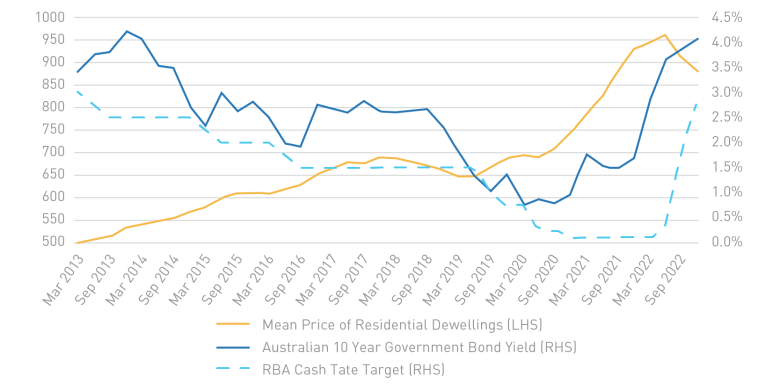
The December quarter saw the RBA lift rates a further 75bps with 25bps announced at each of the monthly meetings. The movements confirmed this interest rate hike cycle to be the fastest since 1994 (see red line in Figure 1).

Australia was not alone with its steep interest rate trajectory of 300bps, as other central banks also moved quickly to stamp out inflation;

  • the US Federal Reserve +425bps,
  • Bank of England +325bps,
  • and the ECB +250bps.


Figure 1: RBA rate hike cycles Figure 2: total volumes by sector
& % offshore investment
Source: CommBank, Economic Insights Global
Economic & Markets Research, Dec 2022
Source: CBRE Research


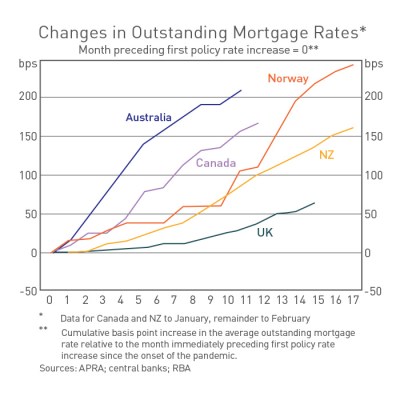
The net effect of these moves has been an increase in mortgage repayments of around 40-60% for the average borrower. Coupled with higher energy prices, this has added to cost of living pressures for most, reducing the affordability of residential property. Transaction activity in Australian commercial real estate slowed into late 2022 with CBRE reporting total volumes of $35.9 billion, compared with 2021’s $50.5 billion in 2021. The office sector formed the lion’s share of what was traded at $15.2 billion (42%).


The cash rate now stands at 3.1%, with the RBA minutes released in December indicating the RBA Board is considering for the first time this interest rate cycle the option of “no change”. This has given confidence to markets (both here and abroad) that we are indeed approaching the peak in the cash rate.


Our Cromwell inflation forecast for 2023 is 5%, which is below the annualised rate to October of 6.9%. The drivers to inflation remain as below; however, we expect to see inflation drop to 3% in 2024.


The drivers to inflation remain as below; however, we expect to see inflation drop to 3% in 2024.


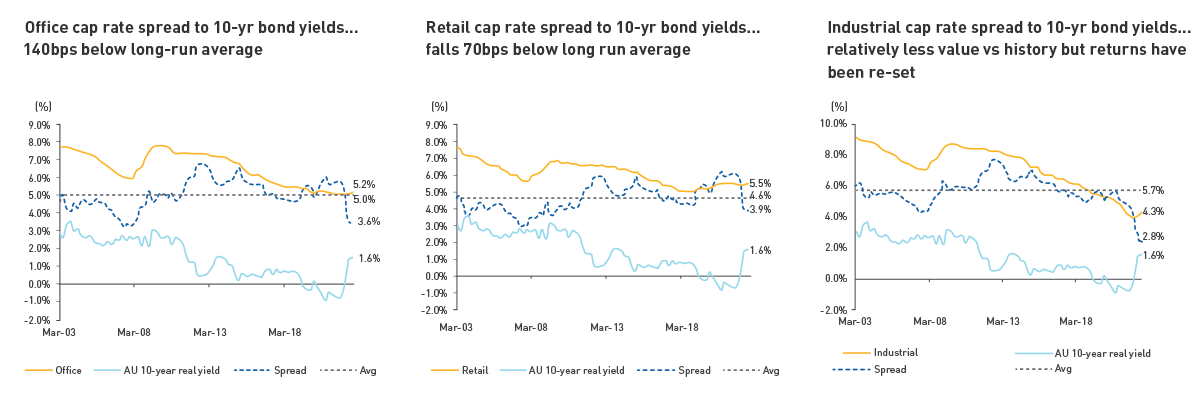
With inflation moderating and interest rates stabilising, liquidity should improve and asset prices should find greater stability. The following charts plot historical Cap Rates for office, retail, and industrial vs a “real” 10-year yield (i.e. stripping out inflation) and the difference (spread) over an almost 20-year period. The inflationary effect stripped out shows the relative value of the sectors. It also explains in part the reduced volume of assets traded in the last half-year as vendors have been unwilling to re-rate pricing.


Figure 3: historical cap rates for office, retail, and industrial
December-2022-direct-cap-rate
Source: FactSet, JLL, Macquarie Research, November 2022

Outlook

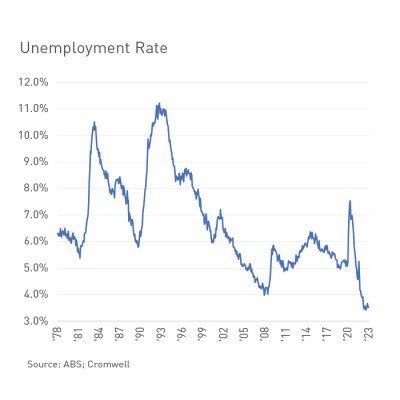
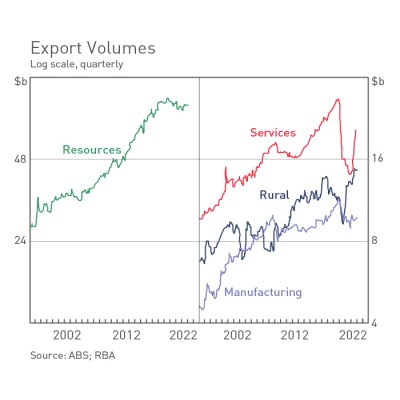
The Australian economy remains robust, despite headwinds. Employment is solid – with unemployment hovering around 3.5%, while job vacancies remain particularly high. Economic growth maintains positive momentum dominated by export demand for resources.

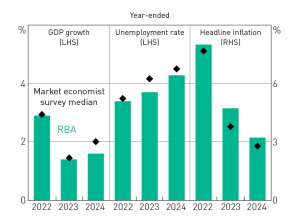
The RBA expects some of this to continue – with the unemployment rate to remain around 3.5% in 2023, weakening to 4.5% in 2024. While it expects inflation to peak at around 8% in 2022 (dominated by higher food prices & energy), it expects it to gradually move down to ~3% by 2024 year-end. Economic growth will slow (we expect to around 2% in 2023), but still remain positive and impressive compared to other western countries.

These factors along with business conditions at a healthy ~30 year high1 put the Australian economy and commercial property market in good stead. Businesses continue to adjust size requirements for occupancy as they live with hybrid working, although in certain markets this is now largely known.

Experiential workplaces with clever refurbishments and amenity continue to attract and retain quality tenants; something we continue to see within our assets.

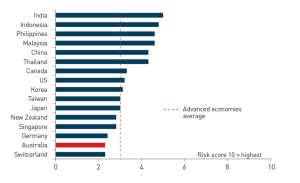
In a global context, Australia is in a position of strength, with a compelling economic outlook, comparatively low inflation compared to Europe and the US and an attractive demographic profile. Oxford Economics, therefore, estimate Australia’s economic risk to be one of the lowest of the advanced economies.

This should in turn support tenant demand for good quality real estate to facilitate economic growth and cater for a growing and ageing population. Liquidity from both domestic and international capital is likely to improve. In conjunction, powerful megatrends such as the need for more sustainable, energy efficient real estate and rising demand for segments serving the modern economy such as urban logistics, data centres and highly amenitised offices will create income growth opportunities.

Figure 4: RBA and Market Economist Forecasts Figure 5: Economic risk: Australia vs advanced economies average
Source: ABS; RBA Source: ABS; RBA


How did Cromwell Funds Management fare this quarter?

The Cromwell Direct Property Fund sold Allara Street, Canberra, this quarter. The property was originally bought in July 2015 for $16.8m and was sold in October 2022 for $18.187m. Sales proceeds were used to reduce debt. Gearing as at 31 December 2022 was 36.3%. Further leasing success post 31 December at Queen St Brisbane, Creek St Brisbane, and Grenfell St Adelaide will improve the current 93.6% occupancy rate and 4.6-year WALE.

The Fund currently distributes 6.75 cents per unit p.a., or 5.29%2, payable monthly, and has generated annualised total returns since inception of 8.8% p.a. The Cromwell Direct Property Fund continues to demonstrate excellent risk adjusted returns for investor portfolios.

Performance (%) P.A as At 31 December 2022

Year Cash (AU) Bonds (AU) Shares (AU) Cromwell Direct Property Fund
1 1.25% (9.71%) (1.77%) 0.7%
3 0.55% (2.87%) 5.51% 6.1%
5 1.01% 0.54% 7.10% 6.8%

Source: Lonsec and Cromwell Funds Management


Footnotes
  1. NAB Business Survey – Business Conditions
  2. Based on current distributions of 6.75 cents per unit p.a. and a current unit price of $1.2755 as at 31 December 2022
Person typing on a laptop

Learn

March 5, 2023

Timber buildings – Truly sustainable real estate


In this special report, our Research and Investment Strategy team explore how timber buildings can be a critical part of the solution the real estate industry needs to mitigate climate change.

The report takes a deep dive into timber as a renewable building resource. Alex Dunn and Tom Duncan explore how using timber in new building construction can deliver positive environmental impacts and lead to truly sustainable real estate. They provide a balanced view of the benefits and challenges of timber construction; address some common misconceptions around its use and consider the advantages from an occupier and investor perspective. This is essential reading for all real estate stakeholders who are serious about enacting impactful environmental change.

Explore timber as a renewable building resource

Read the full Timber Buildings – Truly sustainable real estate report and find out more.

Person typing on a laptop

Learn

February 17, 2023

The physical office in a hybrid world


Why changing occupier demand means investment opportunity

Hybrid working, where white-collar employees divide their working week between home and the office, is now the default for Australian companies. This trend was in motion prior to the pandemic, but has been accelerated and solidified by it, establishing it as the norm.

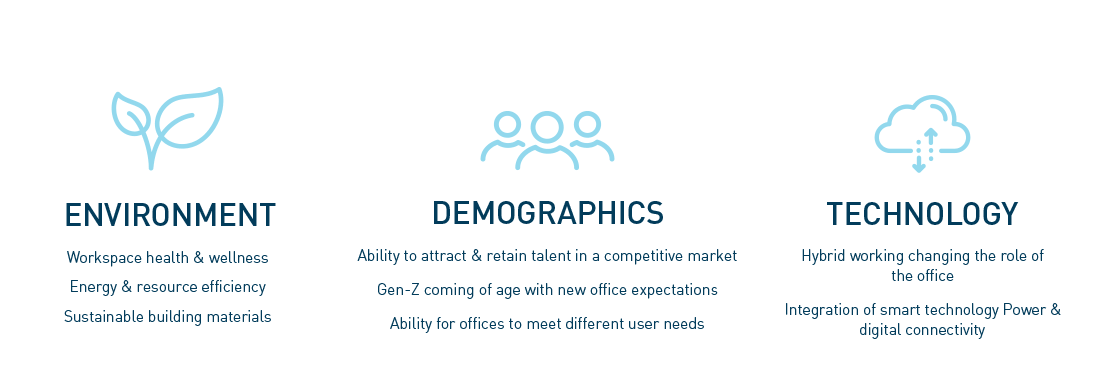
With employees in the office fewer days per week, the role of the office has changed. In parallel, other structural themes are shifting occupier expectations about their offices faster than the market can adapt. These themes include the environment and the need for offices to help mitigate the climate crisis; demographics with a new group of gen-Z employees born since 1997 coming of age; and technology changing the type of work that is done and where it is undertaken (Figure 1). For informed investors who act with conviction, filling the supply gap by providing office space suitable for modern occupation brings performance opportunity.

Figure 1: The themes behind new office requirements

Demand: Successful office criteria have changed
In a hybrid workplace, the office is used selectively by employees for specific tasks that cannot be done at home. These tasks include collaboration, team/client meetings, knowledge-sharing, training, and company culture-building. With employees empowered to choose their working location, the office must also make a better pitch to workers to justify the time, expense, and inconvenience of commuting if it is to be well-used.


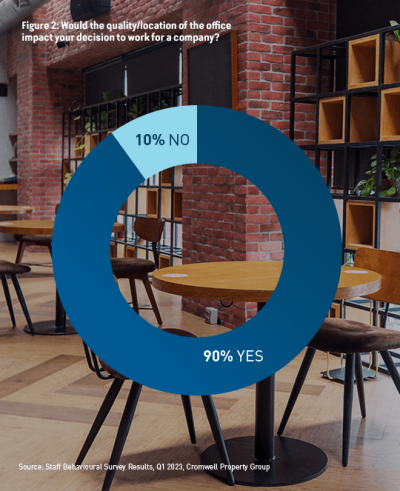
This requires redesigned space, which provides flexibility and can be used for different tasks throughout the week. Shared spaces are in, permanent desks are out. It means a greater focus on experience, with aspects like vibrancy, atmosphere, and amenity being important – think better kitchens/cafes, funky decor and outdoor spaces within the workplace and the immediate locality. Occupying a quality well-located office is essential if companies are to attract and retain talent, as our global survey of workers reveals (Figure 2).


Another key criteria today is sustainability. This includes health and wellness aspects like air quality and biophilia (plants), energy efficiencies to reduce emissions and mitigate high energy costs, and quantifying the carbon embodied within the building itself. These considerations are important, because reducing greenhouse gas emissions is a priority for corporate occupiers – with 77% of 400 global companies recently surveyed by Knight Frank having a net zero target of 20301. Achieving this will require occupying sustainable offices.


Supply: Much of the market does not meet modern occupier need
Occupier demand has shifted rapidly to reflect these requirements, but supply takes longer to realign. Though office space overall may be oversupplied if less space is needed per worker, the provision of space that meets today’s occupier demand is arguably undersupplied. Furthermore, this demand is concentrated predominantly on CBD locations that minimise commute times and maximise access to amenity, further widening the demand-supply gap.

According to JLL data, prime office space comprises just one quarter of the total office space within Australia’s five main CBDs. Prime vacancy in Sydney and Melbourne CBDs is above average but, as lease events occur, it is likely that this space will be absorbed by occupiers relinquishing older quality space within the CBD or suburban locations – perhaps taking a smaller footprint overall but paying more per square metre for it. In addition to prime CBD space, we expect buildings with character – such as former warehouses or heritage buildings – in amenity-rich, accessible fringe locations will attract strong occupier interest.


Implications: Filling the supply gap will deliver returns
The conditions of high occupier demand for a specific type of space and low supply create a compelling strategy for owning, buying, or creating quality stock that is suitable for modern occupiers in CBD and select fringe locations. Offices continue to be impacted by negative investor sentiment associated with cyclical economic conditions and uncertainty over the future of work. However, rational analysis of prevailing structural themes and market trends suggests that acting with conviction now to construct portfolios that provide the space modern occupiers want will deliver solid returns. With the right strategy, the greatest performance potential lies in targeting poor quality, unloved office space in good locations which can be upgraded to todays’ standards.


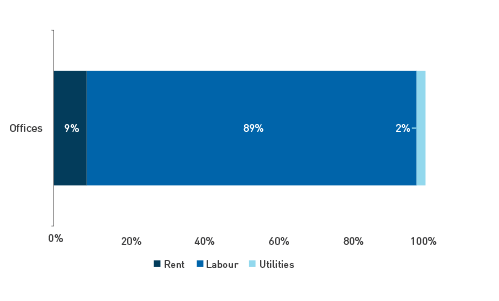
Figure 3: Typical cost structure for office occupiers


Source: Cromwell Property Group/Wall Street Journal, Q1 2023

Occupier competition for suitable space is likely to support rental growth, even in a higher inflationary environment. Our analysis shows that for the typical office occupier, rental costs constitute a mere 9% of total operational costs (Figure 3). If leasing better quality office helps to increase the ability of a company to attract and retain labour – a far larger cost item – and support labour productivity, they will pay more for it.

Over the last 25 years, analysis of prime rental growth in Australia’s five main CBDs against CPI shows that in all cases, rental growth has exceeded inflation. In today’s hybrid working world, the business-critical importance of suitable office space combined with its limited supply will create an even stronger rental growth impetus regardless of the inflationary and economic growth outlook.

Occupier competition for suitable space is likely to support rental growth, even in a higher inflationary environment.

Conclusion: bifurcation of demand implies strong future performance for the best space

The demand for office space has evolved rapidly over the last few years and supply has not kept pace. As demand continues to concentrate on the minority of space suitable for modern occupation, the supply-demand mismatch will widen. Investors who own or can acquire or create the space occupiers want where they want it are well positioned for future rental growth.


Footnotes
  1. Source: Knight Frank, Outlook Report 2023
Person typing on a laptop

Learn

January 16, 2023

December 2022 quarter ASX A-REIT market update

Stuart Cartledge


The S&P/ASX 300 A-REIT Accumulation Index reversed some of 2022’s losses in the final quarter of the calendar year, gaining 11.6%. Results were choppy throughout the period, with a gain of 9.9% in October, followed by a 5.8% move higher in November, before a 4.0% drop in December. The property index outperformed the broader equity market, with the S&P/ASX 300 Accumulation Index up 9.1%.

Much like property market movements, Australian 10 Year Government Bond yields were volatile throughout the quarter. After beginning the quarter at 3.9%, they retreated to approximately 3.3% before finishing the quarter just above where they started at 4.0%. In this context, the strong performance of property stocks could be considered somewhat surprising, however this is probably less remarkable when considered more broadly, with the property index falling 20.1% during 2022. Industrial property owners outperformed in the December quarter.

Demand from tenants for industrial property continues to be strong, with limited vacancy in key markets. Whilst supply is coming online, it is not enough to match demand for well-located properties. As such, industrial market rental growth is very strong, supporting property values, despite expanding capitalisation rates. Dexus Industria REIT (DXI) rose 24.1% in the quarter and Centuria Industrial REIT (CIP) added 22.0%. CIP’s revaluations resulted in a 1.9% reduction to book values, concentrated in ultra-long weighted average lease expiry (WALE) properties. Capitalisation rates expanded 0.47% to 4.66%.

DXI’s portfolio was revalued 0.2% higher, despite capitalisation rates expanding by 0.09%. Owners of shopping centres also outperformed in the quarter, as consumer spending through the crucial holiday season appears to have been resilient, despite the drag of increased interest rates. Whether this continues into 2023 and beyond, as increased costs of living filter through and deplete savings, is uncertain. Offshore shopping centre owner Unibail-Rodamco-Westfield (URW) was a major outperformer, rising 26.1%, however this only served to regain a part of prior losses in recent periods. Australian shopping mall owners Scentre Group (SCG) and Vicinity Centres (VCX) were also outperformers, adding 13.4% and 15.3% respectively.

Owners of smaller neighbourhood shopping centres had mixed performance, with Region Group (RGN) up 18.5% and Charter Hall Retail REIT (CQR) underperforming the index, but still gaining 7.6%. Office property owners were once again underperformers in the final quarter of 2022. Physical occupancy continues to be troubled in key office markets and incentives on new leasing deals continue to be stubbornly high.

Each of Centuria Office REIT (COF), Dexus (DXS) and Cromwell Property Group (CMW) rose, but underperformed the index, lifting 7.6%, 4.0% and 2.1% respectively. GDI Property Group, predominantly a Perth office owner, was a large underperformer, falling 8.1% during the quarter. Property fund managers had mixed performance over the period. Property revaluations were broadly unmoved, supporting earnings for this financial year, however it appears as if inflows to funds will be more constrained moving forward.

Centuria Capital Group (CNI) outperformed, adding 14.6%, whilst Goodman Group (GMG) moved roughly in line with the index, up 11.0%. Alternatively, Charter Hall Group (CHC) and Elanor Investors Group (ENN) underperformed, with CHC gaining 6.2% and ENN up only 0.8%.


Market outlook

August’s reporting season was broadly positive for property stocks when looking into the recent past. However, forward looking outlook statements were cautious, with a focus on the impacts of higher interest rates. Those who released property valuations to 31 December 2022 mostly showed slightly negative revaluations with some reporting rental growth offsetting capitalisation rate expansion.

The industrial sub-sector continues to be the most sought after, given the tailwinds of e-commerce growth, the potential onshoring of key manufacturing categories and the decision by many corporates to build some redundancy into supply chains to cope with current disruptions. All of these factors will support ongoing demand for industrial space.

The jury is still out on exactly how tenants will use office space moving forward, but demand for good quality well located space remains. Transactional activity of office assets continues to provide some evidence of value, but transaction volumes have recently reduced.

We remain cognisant of the structural changes occurring in the retail sector with the growing penetration of online sales and the greater importance of experiential offering inside malls. Recent events will likely accelerate these changes. It is also interesting to note the juxtaposition of very high retail sales figures despite very low levels of consumer confidence, no doubt impacted by rising costs of living.

The recent increase in bond yields does present a headwind for all financial assets, and particularly yield based sectors such as property. However, with key large capitalisation REITs now trading at a significant discount to the value of their underlying assets and with no value ascribed to embedded active businesses, we believe the sector offers value, particularly in comparison to unlisted property.

Phoenix Portfolios has for some time discussed the risk of inflation, given the enormous fiscal stimulus and extreme monetary policy setting that we have lived through. In recent times, commentators and bond markets have begun to react to the presence of such a risk. In this environment, long leases with fixed rent bumps, which were previously in high demand, may become relatively less attractive. Historically, real assets such as property and infrastructure have performed well during inflationary periods.

About Stuart Cartledge

Stuart is the Managing Director of Phoenix Portfolios and the portfolio manager for each of the company’s property portfolios. Prior to establishing the business in 2006, Stuart built a strong track record in the listed property security asset class and has been actively managing securities portfolios since 1993. Stuart holds a master’s degree in engineering and management from the University of Birmingham and is a Chartered Financial Analyst.

Person typing on a laptop

Learn

December 7, 2022

Three Retirement risks and how to navigate them

Peta Tilse


While there has never been a better time to be alive, it has, admittedly, been easy to overlook this notion over the past few years. The truth is that we live in an era of unparalleled economic, social, and technological advancements – all of which continue to develop at an exponential rate – and opportunities still certainly exist, despite the current trying times.

Over the past 36 months, a raft of economic factors arising as a result of the COVID-19 pandemic, severe supply chain disruptions, and the war in Ukraine – as well as other macroeconomic variables – have brought unprecedented challenges to communities across the globe.

Consequently, more than 20% of Australians now believe they won’t achieve their desired retirement standard of living, and half of those who are currently working admit they are unsure as to how much they will have, or need, when they retire. Some of the risks facing Australians who are nearing, or who are in, retirement are outlined below – as well as several ways to mitigate each of these.


The risks

The 2022 Natixis Global Retirement Index (GRI), now in its tenth year, is a multifaceted research tool that examines the factors driving retirement security. The 2022 GRI identifies three key risks for those who are nearing, or are in, retirement – inflation, interest rates, and longevity risk.

1. Inflation
If you were unaware of what inflation was prior to 2022, you undoubtedly know what it is now! Simply put, inflation refers to the average price increases over a given period, typically a year.


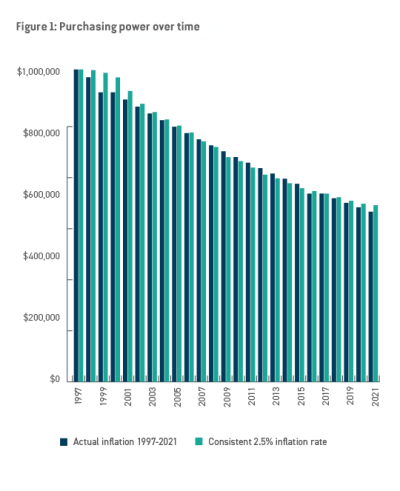
The measure of inflation and deflation – the consumer price index (CPI) – rose 1.8% across the September 2022 quarter, and 7.3% annually; this marks the highest annual CPI increase since 1990. Further, the 9.6% annual increase in the price of goods was the highest since 1983. The price of non-discretionary goods and services increased 8.4%, with discretionary goods rising 5.5%. Inflation can be particularly detrimental to those in retirement, as it not only chips away at savings and investment returns, but it does so to those with limited recourse to recoup that lost purchasing power.


The Reserve Bank of Australia (RBA) maintains that the optimal target for monetary policy is to achieve an average inflation rate of 2% to 3% over time. However, even when inflation sits within the RBA’s target range, it can still be detrimental to savings over the long-term, as demonstrated in the figure 1.


Inflation impacts everyone, not simply those nearing or in retirement. In early-2022, Cromwell provided an inflationary state of play and outlook, and outlined ways commercial real estate can hedge against inflation.


2. Interest rates
It’s well publicised that Australia has just experienced two years of historically low interest rates.

Arguably, no Australians are more acutely aware of interest rate fluctuations than those in retirement, as low rates have made it difficult for retirees to generate income from their savings.

Many retirees who were unable to wait for bonds to begin returning a sustainable yield were forced to dip into the principal of their nest egg. This practice puts these people in the difficult position of lowering income expectations, accepting their assets might run out early, or raising risk profiles in an attempt to reduce losses.

However, there is a light at the end of the tunnel. As inflation has spiked across the globe, central banks seek to enact monetary policy tools, including raising interest rates. In theory, inflation and interest rates are inversely correlated – when one is high, the other is low.

In Australia, the RBA has raised rates across the last six consecutive monthly interest rate decisions – from the historically low 0.10% in May to 2.60%, as at the October 2022 meeting, and have signalled future rate rises.

However, raising rates, even quickly, is not an instant fix for spiking inflation. The RBA’s forecast is for CPI inflation to sit around 7.75% across 2022, just over 4% over 2023 and around 3% in 2024. Retirees relying on fixed income investments are not quite out of the woods just yet, as nominal bond returns are unlikely to outpace inflation for positive real returns for some time.

3. Longevity risk
Medical, economic, and societal advances mean people are drastically outliving life expectancy estimates from this time last century. While longevity is unequivocally good news for individuals, living a longer, healthier life requires people to have more financial resources.

For example, if you are currently 65 years old, your life expectancy at birth was around 68 for males and 74 for females. However, due to significant social and medical advancements since the 1950s – when these estimates would have been made – healthy men and women in their 60s are now statistically expected to live for another two decades.

Longer lifespans mean many are faced with longevity risk, the occurrence whereby a retiree runs out of money because they have lived longer than expected. The challenge becomes maintaining a comfortable, desired retirement lifestyle, while ensuring you will have the means to do so for the rest of your life.


The good news

While the three risks outlined above are daunting, and not to be taken lightly, there are few better countries to approach these challenges than Australia. Australia ranked fifth in the GRI’s rankings for global retirement security, behind only Norway, Switzerland, Iceland, and Ireland.

Australia ranked eighth in the 2012 GRI – remaining consistent over the decade – before jumping from seventh in 2021 to fifth in 2022. Scoring consistently high in health, quality of life, material wellbeing, and finances in retirement year-on-year, Australia and its well-rounded approach to retirement arguably sets the standard in relation to the rest of the world.

Australia and its well-rounded approach to retirement arguably sets the standard in relation to the rest of the world.

Navigating the challenges

There are a number of ways investors can safeguard against the above risks and maintain their desired quality of life in retirement.

Make a plan
A November 2020 Australian Government report into retirement planning, saving, and attitudes found that many respondents were unprepared for life beyond work, with 68% of respondents admitting they had never considered how much they would need for retirement.

The majority (80%) of the remaining 32% of respondents who had estimated a retirement savings goal understood how much they needed to save per year to reach this goal, with 60% changing their behaviour after calculating how much they needed for retirement.

These statistics show the importance of making a plan. Understanding what is required to achieve your desired lifestyle in retirement will greatly assist in helping you putting together an accurate plan. There are countless resources available to assist you, including the Moneysmart retirement planner and Cromwell’s ‘Countdown to Retirement’.

Don’t underestimate the impact of inflation
It’s important to understand the impact of inflation on your purchasing power, and the way in which it can chip away at savings, as well as understanding its impact on your investment portfolio.

Inflation above anticipated levels is generally considered detrimental to stocks and fixed income investments; however, real assets, including real estate, land, precious metals, commodities, and natural resources tend to fare well in times of high inflation.

Income from real assets is generally linked to inflation. For example, it is common for commercial real estate leases to have annual rent increases tied directly to increases in inflation – this is why commercial property is regarded as an inflationary hedge.

Understand your investment income
Understanding your investment income is straightforward, but it is the most important factor throughout retirement. Not only should you understand your income sources, but it is important to set realistic expectations that will allow you to live comfortably.

Retirement casts a new light on investment opportunities, particularly relating to an investor’s risk profile and unfamiliar tax scenarios: it is important for investors to look beyond familiar investment options to diversify and spread their risk across multiple sectors, geographic regions, and asset classes. Without a regular source of income, retirees need to minimise their longevity risk by looking for investments that offer both returns and capital growth.

Don’t underestimate how long you will live
Consider this: The retirement age in Australia is generally understood to be 67 years old, which is when an individual qualifies to receive Government Age Pension benefits – the main source of income for most retirees.

However, according to the ABS, the average retirement age of all retirees as of May 2020 (the most recent information available) was 55.4 years, with 55% of people over 55 retired. By the time most individuals reach 65 years of age, they are now expected to live for another two decades. This means a person retiring at age 55 must stretch their finances for, on average, another 30 years.

It’s important to note this is merely an average, many will live far longer than two decades from their 65th birthday. Therefore, it is vital to overestimate your own life expectancy, rather than underestimate it.

Consider unforeseen expenses
With luck, unforeseen expenses can be kept to a minimum; however, it is important to factor these in, nonetheless. Whether these costs are associated with real estate maintenance or repairs, having to care for a loved one in a crisis, or looking after your own personal wellbeing, unforeseen costs can be significant and need to be a key consideration.

Former United States Secretary of Defense, Donald Rumsfeld, offered the following in a February 2002 news briefing:

“There are known knowns: There are the things we know. We also know there are known unknowns: That is to say we know there are some things we do not know. But there are also unknown unknowns: The ones we don’t know we don’t know.

… It is the latter category that tends to be the difficult ones.”

There are known knowns: There are the things we know. We also know there are known unknowns: That is to say we know there are some things we do not know.
Donald Rumsfeld – Former United States Secretary of Defense

This quote is apt with regard to navigating retirement risks. It is not possible to predict how long an individual will live or the exact level of savings required to maintain a desired quality of life in retirement. However, understanding as best as possible the ‘known unknowns’ and being prepared to weather the ‘unknown unknowns’ is the best method to ensuring a long and comfortable retirement.

Person typing on a laptop

Learn

October 1, 2022

Offices 2025 – Research Briefing Note


The enforced mass homeworking caused by the pandemic has viscerally demonstrated that in today’s tech-infused world knowledge-based ‘work’ is an action, not a place, and it need not necessarily be performed in an office. This has triggered much public debate on the purpose of offices and what future they might have. In Cromwell’s latest briefing note, Tom Duncan and Alex Dunn from the research team examines these recent events, their impact on the sector and what this means for the future role of offices and the resultant implications for occupier demand.

Discover the future of the office market

Read more of the insight and discovers of the office markets for Australia and Europe.

Person typing on a laptop

Learn

August 9, 2022

The relationship between interest rates and real estate yields


The relationship between interest rates, real estate yields and performance is important for investors to understand.

Cromwell’s latest report published by Alex Dunn and Tom Duncan from the research and investment strategy team sheds some light on this topic. Their analysis indicates that interest rate movements do not necessarily cause directly comparable real estate yield changes. The volatility in the yield gap between real estate yields and ten-year government bonds suggests that the influence of other factors play a substantial role in price movement.

This has implications for the extent of yield compression that investors can expect during periods of falling interest rates, as well as decompression when interest rates rise.

Explore insights and analysis on this topic

Read the full report: Opaque link: The relationship between interest rates and real estate yields.