21610
Person typing on a laptop

Learn

Home Uncategorized
May 25, 2026

20:20 Stock Stories: Sunland Group

SUCCESS STORY CASE STUDY


As Phoenix Funds marks its 20‑year anniversary, we are revisiting a selection of past investments that continue to offer relevant lessons for investors today. This case study on Sunland Group forms part of our 20:20 Stock Stories series — a retrospective look at listed businesses that illustrate enduring principles of long‑term investing. Sunland Group was an ASX‑listed property developer for much of its corporate life, and Phoenix initiated a position in the company in 2014, remaining invested until its delisting in 2023. While market cycles, sentiment and conditions have evolved over that period, the core themes highlighted by this investment — earnings volatility, management alignment and the importance of after‑tax returns — remain as pertinent today as they were at the time. It is these timeless insights that make the Sunland story worth revisiting and sharing with our investor community.

“Volatility creates opportunity for investors who are able to look through the peaks and troughs and focus on long‑term value.”
— Stuart Cartledge, Co‑founder and Managing Director, Phoenix Portfolios

The first key lesson for us:

Volatility of earnings creates opportunities for those able to look through the peaks and troughs.

Looking through the volatility

Sunland Group was established in 1983 by architect Dr Soheil Abedian as a Queensland based property development company and was responsible for many projects across the east coast of Australia, spanning both iconic towers such as Australia’s tallest building, Q1 on the Gold Coast and house and land projects in emerging suburbs.

Except for a failed offshore expansion, and the difficult period during the Global Financial Crisis, Sunland has been a highly profitable and well managed business. Its core “House and Land” business consistently delivered solid returns which is a highly valued attribute of any listed company.

The high-rise business created iconic towers that produced some large profits upon completion. However, by its very nature, this led to a volatile income stream – something that many share market investors are uncomfortable with.

The second key lesson for us:

An aligned management team is more likely to make sensible strategic long term decisions.

Alignment of interest

The founding Abedian family maintained a large stake in Sunland throughout its listed life, thereby maintaining a strong alignment of interest with minority shareholders. However, the share market did not value the company appropriately, and over the period from 2009 through to 2020, the stock traded at a significant discount to its book value. A low share price does however enable a financially astute management team to buy back their own stock, reduce the number of shares on issue, and increased the value per share of all remaining shares. Using a combination of retained profits and inventory selldowns, Sunland bought back and cancelled over 55% of its own shares. This is a low-risk way of adding value.

The combination of good capital allocation, an aligned management team and a compelling valuation was attractive to Phoenix and a position in the stock was initiated in August 2014. This position was ultimately held until the company delisted in October 2023.

The third key lesson for us:

The market does not fully value franking credits. After-tax returns can be materially enhanced by holding companies delivering abundant fully franked distributions.

Franking credits

The de-listing was not a bad news story!  Despite years of buying back stock at a discount, a strategic review was undertaken and announced to the market in October 2020 which essentially involved either completing projects, or selling them, and returning all capital to shareholders.  At the time of the announcement, the share price reflected around half of the capital value of the business.

However, given an extended period of profitability and a substantial franking credit balance, a significant portion of sales proceeds were delivered to shareholders as fully franked dividends.  For Australian superannuation investors and foundations, this form of distribution is extremely tax effective and therefore very important from an after-tax return perspective.

Person typing on a laptop

Learn

Home Uncategorized
May 25, 2026

Enhancing Asset Performance for the Future – Electrification at 700 Collins Street

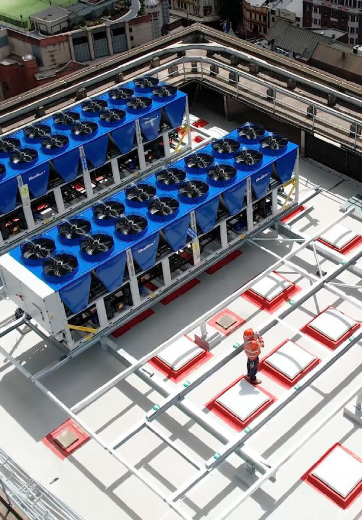
While the transition to a lower-carbon economy is not linear, expectations for commercial real estate continue to shift toward stronger energy performance, electrification and asset resilience. At 700 Collins Street in Melbourne, Cromwell is undertaking a broader program of capital investment to enhance the building’s long-term performance, relevance and appeal to high quality occupiers. As part of this strategy, the building is being transitioned from gas-powered systems to advanced electric technologies, including reverse-cycle heat pumps and heat recovery chillers. The project places 700 Collins Street among a small number of Melbourne CBD high-rise office buildings undertaking electrification retrofits at this scale, and among even fewer doing so while the building remains occupied.

Benefits of electrification

The upgrade is intended to improve operational efficiency, lower carbon intensity and strengthen the asset’s long-term resilience, efficiency and competitiveness.

It is also expected to remove approximately 2.28 million megajoules of natural gas from annual consumption, reducing reliance on fossil fuels and lowering energy intensity. Over time, this positions the building to benefit from grid decarbonisation and greater integration of renewable energy, supporting improved long-term energy performance.

The upgrade reinforces 700 Collins Street’s existing 5.5 Star NABERS Energy rating while aiming to lift the building’s Renewable Energy Indicator (REI) from 75% to a targeted ~99% (with the diesel generator retained). In a market where energy performance is increasingly influencing tenant demand and capital allocation, assets with strong performance credentials are better placed to attract and retain high-quality occupiers.

From a portfolio perspective, initiatives like this are critical in future-proofing assets against regulatory change and evolving market expectations. As ESG considerations become more embedded in investment decisions, proactively upgraded buildings are better positioned to support tenant demand, maintain long-term asset relevance, enhance investment appeal and deliver resilient long-term returns.

Ultimately, the electrification of 700 Collins Street reflects an active approach to managing and enhancing assets in response to structural market trends, supporting long-term value creation for investors.

Proposed performance outcomes

~2.28 million MJ of natural gas removed annually
5.5-Star NABERS energy rating maintained
Targeted ~99% Renewable Energy Indicator (REI) rating
Array
(
    [slides] => Array
        (
            [0] => Array
                (
                    [media_type] => image
                    [image] => Array
                        (
                            [image] => Array
                                (
                                    [ID] => 41723
                                    [id] => 41723
                                    [title] => aerial
                                    [filename] => aerial.jpg
                                    [filesize] => 495545
                                    [url] => https://www.cromwell.com.au/wp-content/uploads/sites/2/2026/05/aerial.jpg
                                    [link] => https://www.cromwell.com.au/enhancing-asset-performance-for-the-future-electrification-at-700-collins-street/aerial/
                                    [alt] => 
                                    [author] => 8
                                    [description] => 
                                     => 
                                    [name] => aerial
                                    [status] => inherit
                                    [uploaded_to] => 41692
                                    [date] => 2026-05-22 04:16:14
                                    [modified] => 2026-05-22 04:16:14
                                    [menu_order] => 0
                                    [mime_type] => image/jpeg
                                    [type] => image
                                    [subtype] => jpeg
                                    [icon] => https://www.cromwell.com.au/wp-includes/images/media/default.png
                                    [width] => 1024
                                    [height] => 432
                                    [sizes] => Array
                                        (
                                        )

                                )

                            [alternate_images] => 
                            [mobile_image] => 
                            [tablet_image] => 
                        )

                     => Array
                        (
                            [video_type] => file
                            [autoplay] => 
                            [video_file] => 
                            [video_embed] => 
                            [image_placeholder] => Array
                                (
                                    [image] => Array
                                        (
                                            [image] => 
                                            [alternate_images] => 
                                            [mobile_image] => 
                                            [tablet_image] => 
                                        )

                                )

                        )

                    [title_block] => Array
                        (
                            [title] => 
                            [emphasise_title] => 
                            [emphasised_text] => real foundations.
                            [emphasis_style] => script
                            [content] => 
                        )

                    [text_width] => constrained
                    [button_group] => Array
                        (
                            [buttons] => 
                        )

                    [button_alignment] => left
                    [button_direction] => horizontal
                )

        )

    [banner_placement] => inner
    [media_position] => full
    [full_height] => banner-short-height
    [banner_logo] => 
    [content_alignment] => left
    [block_theme] => Array
        (
            [block_theme] => Array
                (
                    [] => 
                    [background_colour] => theme-white
                    [block_padding] => section-padding-large
                    [add_anchor_id] => 
                    [anchor_id] => 
                )

        )

)

For tenants, the transition to high-efficiency electric systems enhances workplace quality through more consistent temperature control and improved indoor environmental conditions, while also supporting tenants’ own sustainability objectives – factors that are becoming increasingly important in leasing decisions.

The electrification program has been delivered through a structured, seven-stage pathway, ensuring careful consideration of building systems, infrastructure capacity, and technology selection. The works have also been sequenced to support continuity of building operations during delivery.


Electrification Pathway

Timeline illustrating the Electrification Project at 700 Collins Street

McKell Building, Sydney

This approach has already been demonstrated within the portfolio. At Rawson Place in Sydney, the Group completed a “Sydney-first” electrification upgrade of the McKell Building, converting a multi-storey CBD office asset from gas to an advanced electric heat-recovery system. As the first project of its kind at this scale, it improved energy efficiency while helping future-proof the asset.

READ MORE
Person typing on a laptop

Learn

Home Uncategorized
February 26, 2026

Understanding replacement cost: A key indicator of value and opportunity 

Replacement cost is a key concept in assessing value in commercial property. When high quality assets trade materially below the cost of delivering new supply, it typically reflects a cyclical dislocation in pricing rather than a deterioration in fundamentals. In these environments, the market can temporarily price existing buildings at a discount to their physical replacement cost, creating an opportunity to acquire well-located, income-producing assets at compelling entry values.

Replacement cost is therefore more than a technical benchmark. It links pricing back to real construction economics and helps investors understand both the long-term defensiveness of existing buildings and the feasibility constraints shaping future supply. This article outlines how replacement cost is defined, how and why it has risen in recent years, and why these dynamics are particularly relevant to the Brisbane CBD, using 100 Creek Street as a case study.

How do we define replacement cost

For the purposes of this analysis, replacement cost is defined as the estimated cost to construct a comparable new office building today, using current materials, labour and building standards, excluding development profit and interest costs.

This definition is deliberate: it isolates the physical cost base of an equivalent building, covering structure, services, façade, fit-out, compliance and professional fees, without embedding commercial assumptions that can vary significantly across developments. This “pure build” framing aligns with industry practice used by CBRE, JLL and Knight Frank when assessing whether the market is pricing existing assets above or below the cost of new supply.

How and why replacement costs have increased 

Replacement costs have risen materially across Australia over the past five years, reflecting sustained increases in the cost of delivering new office stock. ABS Producer Price Index data shows non‑residential building construction output prices have risen by around 35% nationally and approximately 40% in Queensland between March 2020 and December 2025.1 This uplift flows directly into replacement cost, as higher material, labour and construction input prices raise the physical cost base required to bring new buildings to market, widening the gap between build‑new economics and the pricing of existing assets.

Fit‑out works represent a significant portion of overall office delivery costs, and market data indicates they have risen more rapidly than base‑build costs since the pandemic. TRS Tenant Representation Services reports that office fit-out costs have increased around 40% since the pandemic, driven by materials inflation, labour shortages and heightened sustainability expectations.2 JLL’s 2025 analysis reinforces this trend, noting a 14.6% year-on-year rise in average fit-out costs as occupiers invest in higher quality, tech enabled and hybrid ready spaces.3

These escalating inputs sit behind a broader feasibility challenge across Australia’s office markets. JLL’s 2025 Fit-Out Cost Guide notes rising material and labour costs are stretching delivery timelines and continuing to elevate project budgets. Knight Frank similarly highlights that higher economic rents and rising construction costs are constraining development pipelines, particularly in CBD markets where the feasibility gap has widened.

In Cromwell’s view, these dynamics provide important context for investors: as the cost to deliver new supply rises, less supply ends up being brought to market. Without new supply, vacancy rates tend to decrease as ongoing population growth drives greater competition amongst tenants for space in existing assets. This creates favourable rent growth conditions for well-located buildings with strong amenity, efficient floorplates, and value-aligned rental levels.

Array
(
    [slides] => Array
        (
            [0] => Array
                (
                    [media_type] => image
                    [image] => Array
                        (
                            [image] => Array
                                (
                                    [ID] => 1564
                                    [id] => 1564
                                    [title] => cfm_hero_property_100creek_3
                                    [filename] => cfm_hero_property_100creek_3.jpg
                                    [filesize] => 507359
                                    [url] => https://www.cromwell.com.au/wp-content/uploads/sites/2/2023/03/cfm_hero_property_100creek_3.jpg
                                    [link] => https://www.cromwell.com.au/invest/fully-subscribed-and-closed-funds/cromwell-direct-property-fund/cfm_hero_property_100creek_3/
                                    [alt] => Cromwell Funds Management 100 Creek Street building
                                    [author] => 8
                                    [description] => 
                                     => 
                                    [name] => cfm_hero_property_100creek_3
                                    [status] => inherit
                                    [uploaded_to] => 875
                                    [date] => 2023-03-31 00:54:00
                                    [modified] => 2023-05-24 04:06:25
                                    [menu_order] => 0
                                    [mime_type] => image/jpeg
                                    [type] => image
                                    [subtype] => jpeg
                                    [icon] => https://www.cromwell.com.au/wp-includes/images/media/default.png
                                    [width] => 1024
                                    [height] => 377
                                    [sizes] => Array
                                        (
                                        )

                                )

                            [alternate_images] => 
                            [mobile_image] => 
                            [tablet_image] => 
                        )

                     => Array
                        (
                            [video_type] => file
                            [autoplay] => 
                            [video_file] => 
                            [video_embed] => 
                            [image_placeholder] => Array
                                (
                                    [image] => Array
                                        (
                                            [image] => 
                                            [alternate_images] => 
                                            [mobile_image] => 
                                            [tablet_image] => 
                                        )

                                )

                        )

                    [title_block] => Array
                        (
                            [title] => 
                            [emphasise_title] => 
                            [emphasised_text] => real foundations.
                            [emphasis_style] => script
                            [content] => 
                        )

                    [text_width] => constrained
                    [button_group] => Array
                        (
                            [buttons] => 
                        )

                    [button_alignment] => left
                    [button_direction] => horizontal
                )

        )

    [banner_placement] => inner
    [media_position] => full
    [full_height] => banner-short-height
    [banner_logo] => 
    [content_alignment] => left
    [block_theme] => Array
        (
            [block_theme] => Array
                (
                    [] => 
                    [background_colour] => theme-white
                    [block_padding] => section-padding-large
                    [add_anchor_id] => 
                    [anchor_id] => 
                )

        )

)

Case Study: 100 Creek Street

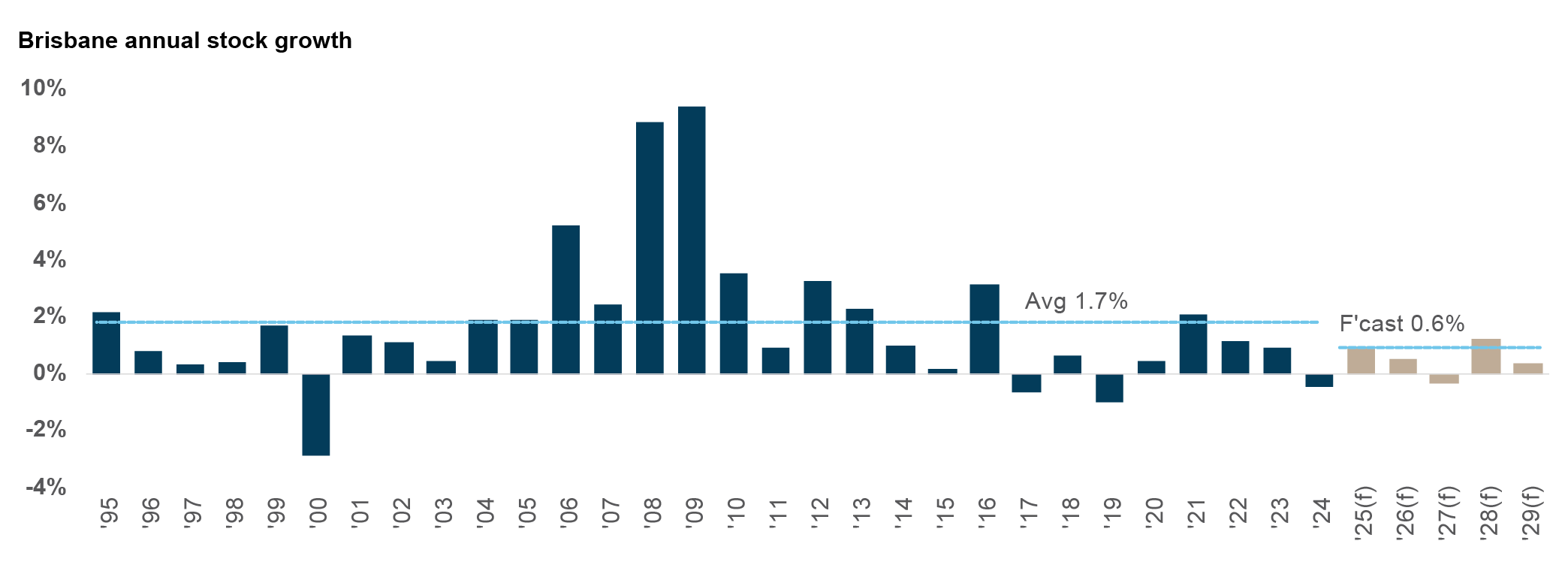
Brisbane is now the most expensive city in Australia to build in, and there is little relief in sight – construction costs are forecast to increase a further 22% by 2029 as major infrastructure projects absorb labour and resources. Replacement costs have risen well above current asset values, subduing the supply pipeline. Total Brisbane office stock is expected to increase by just 0.6% per annum over the next five years, well below the historical annual average of 1.7%, and significantly lagging the forecast pace of job creation.4

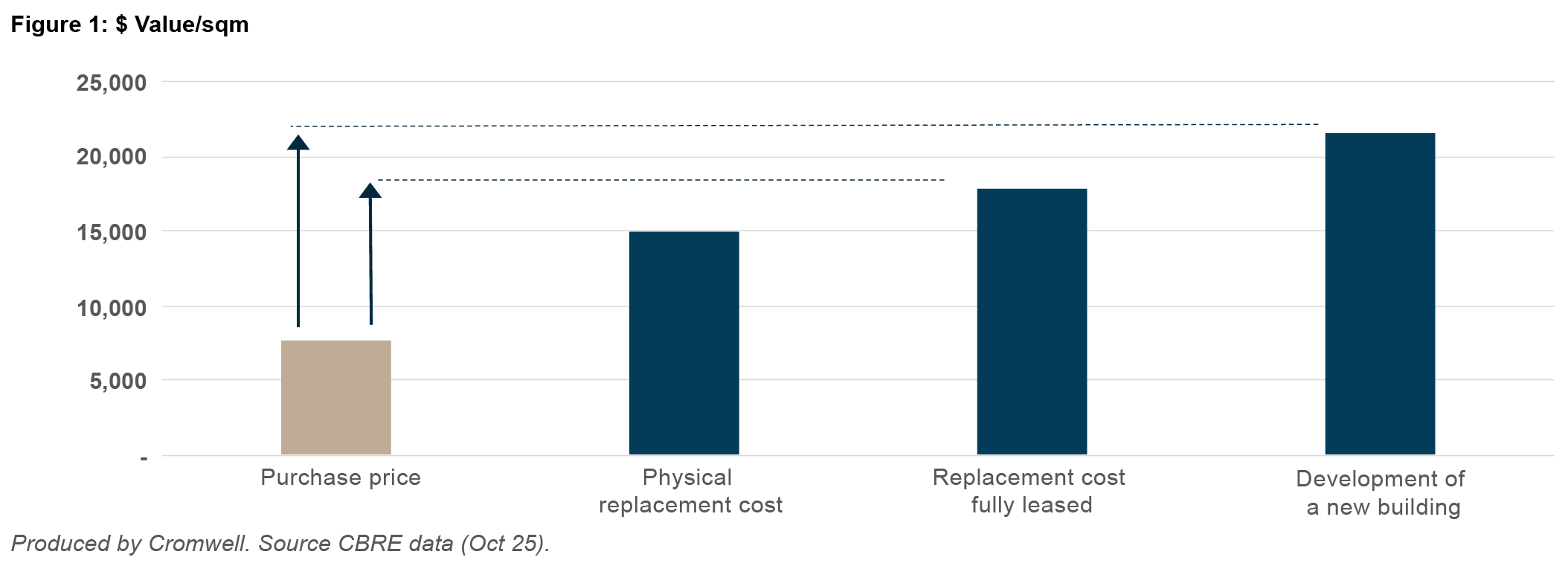
100 Creek Street provides a clear example of the growing dislocation between build-new economics and market pricing for existing Brisbane CBD assets. Figure 1 below shows CBRE’s assessment of the relative value of the acquisition of 100 Creek Street, Brisbane at a purchase price of A$155 million, a 57% discount to the replacement cost of a new fully leased office building excluding development profit and interest cost. Developing a building that may compete with the property is estimated by CBRE to cost 2.8 times the property’s purchase price.

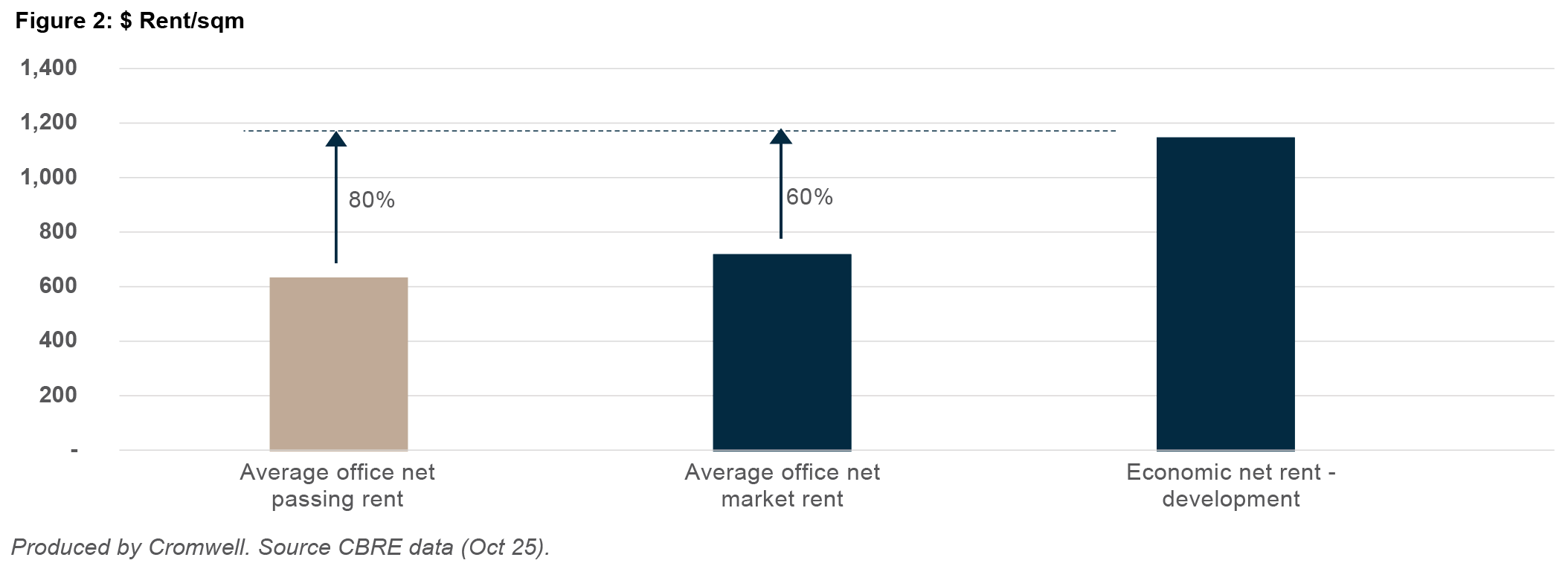
Additionally, as shown in Figure 2, the economic rent (being the break-even rent that tenants must pay for a new office development to be feasible) is estimated by CBRE to be approximately 60% higher than 100 Creek Street’s average net market rent and nearly 80% above the average net passing rent.

This divergence underscores the relative value in acquiring high-quality, well-located buildings such as 100 Creek Street at a meaningful discount to their physical cost of replication.

Array
(
    [slides] => Array
        (
            [0] => Array
                (
                    [media_type] => image
                    [image] => Array
                        (
                            [image] => Array
                                (
                                    [ID] => 34705
                                    [id] => 34705
                                    [title] => Tanika-Blair-Photography-Cormwell-Workshops-Gray-Puksand--10
                                    [filename] => Tanika-Blair-Photography-Cormwell-Workshops-Gray-Puksand-10.jpg
                                    [filesize] => 22600113
                                    [url] => https://www.cromwell.com.au/wp-content/uploads/sites/2/2025/05/Tanika-Blair-Photography-Cormwell-Workshops-Gray-Puksand-10.jpg
                                    [link] => https://www.cromwell.com.au/an-inside-look-transforming-office-spaces/tanika-blair-photography-cormwell-workshops-gray-puksand-10/
                                    [alt] => 
                                    [author] => 8
                                    [description] => 
                                     => 
                                    [name] => tanika-blair-photography-cormwell-workshops-gray-puksand-10
                                    [status] => inherit
                                    [uploaded_to] => 34210
                                    [date] => 2025-05-01 08:45:43
                                    [modified] => 2025-05-01 08:45:43
                                    [menu_order] => 0
                                    [mime_type] => image/jpeg
                                    [type] => image
                                    [subtype] => jpeg
                                    [icon] => https://www.cromwell.com.au/wp-includes/images/media/default.png
                                    [width] => 1024
                                    [height] => 683
                                    [sizes] => Array
                                        (
                                        )

                                )

                            [alternate_images] => 
                            [mobile_image] => 
                            [tablet_image] => 
                        )

                     => Array
                        (
                            [video_type] => file
                            [autoplay] => 
                            [video_file] => 
                            [video_embed] => 
                            [image_placeholder] => Array
                                (
                                    [image] => Array
                                        (
                                            [image] => 
                                            [alternate_images] => 
                                            [mobile_image] => 
                                            [tablet_image] => 
                                        )

                                )

                        )

                    [title_block] => Array
                        (
                            [title] => 
                            [emphasise_title] => 
                            [emphasised_text] => real foundations.
                            [emphasis_style] => script
                            [content] => 
                        )

                    [text_width] => constrained
                    [button_group] => Array
                        (
                            [buttons] => 
                        )

                    [button_alignment] => left
                    [button_direction] => horizontal
                )

        )

    [banner_placement] => inner
    [media_position] => full
    [full_height] => banner-short-height
    [banner_logo] => 
    [content_alignment] => left
    [block_theme] => Array
        (
            [block_theme] => Array
                (
                    [] => 
                    [background_colour] => theme-white
                    [block_padding] => section-padding-large
                    [add_anchor_id] => 
                    [anchor_id] => 
                )

        )

)

What this means for investors 

Replacement cost is not a forecast, nor does it eliminate risk, but it provides a compelling lens for assessing relative value, supply dynamics, and the competitiveness of existing stock, especially in today’s elevated construction cost environment.

For 100 Creek Street, the replacement cost analysis supports three investor relevant implications:

  1. Disciplined entry pricing: CBRE’s assessment indicates the Property is being acquired at a material discount to replacement cost, providing strong context for relative value at entry.
  2. A supportive supply backdrop: rising construction and fit-out costs, combined with higher economic rents, can constrain the delivery of new supply, supporting conditions for well located existing buildings.
  3. Value creation through leasing execution: in an environment where replacement cost and economic rents are elevated, rental reversion, tenant retention and incentive management remain central to income outcomes, consistent with the property’s leasing strategy and WALE profile.


In summary, replacement cost helps frame the Creek Street opportunity in a clear and practical way: the asset represents an established, well-located office building priced materially below the cost of replicating comparable space, at a time when high construction and fit-out costs are elevating feasibility hurdles and limiting competing supply.


Footnotes

1.  Australian Bureau of Statistics, 2024

2. Tenant Representation Services

3. JLL, Global Office Fit-Out Costs Guide 2025 (as cited in Commo, 28 May 2025)

4. Cromwell analysis of JLL data (Sep-25).

Person typing on a laptop

Learn

Home Uncategorized
June 12, 2024

An opportunity underpinned by location: why the Cromwell Healthcare Property Fund

Colin Mackay, Research and Investment Strategy Manager, Cromwell Property Group


As a property segment, medical centres have all the right ingredients to provide a compelling investment opportunity – industry-wide structural tailwinds, strong fundamentals resilient to economic cycles, alignment to government funding, and attractive investment characteristics. But like any real estate investment, location matters. In this short article, we’ll outline some of the factors that make the Cromwell Healthcare Property Fund (Fund) stand out, with its proposed acquisition of 16 Playford Boulevard, Elizabeth, South Australia (the Property).

Catchment characteristics

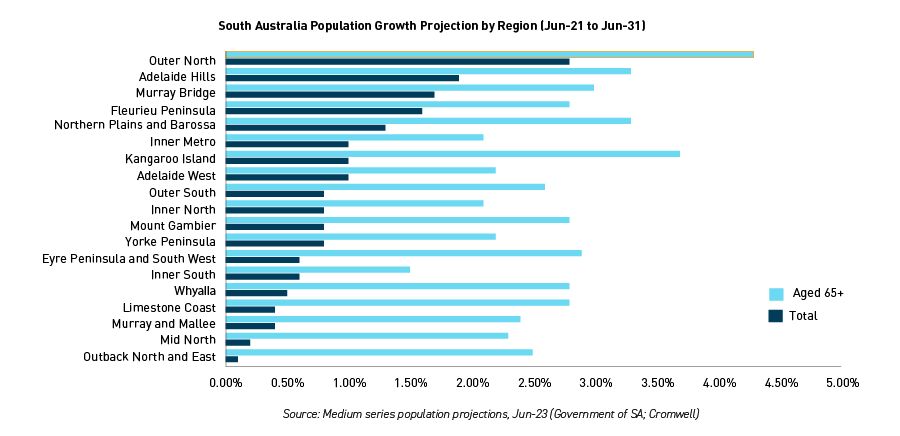
Demand for healthcare is closely linked to population growth, particularly amongst those aged over 65. The Property is located in the fastest growing region in South Australia (Outer North), with total population growth of 2.8% p.a. projected from 2021-31, and growth in the 65+ segment projected to be even more significant (4.3% p.a.). At a more granular level, the Local Government Area (LGA) in which the Property is located (Playford), is projected to see the third strongest population growth over the period, at 2.9% p.a.


Low socioeconomic status is linked to higher incidence of disease and greater need for care. Due to cost, those with more socioeconomic disadvantage have lower rates of private health coverage2. They are also less likely to see a health practitioner but more likely to visit an emergency department2, resulting in a greater number of avoidable hospital presentations which unnecessarily take up valuable resources. The Property is located in the fourth most disadvantaged LGA in South Australia (out of 71) and the lowest socioeconomic LGA within metropolitan South Australia3, which Cromwell believes indicates significant demand within the catchment for affordable, public-aligned healthcare services, such as those provided at the Property.


Important node in the Local Health Network

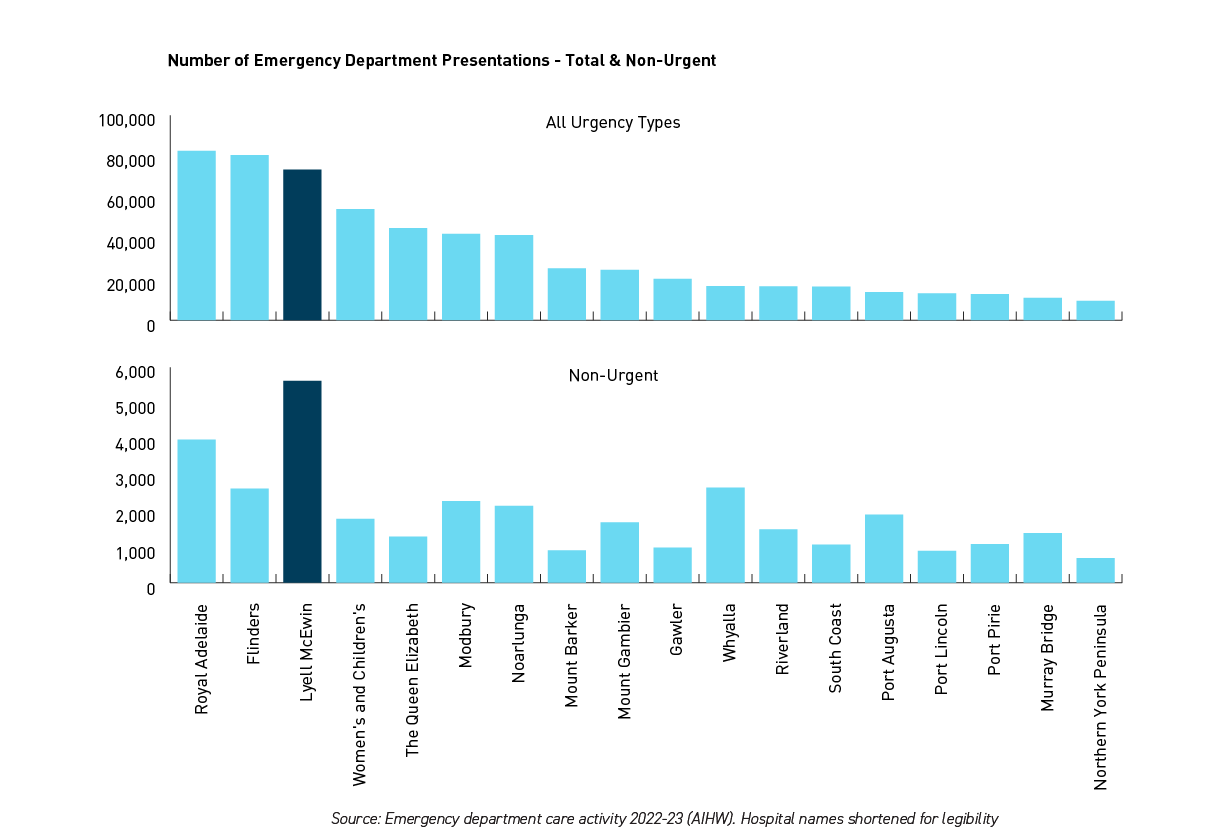
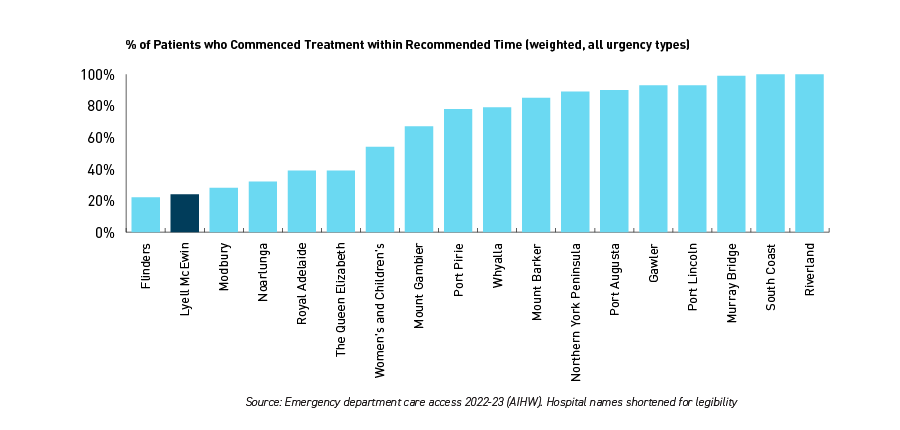
The Property is leased entirely to a South Australian government healthcare operator, which provides a number of important healthcare services for the Northern Adelaide Local Health Network (NALHN), including outpatient services. The main hospital servicing the NALHN, the Lyell McEwin, is the third busiest hospital in South Australia and has the highest number of non-urgent presentations4. The percentage of emergency department patients commencing treatment within the recommended time is the second lowest across South Australia5. The Property operating as a GP Plus Health Care Centre aims to help to reduce the number of unnecessary hospitalisations and better respond to the health needs of local communities6.

The Property is well placed to meet the needs of the catchment, forming part of an essential services precinct adjacent to the major shopping centre of the region. The location provides significant car parking and convenient road access, and is in close proximity to rail and bus public transport. With a substantial site area of nearly 12,000 square metres, the Property also has the potential to expand in line with growing demand for services within the region, providing continuity of care for patients.

A unique proposition

As detailed in the Product Disclosure Statement, the Fund presents a unique investment opportunity, underpinned by a property with an attractive location and catchment characteristics. The Property is located in a fast-growing region with significant need for healthcare services. The Property is well placed to meet the needs of the catchment, providing a broad range of affordable, public-aligned healthcare services. The precinct benefits of the location, adjacent to a major shopping centre and with convenient access to public transport and car parking, further enhances its long-term appeal.


Footnotes
  1. Medium series population projections, Jun-23 (Government of SA; Cromwell)
  2. Patient Experiences 2022-23 (ABS)
  3. Socio-Economic Indexes for Australia, 2021 (ABS)
  4. Emergency department care activity 2022-23 (AIHW)
  5. Emergency department care access 2022-23 (AIHW)
  6. GP Plus Health Care Services and Centres, SA Health.
Disclaimer

This correspondence has been prepared for information purposes and is not a product disclosure document or any form or offer to invest in the Cromwell Healthcare Property Fund (Fund) under the Corporations Act 2001 (Cth) (Corporations Act). This document does not constitute personal financial product or investment advice (nor tax, accounting or legal advice) nor is it a recommendation to subscribe for or acquire securities or other financial products and it does not and will not form any part of any contract for the subscription or acquisition of securities or other financial products.

Cromwell Funds Management Limited ABN 63 114 782 777 AFSL 333 214 (CFM) is the responsible entity of and issuer of the Cromwell Healthcare Property Fund ARSN 676 931 838 (Fund). In making an investment decision in relation to the Fund, it is important that you read the Product Disclosure Statement dated 27 May 2024 (PDS) and the Target Market Determination (TMD). The PDS and TMD are issued by CFM and are available from www.cromwell.com.au/chpf, by calling Cromwell’s Investor Services Team on 1300 268 078 or emailing invest@cromwell.com.au.

This communication has been prepared without taking account of your objectives, financial situation and needs. All investments involve risk and before making an investment decision, you should consider the PDS and TMD and assess with or without your financial or tax adviser whether the Fund is appropriate for you having regard to your objectives, financial situation and needs.

Any ‘forward-looking statements’ are not guarantees of future performance but are predictive in nature and are subject to known and unknown risks, uncertainties and other factors which may be beyond the control of CFM. CFM does not represent or warrant that such ‘forward-looking statements’ will be achieved or will prove to be correct, and actual variations from the projections or estimates may be material. You are cautioned not to place undue reliance on any forward-looking statements.

Cromwell Healthcare Property Fund

Healthcare property investment opportunity | Open for investment

Person typing on a laptop

Learn

Home Uncategorized
January 22, 2024

Cromwell releases annual ESG report, details full scope 3 inventory


In January, Cromwell released its most detailed, comprehensive ESG report to date. This report serves as a snapshot of how the business is progressing towards meeting our environmental, social, and governance commitments over the short and long-term.

The report was developed in collaboration with all relevant disciplines across the global business, and aligns with major reporting standards, including the Sustainability Accounting Standards Board and the Global Reporting Initiative. It has been designed to provide transparency through qualitative and quantitative data, while showcasing the Group’s effort to deliver tangible positive impacts, citing case studies from across the business.

Most significantly, in line with the organisation’s desire for greater transparency, this recent report details Cromwell’s full scope 3 emissions inventory disclosure for the first time.

What ESG progress means for investors

Increasingly, ESG reporting is being used by investors as another way to track an organisation’s activities and keep businesses accountable for their actions. Some investors use ESG results to determine poor performers, associating the factors that cause companies to receive low ESG ratings with weak financial results; some investors seek out high ESG performers, expecting exemplary ESG outcomes to drive superior financial results.

ESG reports are a key source of ESG performance information relied on by investors and stakeholders to make informed decisions about an organisation’s impacts. Investor and stakeholder expectations around ESG disclosure are increasing and reporting standards are rising to respond to that expectation.

Indeed, the term “ESG” was first mentioned in the United Nations Global Compact “Who Cares Wins” report in 2004 and has now become synonymous with the ability to demonstrate good corporate citizenship. Industry trends, as well as independent studies, indicate that investors are now wanting to see tangible ESG results.

A 2022 Ernst & Young Global Corporate Reporting Survey, released in November that year, found that 78% of investors want companies to focus on environmental, social, and governance activity, even if it hits short-term profits.

These days, a company’s risk profile is raised in the eyes of investors if it fails to consider ESG risks adequately and disclose its approach to them. Among other things, this makes it difficult for a company to access capital and can over time, render it ‘un-investable’ to investors, many of whom now have ESG or green mandates.


ESG and our tenants

As a commercial real estate investor and property manager, meeting the diverse needs of our tenants remains a high priority.

Through regular, ongoing engagement and detailed annual surveys, our tenants have outlined that helping meet their own ESG requirements and ambitions needs to be a key priority for Cromwell as the building owner. By helping meet these needs, we significantly increase tenant retention across our portfolio – and attract new long-term blue-chip tenants.

Cromwell’s October 2023 Tenant Satisfaction Survey Portfolio results showed that 66% of respondents rate sustainability as important or very important in their organisation’s decision to lease; and almost 60% of respondents are already at net zero, considering net zero, or already working to become net zero organisations.

For instance, over the past 12-24 months, state and federal government departments have put increased emphasis on restricting leasing properties that can’t demonstrate a credible net zero pathway for the building.

With government tenants making up a significant percentage of our Australian leasing pool, Cromwell has committed to ensuring that we take necessary steps in improving our ESG performance to retain these crucial tenants.

In this way, we satisfy current tenant needs – and future-proof existing buildings – to increase tenant retention, improved rental yields, and deliver for our investors.


This report covers Cromwell Property Group’s environmental, social and governance (ESG) performance for the year ending 30 June 2023.

The significance of understanding scope 3 emissions

Scope 3 emissions – also known as ‘value chain’ emissions – are indirect greenhouse gas emissions both upstream and downstream of an organisation’s main operation. Consequently, for this reason, they are also traditionally the most challenging emissions scope to calculate and address for many businesses as they are not directly controlled by the organisation.

Regardless, the UN Global Compact has found that scope 3 emissions generally make up more than 70% of an organisation’s total emissions footprint and it is accepted that understanding them is critical to identifying the greatest reduction hotspots, avoiding future value chain risks associated with the transition to a zero-carbon economy, and mitigating against greenwashing.

Group Head of ESG Lara Young said that reducing scope 3 emissions, and including this emission scope in net zero carbon targets, is critical to ensuring legitimate net zero targets that deliver tangible change. Addressing scope 3 emissions, she said, can deliver substantial business benefits by providing a clear transparency, understanding, governance, and oversight of an organisation’s full value chain and the evidence of the positive impacts delivered.

“Despite the industry challenges of data quality and availability for scope 3 emissions, the Group is proactive with joint venture partners in Oceania – and its supply chain partners, clients, and tenants globally – to collate scope 3 data via the roll-out its green lease initiative and ESG schedules,” said Ms. Young.

“Cromwell has committed to positively contributing to the communities in which we operate, and that goal involves supporting tenants and investors with achieving their net zero targets and evolving ESG needs.”

“Cromwell’s FY23 ESG report is the first time that Cromwell will publicly disclose scope 3 emissions, and this will place the Group among the minority of industry peers that publicly disclose this data. This outcome is a testament of the Group’s capability and desire for full transparency.”

Cromwell’s FY23 ESG report is the first time that Cromwell will publicly disclose scope 3 emissions, and this will place the Group among the minority of industry peers that publicly disclose this data.
Lara Young – Group Head of ESG, Cromwell Property Group


Progressing on our ESG commitments

The FY23 ESG report shows that Cromwell made notable advancements toward our ESG commitments during FY23 – including the development and implementation of our updated ESG Strategy; preparing a globally aligned approach to decarbonising the business to meet our targets of net zero scope 1 and 2 emissions by 2035, and all scope 1, 2, and 3 emissions by 2045.

This activity is supported by emissions abatement cost modelling for our Australian and European portfolios to facilitate emissions reductions and associated decarbonisation costs.

The report also highlights the progression the business has made in the past 12 months regarding specific ESG results. Among our key achievements, emissions intensity (scope 1, 2, and 3) was reduced by 12% in Australia, compared to the previous financial year; European assets recorded reductions of 22%.

Cromwell’s Direct Property Fund was third in the Australian NABERS Sustainable Portfolio Index (SPI) – the highest ranked geographically diversified fund in Australia – and Cromwell’s Australia investment portfolio was fourth in the same index.

Cromwell Polish Retail Fund (CPRF) achieved a five-star rating and a Cromwell record-high overall score of 90 points, ranking 11th out of 32 European retail non-listed peer funds and 17th out of 87 in the European Retail category.

And, significantly, Cromwell’s Australian gender pay gap decreased by 44% since it was first calculated in FY21.

Lara Young said that, among other metrics, these key achievements highlighted the progress the organisation is making.

“We know that ESG is not just about carbon emissions. While reducing emissions is crucial, this cannot be at the expense of biodiversity, social value, or natural capital. These topics are all interlinked and the Group recognises we cannot be successful if focusing on each in isolation,” said Ms. Young.

McKell Building case study

One of the largest, and most involved, ESG-led projects this year was the electrification of the McKell Building in Sydney’s CBD.

The multi-million-dollar project has involved converting the building’s existing commercial gas-fired heating system to an electric heat-recovery reverse cycle heating, ventilation, and air conditioning (HVAC) system.

Cromwell’s Head of Property Operations, Tessa Morrison, said the upgrade of the 24-storey building has been designed to help ‘future-proof’ the asset by replacing outdated, 1970s-era infrastructure with modern, energy saving equipment.

““The McKell building is a 1970s-constructed building with an existing NABERS 5.5 Star energy rating, so while it is already significantly energy efficient, we are undertaking this project to reduce emissions and drive further energy efficiencies,” said. Ms. Morrison.

“This is the first time that a multistorey, 25,000sqm commercial building in the Sydney CBD has undergone an electrification upgrade – and we’re excited to have engaged experienced mechanical air conditioning contractor Velocity Air to help deliver the project.”

Efficiencies in the new reverse cycle HVAC system will mean that hot air removed as part of the building’s air conditioning process will be recycled back into the system for use elsewhere, including heating the building’s water.

Looking long-term

Through its data informed approach, Cromwell is working focus on the broad spectrum of the ESG agenda, while prioritising the most relevant aspects. Cromwell recognises that the industry needs to remain pragmatic, but also strike a balance with a wholistic systems view.

Cromwell’s key long-term targets remain:

  • Net zero operational emissions (scope 1 & 2) by 2035.
  • Entire portfolio (scopes 1, 2, & 3) including tenant and embodied carbon by 2045.
  • Significantly reduce our gender pay gap year on year.
  • Achieve 40:40:20 gender diversity at all levels.
  • Integrate ESG into risk register and business strategy, including objectives and key results.

“Cromwell recognises the ESG challenges that the property industry faces; however, we also recognise the opportunity to deliver tangible positive impacts. The Group has a global in-house ESG team and dedicated Australian and European teams that supporting all Cromwell ESG targets and activities,” said Ms. Young.