


41525
Person typing on a laptop

Learn

Home 20:20 Stock Stories: Sunland Group
May 25, 2026

20:20 Stock Stories: Sunland Group

SUCCESS STORY CASE STUDY

 

As Phoenix Funds marks its 20‑year anniversary, we are revisiting a selection of past investments that continue to offer relevant lessons for investors today. This case study on Sunland Group forms part of our 20:20 Stock Stories series — a retrospective look at listed businesses that illustrate enduring principles of long‑term investing. Sunland Group was an ASX‑listed property developer for much of its corporate life, and Phoenix initiated a position in the company in 2014, remaining invested until its delisting in 2023. While market cycles, sentiment and conditions have evolved over that period, the core themes highlighted by this investment — earnings volatility, management alignment and the importance of after‑tax returns — remain as pertinent today as they were at the time. It is these timeless insights that make the Sunland story worth revisiting and sharing with our investor community.

“Volatility creates opportunity for investors who are able to look through the peaks and troughs and focus on long‑term value.”
— Stuart Cartledge, Co‑founder and Managing Director, Phoenix Portfolios

The first key lesson for us:

Volatility of earnings creates opportunities for those able to look through the peaks and troughs.

Looking through the volatility

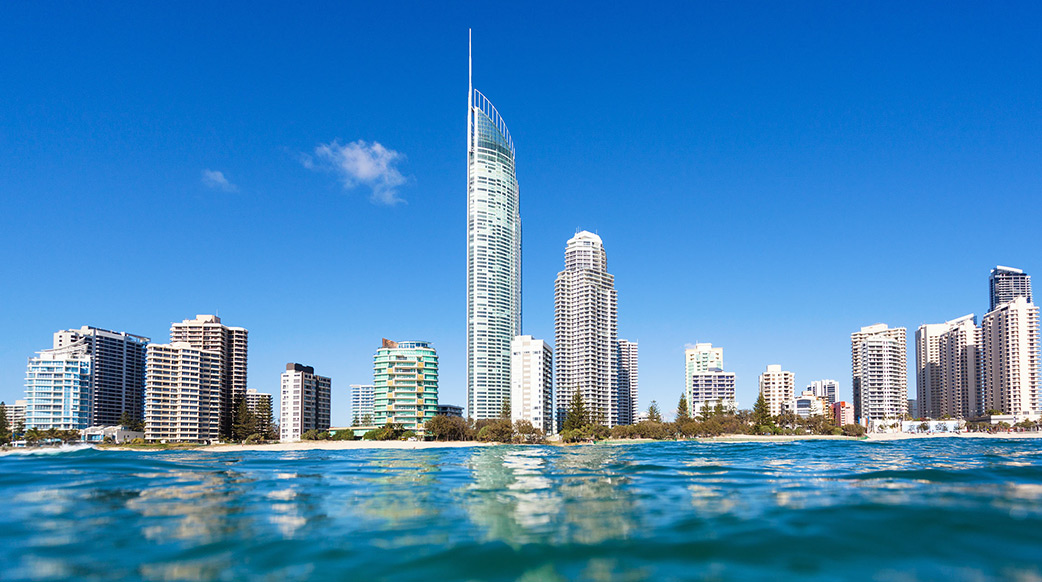
Sunland Group was established in 1983 by architect Dr Soheil Abedian as a Queensland based property development company and was responsible for many projects across the east coast of Australia, spanning both iconic towers such as Australia’s tallest building, Q1 on the Gold Coast and house and land projects in emerging suburbs.

Except for a failed offshore expansion, and the difficult period during the Global Financial Crisis, Sunland has been a highly profitable and well managed business. Its core “House and Land” business consistently delivered solid returns which is a highly valued attribute of any listed company.

The high-rise business created iconic towers that produced some large profits upon completion. However, by its very nature, this led to a volatile income stream – something that many share market investors are uncomfortable with.

The second key lesson for us:

An aligned management team is more likely to make sensible strategic long term decisions.

Alignment of interest

The founding Abedian family maintained a large stake in Sunland throughout its listed life, thereby maintaining a strong alignment of interest with minority shareholders. However, the share market did not value the company appropriately, and over the period from 2009 through to 2020, the stock traded at a significant discount to its book value. A low share price does however enable a financially astute management team to buy back their own stock, reduce the number of shares on issue, and increased the value per share of all remaining shares. Using a combination of retained profits and inventory selldowns, Sunland bought back and cancelled over 55% of its own shares. This is a low-risk way of adding value.

The combination of good capital allocation, an aligned management team and a compelling valuation was attractive to Phoenix and a position in the stock was initiated in August 2014. This position was ultimately held until the company delisted in October 2023.

The third key lesson for us:

The market does not fully value franking credits. After-tax returns can be materially enhanced by holding companies delivering abundant fully franked distributions.

Franking credits

The de-listing was not a bad news story!  Despite years of buying back stock at a discount, a strategic review was undertaken and announced to the market in October 2020 which essentially involved either completing projects, or selling them, and returning all capital to shareholders.  At the time of the announcement, the share price reflected around half of the capital value of the business.

However, given an extended period of profitability and a substantial franking credit balance, a significant portion of sales proceeds were delivered to shareholders as fully franked dividends.  For Australian superannuation investors and foundations, this form of distribution is extremely tax effective and therefore very important from an after-tax return perspective.